Category Archives: Uncategorized

Bell’s Special Reserve at Hemingway’s Bistro

It’s strikingly appropriate that this post is about Bell’s Special Reserve, for which we’ve just launched a Father’s Day promotion (see the The Return of WHISKYdotcoza), and also a bit of an homage to my dad and his favourite restaurant.

My dad is an unpretentious man.  He certainly can and does appreciate fine things, but I think that he reserves his greatest enjoyment for genuine, down-to-earth, simple pleasures.  When he finds something that he likes he embraces it enthusiastically, be it a wine, a restaurant or a rugby team.  This passion is most evident in his support of the Sharks.  He came to this country not knowing much about rugby and having played only a solitary game (the how and why were lost on a child’s ears), but it struck a chord with him, and today he ranks amongst the most ardent fans in the province, one of those with a pedigree dating back to the old B-Division days.  He takes the same approach when it comes to restaurants.  We’re a family that enjoys our food and we’ve celebrated many wonderful family occasions over a meal at a restaurant.  When the first of the Keg restaurants, the Keg & Thistle, opened in Durban, he was one of the most steadfast patrons; some 5 long, loooong years had to pass before we dined out anywhere else, such was his loyalty.

Today, and for some time now, the Keg’s place in my dad’s heart has been taken by Hemingway’s, a substantial step up (I was going to say “in my opinion” but it’s indisputable so take it as fact).  Hemingway’s is located in the lower Glenwood area of Durban, in a charming Victorian style house that’s been renovated and converted into a restaurant.  Half the tables are on a terrace out front, alfresco always being a useful format in the east coast sauna, and the other half inside.  It’s small enough to feel intimate, but large enough to feel vibey, so suited to just about any dining event I can imagine.  I’ve obviously had many meals at Hemingways – this much should be clear by now – but recently I sampled their new menu for the first time.  It offers a wider selection than the previous, and the medium-rare fillet with blue cheese sauce that I selected was fantastic.  I also finished off a few of my companions’ dinners – I’m nothing if not true to my dustbin nature – so I achieved a fairly broad familiarity with menu and I honestly couldn’t fault a thing.  The service is excellent too.  My dad engages with restaurant staff in very dad-like fashion, but these guys seem to get him.

Victorian? Passable knowledge of whisky. Dangerous knowledge of architecture.

Onto the bar.  So far there’ve been words but too few of them on whisky.  The usual suspects were front and centre – but I was pleasantly surprised to see a few older representatives of the Glenfiddich family also in attendance.  I let my eyes linger on the 15yo Solera, but good as it is I know it well so I wanted to give something else a try.  I decided on Bell’s Special Reserve.  Blended malts are a hugely underrated style of whisky, and as a result relatively uncommon.  It’s little known by the whisky drinking everyman that a single malt, the “pure” style of whisky, is in fact blended – different casks of different wood from different years can typically be used.  So there’s not much by way of conceptual superiority of single over blended malts.  A single malt is representative of a singular place and style, in a way that a blended malt can never be, but a blended malt can call upon a variety of malts and the blender’s skill, and thereby draw from a virtually limitless flavour palette to create something that might be just right for you, for me, for a particular occasion.

Bell's Special Reserve

My occasion was an after dinner dram with my dad.    We savoured the first sweet, then peppery-spicy flavour, and reflected on a great meal, and a great moment in time spent together.  If I had to analyse it more closely I’d say that this whisky could use a bit more time in its casks.  I feel much the same about the Grouse blended malt.  But then again if that was the case we wouldn’t be able to pick up these 100% malt gems for under R200 a bottle.  There’s an extrinsic component to our perception of flavour, I guess that’s why such things as marketing and branding exist.  In this case the Bell’s Special Reserve was the perfect complement to a much enjoyed father-son occasion.

The return of WHISKYdotcoza

Since going live we’ve had some technical glitches that required us to take the site off-line.  We had always anticipated certain teething issues, but had been hoping to resolve these without interrupting operations.  The difficulties we encountered were primarily to do with our credit card platform, and as much as we’d like to be giving whisky away to for free (hey we’re all part of the great whisky brotherhood), we had heard somewhere that in business it’s a fairly important to get paid, hence the more dramatic measures.  If you’ve been trying to access the site in the past week, a big thanks for your patience and for bearing with us.  I guarantee you that it will have been worth it.

The return to live status was also delayed because we were adding a special feature to the site – a Father’s Day offer courtesy of Bell’s.  The guys at Bell’s have kindly allowed us to extend the offer to readers of Words on Whisky, and to the fledgling customer base of WHISKYdotcoza.  The promotion is specific to Bell’s Special Reserve, the blended malt in the Bell’s portfolio, which I recently had the opportunity to taste (the report is here), and it includes a set of custom engraved tumblers and delivery to anywhere in SA, both gratis.  If you’re keen to partake simply click here and follow the instructions given.  I’d also like to encourage you to visit the Bell’s website and join the Bell’s Fraternity of Connoisseurs so that their team can keep you informed about future offers and events.

Bell's Father's Day promotion at WHISKYdotcoza

Please try the site and let us know your thoughts about it.  We are committed to becoming the country’s premier whisky e-tailer, and we’re very serious about what potential customers think and feel about it.  We can’t promise to implement all the feedback, but we will read and consider each and every single suggestion.

So, as we face a brave new week, may the dram be with you.

WHISKYdotcoza live

Almost a year after the initiation of the project, and after many months of increasingly intense preparation WHISKYdotcoza is now up and running.  Phew!  Even as I’m breathing this sigh of relief I know that this is actually only the start of the journey.  It’s a milestone nonetheless.

Live and dangerous!

It all began back in 2002 when I secured the domain whisky.co.za, with what was then the very vague intention of creating a whisky e-tailer.  The market simply wasn’t ready at the time (neither was I), but the dynamics have changed dramatically since.  Firstly whisky consumption has grown steadily – in 2010 South Africa was effectively the 4th largest export market for Scotch whisky worldwide (Singapore was actually 4th but I reckon it’s just a thoroughfare, so doesn’t really count) buying £168 million worth.   In 2005, never mind 2002, SA wasn’t even in the top 10.  Secondly internet usage and the incidence of online shopping are in an exponential growth phase.  An estimated 6 million South Africans have access, of which 51% are believed to be shopping online.  We’re still well behind the first world, 10-15% of our population is online compared to 90%+ in a country like Denmark, but we’re catching up quickly.  The e-commerce era has arrived, and I believe whisky is the type of product that’s ideally poised to get on board.  It’s popular, it’s credibly branded, there are no sizing/fit issues, and it’s high value and compact so delivery is cost-effective.

Having said that, it’s going to be a slow burn.  Although there are other online whisky shops operating in the local market, it’s by and large an unfamiliar format; people here are unaccustomed to using this channel to purchase their whisky.  However, I’m confident that the benefits will speak for themselves, and that conversion will follow awareness.

There are two primary reasons why people are increasingly turning to e-commerce in general – because they can shop whenever they want (i.e. it’s convenient), and because they can make purchase decisions that are better thought-out than they would be in the bricks and mortar world.   On the internet, you have an endless amount of information at your fingertips.  You can quickly and easily compare pricing and specifications, and dig into product details – in short ensure that you get exactly what you want for the best possible price.  Time is a valuable.  Why would busy professionals want to spend 2 hours of their Saturday schlepping to Makro and back, when they can buy from us at similar prices, get some decent advice to guide their purchases, and have 3-4 bottles delivered for between R42 and R50 (in the major cities), the cost of their petrol alone?  Well, that’s the theory anyhow.

The many advantages of convenience

We’ve set out to create an e-tailer that will be a benchmark not only locally but internationally.  We can’t offer the same variety as international e-tailers such as Whisky Exchange and Master of Malt, that’s simply not possible here, but in aspects of functionality, usability, and relevance, we think we’ve on our way to matching, and in certain aspects exceeding, these titans.

Thanks for indulging my sales pitch.  I’m not going to make a habit of it on this blog.   As I recently mentioned to fellow local whisky blogger I’m 100% committed to offering an independent and impartial viewpoint on all things whisky, but when it comes to the retail aspect, well, I’m going to have to make an exception, declared upfront.

One last thing – I have a favour to ask.  The site is complex, and despite the talent of our incredibly hardworking and dedicated web designers (Milk), it’s inevitable that there will be issues.  I’d be grateful if you could give us your thoughts, feedback and suggestions.

Thanks again, enjoy the weekend, and may the dram be with you.

Johnnie Walker at the Taste Festival

I attended the Taste Festival over the weekend, courtesy of tickets from my friends at Liquidity. I ambled over to their stall on arrival to say thank you, and sampled their Pyrat rum (part of the Patron stable) whilst I was there. I’m a big fan of rum and this one did not disappoint. With its bold orange taste it’s a great option, indeed one of the very few options, if you’re looking for an aged rum in SA.

Classy Pyrat Rum advertising

The Festival itself was well put together and populated by an interesting variety of stalls, mostly restaurants, but also wineries, bars, and an assorted mix of food and beverage brands. As I mentioned I didn’t pay for my tickets, but I would have been mightily disappointed if I had. It seems that all the entrance fee got you was the opportunity to spend more money. It certainly didn’t seem to have subsidised what was on offer. Tasters from the various restaurants were priced at between R20 to R40, and ranged from ok-fair-enough deals, such as Savour’s Salmon carpaccio and Solms Delta’s Cajun seafood, to ludicrously bad value, witness Nobu’s microscopic yellowtail sashimi. I once had the dubious pleasure of dropping 200 large (as in Sterling) on supper at Nobu, and had to stop at a Burger King on my way home to fill the gap, so no surprise there.

A message then to the organisers: come on guys, we like what you’re doing, but don’t take the piss.

Ok, now that that’s out of the way, to the serious business i.e. whisky, of which there wasn’t much to be found at the festival. I kept looking however, kept walking if you will, and my efforts were rewarded. I came upon the Johnnie Walker (JW) stall, beckoning to me like an oasis in the desert…and I needed no second invitation.

A few facts about JW– it’s the best-selling whisky in the world, it’s part of the Diageo stable, and its product philosophy is “Big Flavours”. I’ve pondered the latter often. For marketing purposes it’s great positioning. Whisky is all about flavour, so what could be more appealing than big flavours. Bigger is better after all.

At this stage it might be worth having a quick aside on the topic of chill filtration. Chill filtration is a process that takes place before bottling in which whisky is cooled and passed through a fine mesh filter, trapping and removing certain congeners (fatty acids and oily compounds) that tend to precipitate at lower temperatures. The finer the filter and the more extreme the cooling, the greater the amount of congeners removed. This is done for aesthetic purposes, so that the whisky does not appear hazy, especially when ice is added. However these congeners are a significant contributor to flavour, so many whisky-makers choose not to chill-filter their whiskies, labelling them “non-chill filtered”.  The bottom line is that chill filtering extracts flavour from the whisky.

Ok, back to JW. My question is – does the “Big Flavours” philosophy represent the reality of the product or is it just a line fed to consumers? Well, the range of JW’s is chill filtered. In fact if my industry sources are to be believed, Diageo has a particularly aggressive approach to chill filtering, using fine filters, and low (-4°C) temperatures. I can’t definitively confirm if this is true either generally or specifically for JW, but for the sake of conjecture let’s assume that it is. What does this say about the commitment to “Big Flavours “? Isn’t the removal of flavour at odds with such a claim? Perhaps “Style over Substance” would be more accurate?

I’m being harsh of course. Almost all blended whiskies are chill filtered, at least to some extent, so this is standard practice. And the JW range is superb and flavourful to a man. You don’t get to the top without having the chops. Nevertheless, food for thought…

The tasting itself was exceptional; short of the Glenmorangie Signet sonic tasting, probably one of the best I’ve experienced. The hosts were knowledgeable, the props, lit display cabinets containing flavour cues, were perfectly atmospheric, and the whiskies, as I mentioned, were superb. JW Red is not amongst my preferred whiskies – the Talisker inspired salty-smoky flavour, whilst interesting, is a bit abrasive for me – but Black and Green, the other variants showcased at the tasting, are standouts.

On that note – keep reading (my blog), keeping drinking (responsibly) and keep well.

Black

Red

WealthWise magazine article

Published in WealthWise magazine, May edition,  www.wealthwisemag.com or http://issuu.com/wealthwise/docs/wealthwise_may_2011/6.

Please note that the magazine has mistakenly given me credit for certain photos.  These should be attributed to my brother, Fred Leclezio, and Steve Adams at Wild on Whisky.

Whisky Wise

We live in a fiercely competitive world.  That’s how it is, for good or bad, particularly in the liquor business.  This gladiatorial arena is adjudicated on an annual basis by The Power 100, a survey that evaluates the world’s most powerful spirit and wine brands, with power in this case being defined as a brand’s ability to generate value for its owner.  The 2010 issue had whisky firmly entrenched in the number 1 spot chalking up a total brand score of more than twice its nearest competitor.  It is quite simply the indisputable king of spirits…but a cultured and benevolent king, with much to offer in return.

Whisky, the golden nectar of the gods, came to us somewhat appropriately from Irish monks who had transported distillation techniques from Continental Europe.  They called it “uisge beatha”, the water of life in the Gaelic of that era.  This Irish birth is believed to date back to the 5th century AD, but whisky’s early history is shrouded by time, and the first official reference was only recorded a millennium later in 1494, when it was mentioned with little fanfare in the Exchequer Rolls in Scotland.  From those obscure beginnings in what were then backwaters it has risen to become the world’s dominant spirit.

Today whisky is made not only in Ireland and Scotland, but all over the world.  Thriving industries exist in the US, Japan, Canada, and somewhat controversially, in India, where the bulk of “whisky” is made from molasses, and therefore is not considered to be whisky elsewhere.  Whisky is generally defined as a distilled spirit made from cereals, yeast and water, so, with the exception of the Indian stuff, every whisky that you’ll encounter is made from some sort of grain, or mix of grains.  Whilst wood is acknowledged to be the single most important contributor to flavour, because all whiskies are aged in wood to some extent, it is these grains which in simple terms define the difference between one style of whisky and another.

Single malt, the heart of the Scotch whisky tradition, is made from malted barley, which is often peated.  The influence of the peat can be identified in the smoky flavours characteristic of Scotch; whiskies such Ardbeg, Laphroaig (pronounced la-froyg) and Lagavullin (laga-voo-lin) are prominent examples thereof.  The Irish counterpart to single malt is pure-pot still, made from a recipe of predominantly unmalted barley, giving its whiskeys spicy notes.  The Midleton Distillery, producer of Jameson and Tullamore Dew, is a noted exponent of this style.  American whiskeys, of which bourbon is the flagship, generally have softer, sweeter flavours, a product of the largely corn based recipes (with rye or wheat in the background), and also because ageing occurs entirely in virgin wood.  Maker’s Mark, Jim Beam and Woodford Reserve are noteworthy examples.

These are broad generalisations though.  Each style, whilst having its own unique heritage, and its own particular charm, is by no means uniform, far from it.  A floral Lowlander has little in common with a pungent Islayer.  It is the extent of variety, both between styles and within styles, that has built the lore of whisky.  As a result the enjoyment of whisky is a never-ending adventure of subtleties and nuances: there is always something new, something more, to taste, to learn, to explore, around every corner.  One can never know all there is to know.

I earlier mentioned the Power 100 2010 survey.  A total of 27 whisky brands featured in this elite group.  Whisky is big business, certainly for the corporate owners of brands and distilleries, and for the retail trade, but also, increasingly, for the individual investor.  People are realising that not only can you drink it, but you can also ride it…all the way to the bank.  There are various avenues open to the average investor.

Firstly, a variety of major distillers offer casks for sale.   You would literally buy a cask’s worth of new make spirit, which can after a time be either bottled, sold, part exchanged or further matured.  This is not a quick road to riches.  I imagine it would provide at best a solid, but unspectacular return, and at worst, if the market collapses in the future, a lifetime’s supply of whisky.  It’s best suited to a whisky lover – you typically get to visit your cask during milestone moments, taste from the cask, and have regular reports on its progress submitted to you by the master distiller.  This is investertainment at its best.

Secondly, you can readily buy and sell bottles of whisky for profit.  Until recently this was done through established facilitators such as auction houses and specialist retailers.  Auctioneers Bonhams grossed £430 000 at their Edinburgh auctions alone last year, primarily attracting collectors and investors, who to an extent are one and the same.  Soaring demand intersecting with scarce supply, particularly of old, premium whiskies made at a time when production outputs were more conservative, has driven an exponential growth in prices.  There are stories that have become the stuff of legend.  Martin Green, Whisky Specialist at Bonhams, recounted to me the history of the 1964 Black Bowmore, released in limited batches in 1993, 1994, and 1995, at less than £150 a bottle.  The whisky was a novelty, black in colour from the unusual Oloroso sherry casks in which it was aged, and became highly regarded.  The bottles released were snapped up and soon thereafter started appearing under the hammer fetching on average £2000 a pop.  The 1993 bottling now sells for over £4000 where and when available, circa 28x its original value.

Thirdly, you can invest in a whisky portfolio run by whisky “fund managers”, a relatively recent innovation.  Such has been the value explosion in whisky, and such is the potential, that a group of Dutch businessmen have established an organization called the World Whisky Index allowing investors to buy and sell authenticated whisky in a structured trading environment.  Minimum buy-in as advertised by their website is € 5000, although in recent correspondence with me they advised that this is now € 25000, so not just fooling-around money.  In practical terms, you buy a portfolio made up or bottles and/or casks with or without the guidance of the Whisky Talker (their version of the Horse Whisperer, I guess).  This portfolio is then traded on the exchange, bids are received for individual whiskies, and their values fluctuate like shares on an exchange.  In 2010 the average portfolio at the World Whisky Index increased in value by some 7.9%, or so they claim.  By European standard that’s a healthy return.

I take a measured view on all of this.  Big wins are undoubtedly possible, like they are in the stock-picking game, but I’m an efficient market theorist at heart and I believe that all publicly available information has increasingly been accounted for in whisky pricing.  The market is also changing and supply discrepancies will no longer be as acute in the future, as brand owners look to ramp up production and lay down increased stock.  Will whisky continue to appreciate – probably.  Will the strong growth of recent years continue – not sure.  You pays your money and you takes your chances.

Whether your objective is to drink it, to collect it, to invest in it, or to just contemplate it from afar (I recommend the first one), whisky has stirred our collective consciousness.  W.C. Fields, the American comedian, said:  “Always carry a flagon of whiskey in case of snakebite and furthermore always carry a small snake.”  He obviously didn’t live in mamba country, but you get the drift.  On that happy note allow me to resort to the clichéd sign-off of whisky writers everywhere – Sláinte!

Shaken not stirred

I’m often asked how whisky should be drunk, and I thought I knew all there was to know (always a mistake with whisky).  Younger whiskeys, particularly of the American and Canadian styles, can be suited to mixing, or used a base for cocktails such as the Mint Julep, Manhattan, and Old Fashioned, if that’s your inclination.  Older whiskies are best enjoyed with a splash of water – filtered or bottled (still) so that the chlorine does not contaminate the flavour – at room temperature.  Use a glass with an inward tapered rim if available, so that the vapours are concentrated, allowing you to optimally enjoy the aroma or nose of the whisky.  I tend to stay away from neat whisky, apart from an initial sniff and sip if I’m doing a formal tasting, because I find that the undiluted alcohol can be a sensory anaesthetic, although some would disagree.  That comes down to personal taste, as does ice – to use or not to use.  It’s in this regard that I recently acquired some cool new knowledge.   Cold can inhibit flavour, but room temperature varies from Dundee to Durban, so it may be justifiable for regulation.  However ice melts, and quickly, especially where it’s needed most, and this introduces uncontrolled dilution into your drink.  I don’t like my whisky tasting like the back-end of a slush puppy, so I had tended to avoid ice, even in high heat…but now I don’t have to.  Enter the ice-ball: take the same volume as a block, get less surface area, and therefore less dilution.

Experiment, enjoy, and may the dram be with you.

Die Dop Paleise

In case you haven’t noticed, South Africa is mad about whisky, Scotch in particular.  We are the 5th largest export market worldwide, having shelled out £169 million to the Scots in 2010.  However, the premium sector is still immature, and a tangle of red-tape makes it difficult to bring in new products.  The upshot is that when we’re out dramming we usually can’t pick and choose from the variety of top-end whiskies that is available in some developed countries.  I say usually.  Because there are a few exceptions, a few shining beacons of whisky civilization out here in deepest darkest where you can uncompromisingly slake your thirst.  These are my 4 standouts: The Bascule Bar in Cape Town, which offers a choice of over 400 distinct whiskies, Katzy’s and Brown’s which are the epicentres of the Gauteng whisky scene, and Wild about Whisky, a small bar in Dullstroom (where else) boasting a choice of over 800 whiskies, apparently the largest whisky menu in the Southern Hemisphere.  I should qualify that I’ve yet to find my way to the latter, but it lives large on reputation alone.  I don’t think you’ll be disappointed.

Shopper’s guide

This is tough.  We live in a whisky world where we’re spoilt for choice, and where we’re not short of quality.  Taste is also highly individual – what one person likes another might not.  I simply can’t commit to any favourites, however if you travel these roads you’re unlikely to get lost.

Scotch blend: Ballantine’s,

Premium Scotch blends: Johnnie Walker Black Label, Chivas Regal

Affordable single malts: Aberlour 10yo, Glenmorangie 10yo, Macallan 12yo Sherry Wood, Glenfiddich 15yo Solera, Dalmore 12yo, Glenrothes Select Reserve, Benriach 10yo Curiositas, and Bunnahabhain 12yo.

Irish blends: Jameson, Bushmills Original

Bourbon: Maker’s Mark

Rye: Sazerac 6yo

Patrick Leclezio is a whiskyphile, writer and entrepreneur who has spent the last 12 years working in the liquor industry in one capacity or another.  He writes the blog Words on Whisky, and is launching a specialist whisky e-tailer called WHISKYdotcoza.  He is passionate about the culture, business and enjoyment of whisky.

FAIL

Yesterday I came out firing like an American soldier in a Pakistani mansion.  Now, here I am eating a public slice of humble pie.  I’m not sure where that expression comes from because pie tastes good and this doesn’t.

Anyhow, here it goes.  Despite my apology yesterday I still thought that I was somewhat right.  I have now established beyond a doubt that I was wrong.  Very wrong.  My government will be happy about this – she reckons that she doesn’t hear me say it often.

In my defence the SWA briefing was somewhat unclear, nay absent, on the point – I have their DVD at hand to prove it.  I suspect that they may have gone over to the Dark Side after the whole Glen Breton saga.  But I won’t lie, it’s a paltry defence.  I’ll take my stripes.

This to conclude the Regional GI storm in a teacup:

Dear Patrick

Campbell has passed on your enquiry about regional geographical indications to me.

Speyside Scotch Whiskies are a sub-set of Highland Scotch Whiskies. That has been the traditional practice since at least 1909, and the definitions of the regions in The Scotch Whisky Regulations 2009 have not changed that.

A Scotch Whisky qualifies as “Highland” if it is distilled north of “the line dividing the Highland region from the Lowland region”. All Speyside Scotch Whiskies therefore qualify both as “Highland” and as “Speyside”. It is a matter for the distiller which description is used.

Kindest regards

Magnus Cormack
Senior Legal Adviser
Legal Affairs Department
Scotch Whisky Association

As Bart Simpson would say Ay Caramba.

Glenfarclas again

I mentioned some time ago that I was a language purist – see the post Whisky or Whiskey. At times I can also be a hair splitter. Recently I commented, on a post by fellow whisky blogger G-LO, that Glenfarclas would probably be forced to change their labels in the near future, due to a particular stipulation in the recent Scotch Whisky Regulations of 2009.

I came across this knowledge because late last year I attended a briefing on the regulations hosted by the Scotch Whisky Association (SWA). With South Africa having in 2009 become effectively the 4th largest export market for Scotch worldwide (Singapore was actually 4th, but I think we can assume that they’re just redistributing), these guys are paying attention to us down here.

Specifically I’m referring to a point related to Geographical Indication. The SWA have defined 5 official Scotch whisky regions: Speyside, Highlands, Lowlands, Islay, and Campbeltown. No sub-regions, no “Islands”, and none of the other deviations that have evolved over the years. Furthermore they have unequivocally stated that in order to claim regional provenance a whisky must be “wholly distilled” in that region. Maturation it seems can take place anywhere in Scotland.

This brings us to Glenfarclas, which is located in Speyside, near a town with the wonderfully Scottish sounding name of Ballindalloch. Yet its label proclaims it to be a Highlands whisky.

Hence I logically assumed that it would need to change. Concerned however about my journalistic integrity I decided to write to Glenfarclas to verify my assumption. G-LO, apologies, it seems that I’m wrong. Here’s the reply from George Grant of the Glenfarclas Grants:

Patrick,

Thank you for your email.

Simplest way to explain, all Speyside whiskies are Highland Whiskies, but not all Highland Whiskies are Speyside. In the small print on our labels we do put Speyside. Macallan also does the same put Highland rather than Speyside. The Speyside region is a relatively new region. And Glenfarclas has been a Highland Whisky for over 100 years before the Speyside region came about. Hope this helps.

Best regards,

George Grant

It was very kind of him to respond to my nit-picking. I was indeed aware that Speyside had previously been considered a sub-region of the Highlands, but post-2009 it seems to me that this officially no longer applies. Perhaps the fine print resolves the issue…I don’t have sight of the detail of the regulations so can’t comment definitively. But fine print or not, the whisky is still claiming Highlands origin, despite being distilled  in Speyside, and from a broad common-sense point of view this seems to be contrary to the spirit of the regulations. I wrote to the SWA to get their views on the matter, and I’ll let you know if they bother to respond.

George’s response also raises the issue of whether these regulations are fair or not. If indeed my interpretation is correct, why should Glenfarclas be forced to change a claim that they’ve legitimately made for over 100 years? More importantly does any of this make much of a difference. There is so much variety within the regions, that they are no longer (if they ever were) a consistently reliable guide to flavour. Even relatively homogenous regions such as Islay have startling exceptions (witness the unpeated Bunnahabhain). They are peripheral, more relevant to the culture of whisky than the product itself.

Fascinating nonetheless. I love this stuff!

Glenfarclas tasting and independent bottlings

I was privileged during the weekend to be invited by a good mate to taste a very special whisky; special because it was intrinsically so, and also because it’s a vintage dating from the year in which his late brother was born.  We drank a toast in remembrance – rest in peace Warren.

The whisky in question was a Douglas Laing independent bottling of Glenfarclas that had been distilled in 1967.  It’s part of their Old Malt Cask range, comprising uniquely of single casks all bottled non-chill filtered at 50% abv (sometimes referred to as “the golden strength”).   They have their reasons but it seems restrictive to me.  What would happen if the cask strength for a particular older cask was below 50%?  Worrying, but I only let this view into the abyss deter me momentarily.

Malt that's more mature than me

This is a whisky that was wholly matured in sherry casks, so I was expecting resinous, raisiny, leathery, tannic flavours, and I was conscious that at 42 years old it might be overly oaked.  It turned out to be a tight, well-integrated, balanced whisky, purposeful and sure of itself, and without any excessive wood influence.   Over and above I also identified some nutty aromas, restrained sweetness, and a bit of spice on the palate and finish.  The only drawback was that I had anticipated something more vivid.  The cultivation of tasting ability is a progressive exercise and I’ll admit that mine is still a work in progress, so I may well miss some subtle flavours, simply through lack of experience and education.   I’m not going to get too hung up about it – I don’t want to transform myself into either an anorak or a Hilton old boy (the dark sides of the dram) – so I’ll just trust my instincts:  good, even great whisky, made even better by the company in which I enjoyed it, but not animate enough to be spectacular.

This experience also prompted me to reflect on the whole concept of independent bottling, which I think is fascinating.   Typically an independent bottler would secure new-make spirit from a distillery, mature the spirit themselves, and then release a single-malt under both its name and that of the distillery.  Duncan Taylor, and Gordon and Macphail are two such well known examples.  Some bottlers do not associate their single malts with the distillery of origin, either on the insistence of the distillery (to prevent dilution of their brand name) where this has sway, or so as not to be committed to a specific source of supply.  In certain circles these are known as bastard malts, but I find this descriptor unfairly disparaging.  I’ve tasted some that are simply magnificent.  Some distilleries have employed practices such a teaspooning as a deterrent.  It sounds kinky but disappointingly isn’t.  The most famous practitioner is Glenmorangie, reputed to add a teaspoon of Glen Moray to spirit that they sold to blenders – under the name “Westport” – to prevent it from reappearing later as independent bottlings under the Glenmorangie name.  Curiously I’ve seen Westport labelled as a single malt, and not a blended/vatted/pure malt, so either someone is taking a chance, no-one is too bothered about the teaspoon, or the story is a myth.

Completely unrelated

Fascinating indeed.  I’ve said it before and I’ll say it again – whisky appeals to me because of its integrity, its complexity and its variety, and independent bottlings really contribute to that variety.  They allow for a wide range of different products to be crafted from the same new make spirit.  Unfortunately availability is scarce in SA – the upper end of the market is not mature enough, and the process for bringing new liquor into the country is a contortion of epic proportions.  These add up to be a roadblock for niche products.  There’s hope however: SA is today the 5th largest export market for Scotch whisky (4th if you don’t count Singapore), and the premium segment continues to grow.  Hopefully the dynamics will change as we continue to leap forward.

Wrap party at Pepénero Restaurant

Last night saw the WHISKYdotcoza site wrap party take place.  There’s still some information to chase up from errant suppliers, and a few final tweaks to be made, but we’re almost there.  The opening bell is about to sound.  Let the trading begin…soon.

I sneaked in a quiet one before the festivities began

Our event was held at Pepénero in Mouille Point – a venue that I frequent regularly, and so do many other Capetonians it seems; Wednesday night and the place was packed to capacity.  We chose it for the party because it’s a great place to drink whisky.  For starters there’s a meaty selection of whiskies, as one would expect because it’s owned by the scion of one of the doyens of the local liquor industry.  The bar area is atmospheric – featuring an opulent décor style (which extends to the restaurant), large comfortable leather couches,  and a massive travertine bar counter, which is just perfect for propping up whisky-sipping barflies.  Take a bow Paul Kovensky.

I asked to bring in my own whiskies – their selection is wide, but by no means exhaustive – which they graciously allowed, so we worked our way through bottles of Macallan 12yo Sherry Oak and Highland Park 12yo, a taste journey starting from preserves and working its way to soft smoke.  I appreciate Islay malts once in a while, but I’m by no means a peat-freak, and this Highland Park is just right; enough peat into which to sink your teeth, but not so much that it clobbers you over the head.   Awesome stuff!

On the culinary front the restaurant was as reliable as always.  They have a fairly broad menu, but I find myself gravitating to their sushi more often than not.  It’s delicious and reasonably-priced, a winning combination in my books.  I like my sushi with strong wasabi, and too often restaurants don’t get this right.  Pepénero’s wasabi takes no prisoners – it sits up and punches you in the nose.

On the whole a great evening with our web designers and friends from Milk, who have done an amazing job.  Whisky, good company, and a great setting…what more is there?

Happy Easter everyone.  May the dram be with you.

Asoka bar, restaurant and lounge

This is the first in what will be a series of restaurant and bar reviews.  I like chowing down as much as if not more than the next guy, I like whisky, and I like writing, so connect the dots and it seems like my career as a critic was written in the stars…or maybe just in the script of delusions that play inside my head.  Less grandiose but probably closer to the truth.  Whichever way it matters not.   The cuisine of course will feature along with ambience, décor, clientele and all those other factors that attract people to such venues, but for the purposes of my reviews they’ll be satellites revolving around the whisky sun.

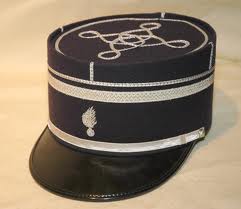
Asoka is the old Dharma Lounge – I think it was somewhat pretentiously called Asoka Son of Dharma for a time – and not much seems to have changed.  The architecture is the same, the décor similar, and the trademark tree still stands in the middle of the lounge; all that was missing was the former kepi-wearing owner, and with it my chance to enquire about the source of the hat.  Damn, I really want one.

Too cool for school

I was there for a function so can’t comment much about the food.  We had platters of chilli-poppers, prawns, calamari, tandoori chicken in pitas, deep fried goat’s cheese, and miniature burgers.  Solid fare, no-one was complaining.  I was quite enchanted however with the delightful drinks menu which includes a long list of cocktails, several with a whiskey base (Mint Julep, Manhattan, Old Fashioned, Sour), a very decent selection of single malts, and unusually for South Africa, a relatively extensive choice of American whiskey: the ubiquitous Jacks of course, but also virtually the entire Buffalo Trace stable, Maker’s Mark, and Woodford Reserve.

I decided to encourage this initiative by opting for a double Maker’s Mark (which had to be repoured after the barman loaded my glass with ice).  This is one of my favourite bourbons, a bourbon for all seasons, and it was delicious as always with its soft, gentle sweet honey palate.  Later, ready for some more pronounced flavours, I switched to Jameson’s Gold Reserve, enjoying the lingering spice and the complex interplay of bourbon, sherry and virgin woods in the whisky.

The impressive bar selection aside, Asoka provides a great ambience in which to comfortably relax and enjoy the golden nectar.  The music is set at just the right volume to promote a vibey atmosphere, but at the same time not inhibit conversation.  Clearly the whole mix must be working, because amongst our fellow patrons were some government power-brokers including Minister of Sport Fikile Mbalula.  Back when he was ANC Youth League President I thought this guy was a prize twat, however my criteria for conferring twatitude have had to be re-evaluated with the emergence of his successor (amandla, Julius, please don’t point the M14’s this way).  I was handing out the mantle far too easily.  By comparison Fikile now seems like a righteous dude.

The new benchmark

I can wholeheartedly recommend Asoka to fellow whisky lovers – just be specific about how you want your whisky served.

Asokas scene-setting tree

Well, the weekend is upon us.  It’ll probably fly by as usual, but let’s remain optimistic.  Until the next time may the dram be with you.