Category Archives: Uncategorized

Royal wedding whisky

There is no manner of business it seems that shies away from exploiting a royal wedding.  Memorable highlights so far are the mixed-up mugs (Harry and Kate), and the “condoms of distinction”, appropriately – in every which sense – purple in colour.

Sheaths for a royal sword

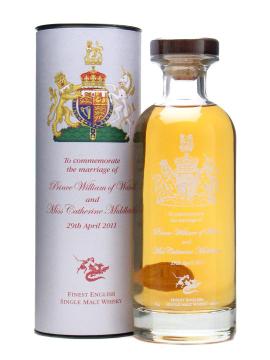
Lone English whisky distiller The English Whisky Co., not wanting to be left out, has clambered onto the bandwagon with gusto, with its William & Kate Commemorative Decanter.   I’m sure other whiskies will follow.  In fact experts predict that the wedding will boost the British economy by some £600 million (I read this on the internet so it must be true).  It’s enough to make a groupie out of even hardened royal cynics like myself…if I were British.  I’m not so as things stand I still don’t really give a toss.

Will & Kate whisky

Anyhow, back to the whisky then.  This bit of news brought the English Whisky Co. onto my radar screen, and, its geographical uniqueness aside, there were a few features of its product offering that piqued my attention.

Firstly, it seems to be overpriced.  I realise that distillers such as this one, Penderyn (Welsh), and I guess many of the Continental distillers, don’t have the economies of scale from which the big boys of whisky benefit, but nonetheless I wonder whether they can sustain these price levels if they hope to be anything other than a niched oddity.  Compare their Chapter 6, a 3yo Malt selling at £35, to an “equivalent” Scotch Single Malt such as Glen Grant’s Major’s Reserve at £20.95.  I might pay for the novelty once, but short of it blowing me away, I doubt that I’d come back for more too often.

Secondly, they’re one of the few distillers that sell new-make and young malt spirit i.e. not yet 3 years old, so not able to qualify as whisky.  This is great, even if only for the education.  It allows you to compare the stuff that comes off the still with its progressively aged counterparts and thereby get some great insight into the influence of the wood.  My concern however is the prominence of the word “whisky” in the brand name, which adorns all their products, whisky or not.  Can this not be considered misleading?  The Scotch Whisky Association recently censured a Panamanian company called “Scottish Spirits” that sells whisky…in a can!  Even though their product does not claim to be Scotch, the SWA has come down on them because of the potential for consumer confusion.  Is this not the same thing?

Quality stuff I'm sure...not

This is by no means a criticism of the English Whisky Co. (like a good Islay malt I like to balance peat with sweet).  If they can command the pricing that they do, and if they’ve managed to slip past the SWA then good luck to them.  Until and if I experience otherwise I’ll also assume that they make great whisky, and I look forward to making its acquaintance (unlikely in South Africa unfortunately).  Most creditably though they’ve brought the lost art of whisky distillation back to England and for that alone they deserve warm regard.

Shackleton whisky replicated

Early readers of this blog may remember the post Ancient Whisky,  which mused on the discovery of the Shackleton whisky.

The whisky has now been analysed and replicated by Whyte & Mackay master blender Richard Paterson, who seems to have done a fine job of it. A representative from Whisky Magazine was at the unveiling and wrote this report.

Paterson had been quoted – when the whisky was first delivered to him for analysis – as saying: “It is an absolute honour to be able to use my experience to analyse this amazing spirit for the benefit of the Trust and the whisky industry”.  There’s no doubt that he deserves plaudits for this remarkable achievement.  I can only imagine the intricacies involved. However I’m struggling at this stage to see the benefits for the wider industry, and I can’t help but feel that W&M’s donation to the Trust doesn’t seem so generous.  The discovery of the whisky, its loan to W&M (which allowed Paterson to do his work), and the massive resultant publicity, from which the imminent sales will benefit to no small measure I’m sure, all derive from the Trust.  5% seems rather measly.  I can’t confess any insight into the accounting but at £100 a pop, I reckon I’m being conservative in assuming that W&M’s unit GP must be about £30.  Why should the Trust’s share be only 16% odd?

Am I being unfair?  Maybe…but the outcome of this whole saga that is most clear to me is that if they sell the 50 000 bottles W&M will haul in a pot load of sterling.  Good luck to them – I’m guess I’m just jealous.

Chwisgi interview

I was privileged today to be interviewed by fellow whiskyphile Jens Wedin.  Jens hails from Sweden, and runs Chwisgi.com, which he calls an “open social whisky community”.  It’s a great platform for whisky lovers to exchange views on all things whisky.

You can see the interview here.

Big Jack

Well, the 1st of April tomfoolery is now past…for another year anyhow. I was easily unmasked – yes, Chivas is still Regal.  E-tailer Master of Malt had better success it seems (amongst the more gullible anyhow) with a story about putting a 105yo whisky on sale at £870k.  The most expensive whisky in the world if it in fact existed would probably taste like a mouthful of sawdust.

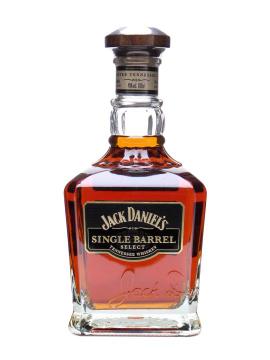
With the silliness over on Friday it was time to get down to more serious duties. My government was turning 35 and we were hosting a G2G, so I had to gather up some decent whiskies to mark the occasion in fitting style. As it happened I had recently been given a bottle of Jack Daniel’s Single Barrel by blogmeister and burgeoning media mogul Seth Rotherham, South Africa’s answer to Silvio Berlusconi (I mean that in the best possible way).  It would do nicely. I might not be able to live the holiday (yet) but I could quaff some Big Jack and pretend.

His brother from another mother

For those of you who don’t know, the typical American whiskey (and whisky in general, including single malts) is bottled from a blending of multiple casks, often of different ages. This is done to ensure flavour consistency from one bottling to the next.  More rarely, as in this case, there are expressions bottled from a single cask. Single casks – or in the American whiskey lexicon single barrels – are special whiskies, considered good enough to bottle as is. They are also vintages by definition, although Big Jack does not claim such. A single cask Scotch is usually a one-off. When another single cask is offered by a brand, it would be as a distinct offering, because it would be a different whisky; since wood is a living thing, each cask is different from another, thus having a varying impact on the whisky within. American whiskeys however appear to operate otherwise. Brands such as Jack, Blanton’s and others, offer a perpetuating single barrel variant, for which it’s not possible to accurately maintain a flavour from one bottling to the next. This is an unusual and interesting proposition – a branded product that changes from one day to the next – and indeed the Big Jack label states: “for unique flavour and character”.

Big Jack’s particular claim to fame is that the barrels are individually and specially selected – so you’re getting the much-loved Old no. 7 product (I believe aged 6 years rather than the usual 4, although in both cases there is no age claim), but the crème de la crème thereof. They’re chosen from what’s called the “Angel’s Roost”, the top of the warehouse, where these barrels are exposed to the widest temperature variations: contracting in the winter, and expanding in the summer to aggressively draw the whisky in and out of the wood, and intensify the impact of maturation.

This makes great marketing copy. However, ageing is a complex endeavour, and things may not be as straightforward.  There is a body of thought which suggests that dunnage warehouses, short buildings in which 3 layers of barrels are stacked one on top of the other, are the optimal places in which to age malt whisky. Why? Because their thick brick or stone walls insulate the whisky from temperature variations. Big Jack is a grain whiskey but nevertheless, this opinion flies in the face of the basis for its existence. I personally don’t think there’s a right and a wrong answer either way. Many elements of this science are not precise, and some of the methods which created the flavours we love today were accidents of history that have subsequently become established practice more through sheer momentum than anything else. Pure pot still Irish whiskey for instance was only created because of a lower tax on unmalted barley.  New experiments mean that conventional wisdom is being challenged and re-evaluated constantly. Take the case of Amrut Indian whisky which is aged at altitude in a hot, dry climate, resulting in 5yo whisky tasting like an 18yo.  There is more than one way to skin a cat as they say, and sometimes things need to be evaluated on their merits rather than according to a particular fixed notion.

The bottom line is that Big Jack is a damn fine whiskey. Soft smoky nose, with an intense foresty freshness…pine rather than oak (?).   It reminded me of my days as a cub-scout building forts in forests on the foothills of the Drakensberg.  Great full mouthfeel. Smooth, balanced woody taste on the palate with traces of candy like-sweetness, perhaps a bit sherbety. Long, lingering finish with similar elements to the palate. It is what it makes itself out to be – an evolved version of its little brother. Thanks Seth, and thanks Dino at Brown Forman. You have my contact details – don’t be shy to send more samples.

Big Jack suited up in a groovy bottle

Breaking news

Queen Elizabeth II today withdrew the royal warrant granted to Chivas Brothers in 1843. By virtue of a special provision in British law guiding the use of these warrants their marquee whisky will now no longer legally have the right to be called Chivas Regal.  A new name has not yet been announced, but industry insiders are speculating that it will be Chivas Gowkin, “gowkin” being an ancient Scottish word with similar meaning to royal or regal.  You read it first at Words on Whisky.

Regal no more?

Ice-balls

You may remember from a previous post that I had ordered an ice-ball mould.  Well, the waiting is over.  It finally arrived.

Made in China of course

The logic behind the ice-ball is that in theory it melts slower than an equivalent sized ice-block, because a sphere with the same volume as a block will have a lesser surface area than that block.  Hence it cools a drink without diluting it as excessively.

The Macallan, makers of great single malt, have recognized this logic and embraced the ice-ball.  Check out this press release from last year:

March 15th 2010

Raising the Bar – The Macallan Introduces the Ice Ball Serve

The ice or water debate has long remained a fiercely contested subject amongst whisky drinkers and The Macallan has thrown its hat into the ring by creating an innovative serving method expressly for those who like their whisky with ice.

Believing the perfect serve to come down to personal preference, The Macallan has pioneered the Ice Ball Serve.  It is the first real move by any whisky brand in the UK to present whisky in an innovative, contemporary fashion and open the doors to a growing adult population that regards ice as an integral part of the spirit-drinking experience.

The Ice Ball Serve is based on the Japanese tradition of serving hand-carved ice with ultra-premium spirits.  The ice ball press instantly creates a flawlessly formed sphere of ice that adds a touch of theatre and sophistication.

The Macallan’s Marketing Assistant, Pat Lee, explains the science part: “The Ice Ball Press was inspired by Japanese cocktail culture where artisans hand-carve ice balls from massive slabs to create an uninterrupted surface that cools spirits quickly and evenly.  The ice ball melts slowly to preserve the integrity of the spirit.  We have updated this process, by developing a copper press that instantly trims a block of ice into a flawless ice ball.  This, combined with our masterful single malt Scotch whisky, is The Macallan Perfect Serve.

“The Macallan’s liquid excellence is continuously defined by its unprecedented elegance and versatility. The ice ball balances these qualities. As global cocktail culture has evolved, ice has become central to the modern-day spirits experience.  With an eye on this trend, we created The Macallan Perfect Serve, to modernise the way single malt can be enjoyed and appeal to a wider range of consumers.”

In essence; The Macallan ice ball serve takes this traditional practice to the ultimate level, with a single perfect sphere of ice, a unique beautiful serve with the benefits of maximum chill with minimum dilution.

Enjoy the perfect ice-ball serve at the following bars and restaurants:

London:

Rules

The Ritz Hotel

Claridges

The Connaught Bar, The Connaught Hotel, London

The Dorchester Hotel, London

Hawksmoor

50 St. James

Milk & Honey

It might have been a better idea to focus this initiative on warmer climes, the blink-and-it’s-gone British summer doesn’t count, but credit to them nonetheless.  Many brand owners’ marketing efforts are so focused on advertising, point of sale, packaging, and whatnot, that product aside there’s sometimes little attention paid to the consumer’s drinking experience.

So, having waited for a while, I was quite excited to ball some ice, and I hastily pressed my mould into service.  I had no Japanese whisky at hand so I called on an Abelour 10yo, knowing it would not let me down.  With the ice-ball in the glass and ready I tossed in whisky and water, let rip with the prescribed 13 and half stirs, and hey presto a mizuwari was born.

The mystical ice-ball

Vigorous but precision stirring required

I’m not an ice man (more a Maverick…sorry couldn’t resist) and yesterday evening wasn’t particularly warm, so this was never going to be my preferred format for drinking, or should I say appreciating, a whisky.  But it is a pleasant enough drink…hey it’s water and ice with a bit of fanfare and a fancy name.

I can’t comment on the efficacy of the ice-ball.  The theory’s appealing, but the difference in degree of dilution is probably quite subtle in practice.  I’ll have to repeat the experiment with two drinks at the same time, one balled one blocked.  I’ll say one thing though, whilst the mould is a great cheap alternative, I wouldn’t mind getting my hands on a Macallan-type ice-ball press.  Check it out here…with some sales patter thrown in.

The problem with brandy

As a lover of whisky I can’t help but take an interest in other fine spirits – I’m a big fan of rum in particular, one of my favourites being Ron Zacapa (pronounced Tha-capa) of Guatemala. Recently however my attention has turned to brandy. Traditionally the mainstay of the local spirits industry, it is currently in crisis. Over the last few years consumers have fled brandy like rats from a sinking ship, finding dry land and refuge in guess what…whisky of course.
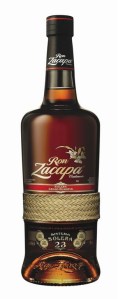
Who’s this guy Ron?

Naturally, the first question being asked is why: alarmed stakeholders have frantically been searching for cause and cure. The broad consensus is that whisky is seen as a better class of drink; in painfully overdone marketing-speak, as more “aspirational”. Coupled with that has come a reduction in the price difference – a result of the vagaries of the global economy and macro-economic policy, about which little can be done at an industry level. Most whisky is imported and the strong rand has somewhat reduced the price advantage previously enjoyed by locally produced brandy. These are the obvious superficial insights, but as was drilled into us when I was reading for my MBA, if you want to get to the real truth ask why 5 times.

So why is whisky perceived as better than brandy? There can be no doubt that the Scotch whisky industry in particular has done a great PR job over the last 20 years. They’ve been assisted by having some great raw material with which to work. Whisky is superb drink. It has endless variety, integrity and complexity. So perhaps the solution lies in a brandy make-over. I’m not a brandy expert. I don’t have a market research budget.  I’m not up to date with the latest figures. I’m sure great minds have been huddling around conference tables for a while now giving this issue a lot of thought. So I’m entirely allowing for the fact that my analysis is simplistic. Sometimes however things can really be quite simple, and my simple conclusion is that try as you might you just can’t polish a turd.

That may seem like a harsh statement. After all, on the face of it, the quality of South African brandy has a great reputation, with our products consistently winning awards at all the major spirits competitions world-wide. Van Ryn, Oude Molen, and Joseph Barry, to name but three, have flown the flag and flown it high. But a chain is only as strong as its weakest link and the weak link in this case happens to be the foundation upon which the entire edifice is built. It’s all very well having a champion in your army but he’s not going to win you the war. The guts of this industry are the mass brands – the Klipdrifts, Richelieus, and Wellingtons. They’re the ones responsible for taking the fight to the whisky enemy…and that’s where the problem lies, that’s where the turd is lurking.
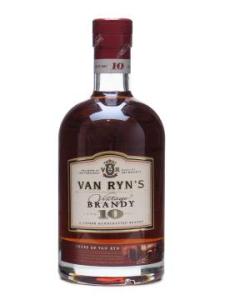
Great brandy. Is it really all 10 years old though?

People think whisky’s better than brandy because, deep down in its DNA, once the smoke has dispersed and the mirrors have been cleared away, it is better. Let me explain myself, starting with an excerpt from the regulations governing the definition of brandy:

13. Requirements for brandy [7 (1) (b); 27 (1) (a) and (d)] (1) Brandy shall consist of a mixture of not less than 30 per cent, calculated on the basis of absolute alcohol, pot still brandy referred to in regulation 12 to which no grape spirit, wine spirit, spirit or a mixture thereof has been added in terms of regulation 12(2), and not more than 70 per cent, calculated on the basis of absolute alcohol

– (a) wine spirit distilled from the fermented juice of the product of the vine to an alcohol content of at least 60 per cent, which was approved by the board and certified by the board as a spirit produced exclusively from the fermented juice of the product of the vine;

or (b) a spirit which – (i) has been distilled from fermented sugar exclusively obtained from the pulp that remains after the juice has been pressed from grapes, with or without addition of water; (ii) has been distilled to an alcohol content of at least 95 per cent; and (iii) has been approved by the board and been certified by the board as a spirit that has been manufactured exclusively from the product of the vine;

or (c) a mixture of wine spirit referred to in paragraph (a), and spirit referred to in paragraph (b).

Regulation 12, which defines pot still brandy, stipulates that it should be aged for a minimum of 3 years in oak casks. It seems that there is no maturation requirement for the rest. This means that only 30% of the liquor that we drink in popular brands needs to be 3 years old or more. 70% can be new make, non-matured vinous spirits*, sometimes referred to within the industry as “A” spirit almost as if it’s not worth a real name. Compare that to whisky where the youngest component, whatever fraction that might be, MUST be a minimum of 3 years old. Age might not be everything, but as I maintained in the post “Respect for Elders” (https://wordsonwhisky.wordpress.com/2011/02/25/respect-for-elders/) it matters, and it matters greatly. It is universally acknowledged as the single most important element contributing to flavour.
Needs more time in a cask

This situation probably arose because at some point in time stakeholders in the brandy industry had lobbied the government to set the bar low, and hand them a decisive cost advantage. Now, in my opinion, it’s coming back to bite them in the arse. There have also been short-cuts taken with the definition of pot still, although there perhaps it’s less of a factor. Regulation 12 goes on to say that a pot still brandy may contain as much as 10% vinous spirits. It’s not clear whether this 10% needs to be matured, but I wouldn’t be surprised if the answer was a resolute no.

Hmm…enough said

In an era where consumers are becoming increasingly curious about their consumption, and discriminating as a result, these are debilitating disadvantages with which to be shackled. It’s going to take great vision and courage on the part of the industry to correct the problem, and good luck to them. No-one wants to see a home-grown industry fail.  In the meantime however we’ll be awash in whisky – more brands and greater variety in larger volume. Now there’s an uplifting sentiment with which to start the week. May the dram be with you!

*Spirit is made from “product of the vine” in column stills i.e. a blending spirit without the character of brandy, often distilled close to neutrality.

For further thoughts on the subject read this: http://wordsonwhisky.com/2013/09/20/beleaguered-brandy/

The world’s greatest whisky collection

I mentioned in the post In Memorium that Lesley Zulberg’s magnificent collection should have been exhibited rather than languish as it did, lost amidst the pith of the Big Naartjie.  Whilst he was amassing his specimens locally, on the other side of the Atlantic a Brazilian by the name of Claive (Clive but with amended spelling so that Brazilians don’t pronounce it “Cleeve”) Vidiz was putting together what would become the world’s largest whisky collection.  Housed for many years in a private museum – in fact a remodelled wing of the man’s home in Sao Paulo – it was bought lock stock and cask by Diageo in 2008 for an undisclosed sum.

Claive Vidiz

Liquor giant Diageo is not typically known for its benevolence, however in what has been a grand gesture to both the industry and to whisky lovers, it has (for the foreseeable future) bequeathed the collection, now called “The Diageo Claive Vidiz Scotch Whisky Collection, to the Scotch Whisky Experience, an exposition located on the Royal Mile in Edinburgh. The collection is thus being exhibited and is accessible to the general public in the heart of the Scottish HQ, a more appropriate scenario one could not hope to imagine.

The Collection in its new home

I decided to contact the SWE to see if I could wangle from them a catalogue of the collection, previously unpublished.  Where the BBC and the Scotman had failed perhaps Wordsonwhisky would prevail…haha.  The weight of my journalistic influence unfortunately leaves much to be desired – I was politely rebuffed, but it appears with good reason.  The catalogue is still being compiled; researching 3000 plus whiskies is a seemingly lengthy task.  Angela Keir, the expo’s Deputy General Manager, was nonetheless very forthcoming in response to my enquiry, and she provided me with the following information about some of the more interesting and obscure bottles:

James Buchanan’s:  The Diageo Archive Team has dated this bottle back to 1897.  It is the oldest bottle in the Collection.

Strathmill: To celebrate the distillery’s 100th anniversary, Strathmill produced only 100 bottles of this particular expression.  These bottles were gifted to sitting Presidents, the Queen and Claive Vidiz.  Claive’s bottle was number 69.

Jubilee Collection: This is the full collection bottled by Gordon & MacPhail in 1977 to commemorate the Queen’s Silver Jubilee (25yrs).  It is very rare to have the complete collection.

Dewar’s Centennial Flagon: In 1986 Dewar’s produced their “Centennial Flagon”, a replica ceramic decanter to celebrate the historic brand of whisky.  Each person gifted a flagon was asked to record their thoughts about Scotch Whisky.  These records were then stored to a time capsule which was buried in the Dewar’s gardens in Perth.

I was a somewhat concerned that collection would become static, and potentially overhauled at some point in the future, but my fears were unfounded.  There is a firm plan in place to grow the collection consistently over time.  The SWE’s stakeholders, which include all the major Scotch whisky distillers, will on an annual basis set aside samples of their new bottlings to be added to the collection.  Imagine being included on those mailing lists!  One can only dream.

Anyhow if you find yourselves in Edinburgh, be sure to bear witness to Brazil’s greatest contribution to Scotch whisky.  In the meantime, have a great weekend and may the dram be with you.

Glenrothes 1975

I once met FW de Klerk, Nobel Prize winner and maker of history, the man who held the destiny of a nation in his hands and changed it for the immeasurable good.  It was an awe-inspiring moment.  I’m overstating the situation somewhat but I felt a bit of that same awe when I sat down opposite a bottle of the Glenrothes whisky 1975 vintage.  Only 3708 bottles were released, making it one of the smallest vintage runs from a distillery where already only a small fraction of production ever sees the light of day as single malt.  Very little remains – if I’m not mistaken there are less than 20 bottles available in SA.  So this is a whisky not lacking in gravitas.  If I were to meet FW again, this would be a most appropriate drink to offer him.

A quick aside: a whisky, even a single malt, is usually a “blend” of products of different ages.  This is done to maintain flavour consistency from bottling to bottling.  A whisky claiming vintage status was all distilled and put in wood in the same year – the one specified in the label – and then later also bottled at the same time (although I suppose you could get two vintages from the same year bottled on different occasions).  In theory a vintage is individually good enough to be offered as a stand-alone bottling, and would typically have a distinct flavour profile to the standard bottling.

The Glenrothes 1975 was bottled in 2006, making it a whopping 31 years old.  My flavour-specialist mate and I licked our lips as we contemplated getting stuck in.   The nose was spicy, with an accompanying but subservient sweetness, hinting at what was to come.  We detected cinnamon, cloves and ginger in the aroma.  The palate was full and rich, with evidence of Christmas cake, vanilla, toffee, nut brittle and some restrained fruit.    The spice was thinner that was suggested by the nose, and perhaps the only detractor was an overstated woodiness.  I make this last point with an important caveat – I should entirely own up to the fact that I’m a pleb with limited experience tasting 30yo+ whiskies.  The finish yielded some precision on the fruit – dried pears, stewed apple, and maybe some peach.  Closing our eyes as the whisky lingered on our palates we called up images of baked apple pie dusted with cinnamon, and après-ski drinks around a roaring fire in the Swiss Alps.  Most enjoyable!

Not a drop left

At somewhere in excess of R3k per bottle this is not an everyday whisky.  I’ll endorse the advice given by Glenrothes: “If it’s to be shared, choose carefully”.

Chasing the dragon

Whisky is a complex beast.  It can’t be compared to most other consumer products.  There is a depth to it that sometimes seems unplumbable.  I guess that’s a big part of the appeal – no matter how much you learn, there’s always another mountain to climb and another river to cross…it’s a lifelong adventure, a continuing mystery, and I for one love it.

The most exciting but also intimidating part of the whisky journey is the exploring of flavour.  Flavour refers to aroma and taste, and fully engaging with it can initially be off-putting.  Certainly that was my experience.  Just one look at an anorak swilling a nosing glass, and spouting forth with the cumulative pomposity of a group of old boys at a Hilton reunion is enough to make you wince.   As fascinating as an underlying aroma of sandalwood incense, west coast heather, and figs (Anatolian mind you, not the common variety) may well be, at first sight it all seems a bit pretentious and intangible.

Yes, the language and technical minutiae often used to describe flavour can be an obstacle…but flavour is quite simply the single most important attribute of a whisky.  It is the raison d’être.  Once you’ve acquired a liking for whisky and become familiar with its basic defining elements, such as smoke in Scotch, the natural next step is to plunge in and explore further.  Why do you like one whisky more than another?  Why does this whisky pair with that meal, but not another?  Why does this whisky work as an aperitif but not as a digestif?  The answers lie in understanding flavour, and with some practice and a bit of imagination, it is something that is easily understood.

The trick in my opinion is perspective.  Your nose and palate interpret flavour in an individually specific manner.  Take a look at these tasting notes for the Glenfiddich 15yo Solera Reserve by two of the world’s leading whisky writers and tasting experts:

Michael Jackson

Nose:  Chocolate, toast and a hint of peat.

Palate: Smooth, silky, white chocolate. Pears-in-cream. Cardamom.

Finish: Cream. Hint of ginger.

Comment: Elegant. Well-balanced to the point of suavity.

Jim Murray

Nose:  Honey with hints of wood and vanilla, complex spice and fresh fruit.

Palate: Honey again, perfectly balanced by delicate spice and Glenfiddich maltiness.

Finish: Medium length, with sherry notes and spiciness.

Comment:  The sweetness is effortlessly balanced by drier oakiness.

They are clearly different.  The basic direction is similar, but there is no single right answer.  Whilst there is a theory and certain parameters to flavour (more on this some other time), at the end of the day you’re answerable only to one person.  It’s sometimes worth the reminder that the whole endeavour is undertaken only to further your own satisfaction.  It’s not a test – you drink whisky to enjoy it.  And once you’ve started to master the identification of flavours in whisky, something that can certainly be done on the hoof, there’s no limit to the variety to be explored, and the enjoyment to be savoured.  There’s always another high just round the corner.

It was in this spirit that I approached the tasting of a Glenrothes 1975 vintage over the weekend.  I also invited a mate, who happens to be the local head honcho of a French flavour company, thinking that his more educated palate would make an interesting foil to my instinctiveness.  Drop by tomorrow for our ponderings on this fine and almost extinct whisky.