Category Archives: Uncategorized

Win with Glenfiddich!

The excitement of Whisky Live is upon us again, and in spirit appropriate of the whisky season my friends (and yours) at Glenfiddich have put together a special surprise for all you whisky-loving readers of Words on Whisky.   Here it goes.

Win a bottle of Glenfiddich 12 Year Old Single Malt Scotch Whisky, the world’s leading single malt Scotch Whisky, in the lead up to the FNB Whisky Live Festival.

Whether you’re a first-time taster, already a passionate connoisseur, or enthusiastic to learn, see, and taste more, visit the Glenfiddich gold stand at the FNB Whisky Live Festival to nose and taste a dram of the core range of Glenfiddich 12, 15 and 18 Year Old under the expert guidance of the Glenfiddich Brand Ambassador team.

Mmm….

Send your name and contact details to info@whisky.co.za to stand a chance to win a bottle of Glenfiddich 12 Year Old Single Malt Scotch Whisky valued at R320.00.

The FNB Whisky Live Festival takes place at the Cape Town Convention Centre from 3 – 5 October and is open daily from 18:00 – 22:00.  Tickets are available online at www.whiskylivefestival.co.za.  See you there and may the dram be with you!

PS – Please note that the competition is only open to residents of South Africa, or to those prepared to travel here to come and collect their prize :).  Entries must be received by midnight 5 October.

Winter whisky specials

This message went out to the WHISKYdotcoza database today.  Ignore if you’re not interested in a commercial punt.

Winter is upon us.  If you’re anything like me then you’re probably enjoying a dram or three to fight back the cold.  In this regard WHISKYdotcoza is offering a little bit of winter cheer.

We’ve teamed up with Macallan and Highland Park to bring you these special offers:

These promotions will be open for the next two months, but be warned that stock is limited.  It’s strictly first-come, first served.

Note too that WHISKYdotcoza has secured some stock of the Glenfiddich Age of Discovery Madeira Cask 19YO.  The South African allocation is limited, so if this is something that strikes your fancy don’t delay in getting yourself a bottle.  The numbers are too small to place the product on the site so please contact us at info@whisky.co.za to order.  Price is R1099.

We’ve also been informed by the local suppliers of Laphroaig that there’s a global shortage of the 10YO.  It’s currently out of stock – there’ll be limited stock arriving next month and then no further availability for the rest of the year.  Same deal as above – if this is your bag then get an advance order in to us at soonest convenience.

Until next time – keep well and may the dram be with you!

A lightness of winning

The gilded honours of spirits awards

First published in Prestige Magazine (July 2012 edition).
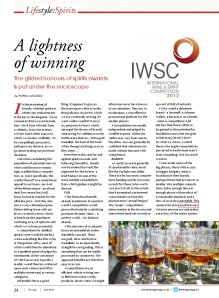
As it appeared – page 1.

As it appeared – page 2.

In the marketing of brands, whether spirits or otherwise, endorsement is the key to the kingdom.  We as consumers find a recommendation – be it from a friend, from a celebrity, from the masses, or from some other source to which we ascribe credibility – to be compellingly persuasive, perhaps even decisive, as we go about making our purchase decisions.  And when considering the population of potential sources what could be more reassuringly credible than a competition, or, more specifically, the results thereof?  In a sense these appeal to our baser, survival-of-the-fittest nature – an all-out duel, foe versus foe (well…foes), locked in combat for the ultimate prize – but they also serve a very rational purpose.  Before letting loose with our lucre we need to know which is best from the sometimes confusing array of options with which we’ve been presented.

A competition for distilled spirits (wine would be similar) works something like this: a fee is charged per entry, each of which would then be submitted to a qualified panel of judges for assessment, at the conclusion of which an award, typically a medal, would then be conferred upon each winner (and often multiple runners-up) in various categories.  Ostensibly this is a good thing.  It appears to give us the basis upon which to make that judicious choice for which we are continually striving.  If I want vodka wouldn’t it serve my purposes to know which – from amongst the dozens of brands clamouring for validation on the bottle-store shelves – is the gold medallist, the best of the best?  When though are things ever as they seem…?

Here then is the case for and against spirits awards, and, following thereafter, should one be inclined towards the argument for the former, a brief feature on one of the more notable competitions from which guidance might be derived.

For

–        The theoretical benefit already mentioned.  In a perfect world a competition would give us the basis for a satisfying purchase decision.  Hmm…a perfect world…I’m dubious already.

–        The outcome of a competition is an immediately understandable concept.  There are gold, silver and bronze medallists, or an equivalently straightforward grading.  This is something that can be readily processed by consumers.  The apparent benefits are therefore easy to access.

–        Competitions are an efficient vehicle to bring new or little-known but worthy products, about which we might otherwise never have known, to our attention.  They are, in moderation, a cost-effective promotional platform for the smaller players.

–        Competitions are usually independent and judged by credible experts.  Whilst the calibre may vary from one to the other, one can generally be confident that selections are made without bias and with competence.


Against

–        A spirits award is generally of questionable value, much like the Zimbabwean dollar.  There are far too many competitions handing out far too many awards for these to be worth very much at all, to the extent that it prompted a prominent commentator to term the phenomenon “medal fatigue”.  The “major” competitions alone number in the dozens and some these hand out awards to upward of 80% of entrants.

–        Why would a dominant brand – a Smirnoff, a Johnnie Walker, a Bacardi or an Absolut – enter a competition?  Add the fact that there’s little to be gained to the potential for humiliation and what one gets is that many (most?) don’t.  So what’s a victory worth if those who might reasonably be perceived to be the best aren’t even competing?  Not too much I reckon.

–        Conversely some of the big players, those with access to bigger budgets, enter a truckload of their brands, perhaps those that are newer or smaller, into multiple competitions.  Enter enough times in enough places with product of a reasonable standard, and a slew of awards is inevitable.  This renders the more meritorious victories anonymous and makes a mockery of the entire system.

–        Taste is subjective, and there are extrinsic, emotive factors which play a significant role in satisfaction.  Competitions are unhelpful in this regard and may even be counter-productive.

The International Wine and Spirits Competition (IWSC)

If there was claim to be the most prestigious of spirits competitions, the IWSC has it secured.  It would in all likelihood be the gold medallist in a competition for competitions.   Established in 1969, and operating continuously since, the competition regularly draws entries from some 80 countries worldwide.  It is truly as competitive a competition as one could hope to find.

A competition of this nature is only as a good as the people involved, and this is where the IWSC really shows its class.  The list of past presidents, extensive because the incumbent changes on an annual basis, makes for particularly interesting reading, with eminence clearly being a necessary criterion.  South Africa’s sole representative was no less illustrious a person than Anton Rupert.  The fact that he associated himself with the Competition speaks volumes.  I’d say though that what really matters is the quality of the judging, the foundation for a competition’s credibility, and to this end the IWSC is able to call on an impressive breadth and depth of expertise.  Entries are evaluated by panels drawn from a pool of 250 specialists from around the world.  Our own Dave Hughes, probably the country’s more prominent liquor taster (and expert in general), is an IWSC judge.  Five large platoons comprising people of his calibre is mind-boggling indeed!

Underpinning the impressive personnel is a rigorous process and an impeccable infrastructure.   The Competition itself is divided into two parts occurring over a period of six months: it involves firstly a blind tasting and secondly a precise technical analysis conducted by an independent laboratory.  The tastings take place on the Competition’s own, dedicated premises, which includes temperature controlled cellars, purpose-built tasting rooms, and storage facilities and cellaring for some 30 000 bottles.  Nothing is left to chance – judges reporting on the process have commented on the preponderance of signage warning against smoking and the wearing of fragrance (so as not to interfere with the ability to nose and taste).  It is tasting at its most professional.

I guess what I’m saying is that if one was to put any credence in an award then one should probably make sure that it’s from the IWSC.


Jill Daniel’s?

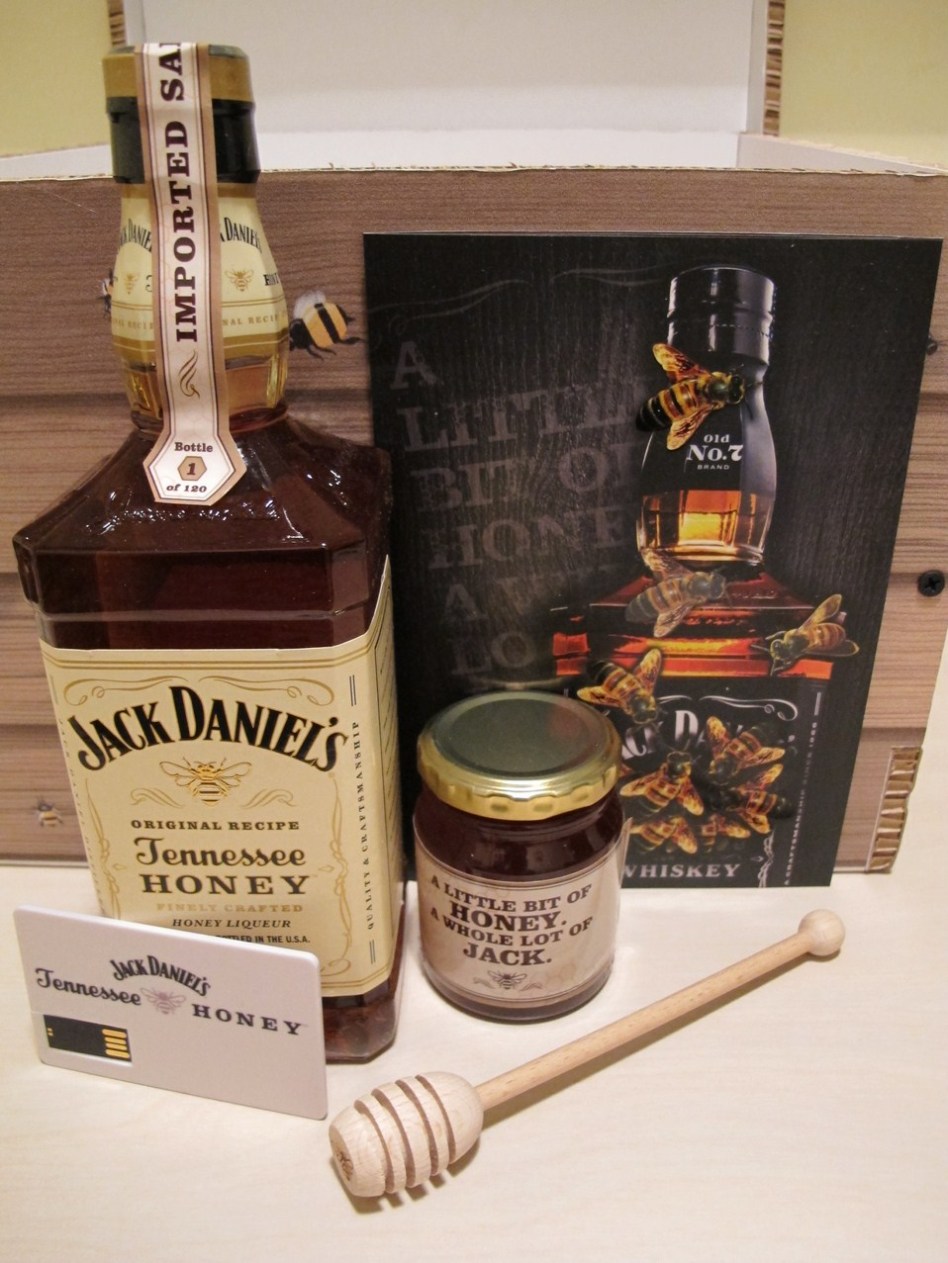
I was surprised this week by the arrival of a media pack for the launch of “Tennessee Honey”, a new whiskey liqueur – surprised because I wasn’t expecting the package and surprised because it’s an unexpected product. Actually I’m probably overstating the situation on both counts. I had heard about the global launch sometime last year, so I was aware of the product, and the marketing dude for this brand had informed me a few months ago that he’d be sending me a package. However there’s been a lot of whisky under the bridge since then so let’s just say that I was nonetheless mildly taken aback.

Image

The reason for my second source of surprise is that this drink bears the Jack Daniel’s name, and is packaged in the same square-jawed, iconic bottle. Jack is a masculine brand – a tobacco-chewing, chest pounding man’s brand. I wrote this sometime last year for my friends at Mojodojo:

“We struggle with availability of American whiskeys here in SA, but you can always count on Jack. It’s not going to blow you away with its complexity but it’s rugged and adaptable – sip it, shoot it, mix it, cocktail-ise it, it’s all good. A live fast, die young, rock star of a whiskey.”

You might also remember my review of Jack Daniel’s Single Barrel.

So how then did a liqueur that seems intended for women (and guys who like sweet drinks) get into this locker room? Al and Laura Reis (of “22 Immutable Laws of Branding” fame) were clearly not consulted. And this from a brand that has built its incredible strength on the back of a tightly focused consumer proposition. The temptation to stake a claim in new territories must be powerful indeed…but I’ll put my marketing strategy reservations to one side for now.  In terms of execution, if the pack is anything by which to go, these guys clearly don’t need any advice (or very little).

It’s high quality (without being excessive or overblown), and it’s relevant, evocative and informative. Check it out for yourselves.

Image

Image

The only thing that rung false was a label declaring my bottle to be number 1 of 120. I’m not that special, so was this just the luck of the draw? Turns out everyone else also received bottle numero uno. Either this was a concession to practicality (it’s easier to print identical labels) or it was, certainly in this Twitter era, an ill-conceived PR gimmick. We’ll forgive them because the overall effort is outstanding.

Now, before I’m labelled a fraud, I need to make a confession: I haven’t yet tasted the drink. I only received my pack yesterday and I’m currently writing this somewhere above the Horn of Africa, so I didn’t get the opportunity to crack the seal. It’s probably going to be lost on me anyhow – I’m not a fan of liqueurs, and my Spiced Gold days are behind me. I have no doubt however that it’s damn good (although I’ll get my wife to verify). These guys don’t often create new products, a fact which they point out at great pains, so you can be sure that when they do it would have been expertly concocted.

Enjoy the week ahead. May the dram bee (☺) with you!

A night of big sherry

Last week I scrounged a back-door invitation to a GlenDronach tasting.  It was hosted by the Bascule, and after I’d arrived it gradually dawned on me that I had kind-of gate-crashed a get-together of their whisky club.  I felt bad about it, but sometimes these things need to be done in pursuit of a higher purpose.

It turned out to be well worth the momentary embarrassment.  During a tasting that was expertly led by the amicable, Scottish-accented (which always lends a certain authenticity) David Wyllie, we were served a sextet of exquisite drams from a stable renowned for their sherried whiskies.   I’m a big fan of sherry-casked whisky – you could say that I’m the sherry equivalent of a peat-freak – so this was quite a treat, and also the motivation for my dubious presence at the event.

We tasted the 12, 15 and 18 YO’s from the core range, a 14YO finished in Sauternes casks, a 1992 Single Cask bottled exclusively for the South African market, and, last but not least, a whisky about which we were asked not to publicise details.  This was a special bottling, supposedly not authorised for public consumption.   It’s widely known that a whisky lover relishes nothing more than the opportunity to taste something exclusive and uncommon, so I’m pretty sure that the GlenDronach guys were blowing a bit of smoke up our arses – but I appreciated the sentiment and the whisky regardless.

Interestingly the 14YO, which is sadly not available in SA, was made from a stock of virgin-casked whisky (European oak) which was then re-racked into a variety of casks for finishing.  I found this Saturnes version interesting if somewhat overly woody.  Taste can be suggestible though and I wonder if I would have come to this same conclusion had I not known its provenance.  I suggest that you try it if you get the chance.  Virgin casks are blended into bottlings occasionally, although perhaps with increasing regularity in recent years, but whisky which is made primarily from virgin casks is exceedingly rare.  In fact this style is probably limited to the few available organic whiskies.

Finished virgins.

Amongst the core range the 15YO stood out, at least for me – the signature sherry flavours were offset by the freshness and vibrancy of a pine forest.  It also has a spectacular nose which drew oohs and aahs from the audience, myself included.  The other whiskies were similarly impressive – only enhancing my affinity for this distillery and its creations.

Corker!

I was struck by a final observation before heading home, which reinforced to me why I’m passionate about whisky rather than other potential candidates – i.e. why I’m not spending my time writing about chocolates, or teas, or bicycles, or somesuch.  There is artistry and skill required for all of these and hundreds of others, but whisky has a certain uncommon magic.  The 1992 and the mystery bottle were both from Oloroso casks, probably sourced from the same bodega.  The latter was significantly older.  And yet the 1992 was considerably darker and its sherry flavours more pronounced.  In fact the mystery whisky has citrus notes, which are unusual in sherry casks.  This is the enigma of wood.  It contributes a visceral organicity to whisky which sets it apart from other industrial production, and gives it the constant ability to surprise and to astound.

Father’s Day 2012

The below went out to the WHISKYdotcoza database today.  Please feel free to partake if it’s of interest.

Father’s Day is nearly upon us.  This year it takes place on June 17.  It’s an annual opportunity to specially celebrate one of the most important people in our lives.  My own father kindled my love of whisky, and I can’t think of a better gift for whisky-loving dads than a fine bottle of the golden nectar.

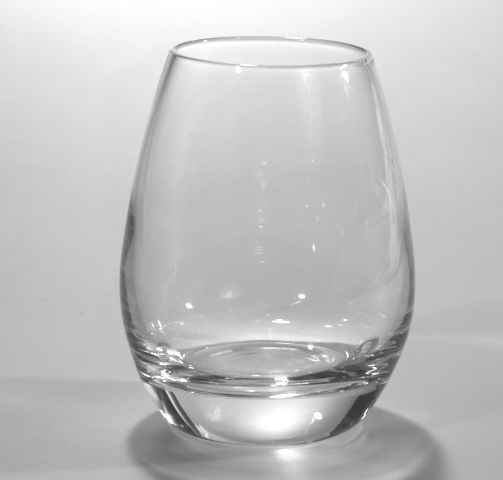
This year, for a very limited time (the offer expires at 08h00 on the morning of Wednesday 13 June), WHISKYdotcoza is offering a complimentary set of six specialist glasses (see below) with every bottle of Michel Couvreur whisky.

Epic glasses!

These are the glasses that I use to drink my whisky – they’re epic glasses for epic whisky.  Note though that stocks are limited, and will be allocated on a first come, first served basis.  However, if you miss out on the glasses, we’ll provide you with a complimentary gift bag and card – there’ll be a little extra for all fathers on this special occasion.

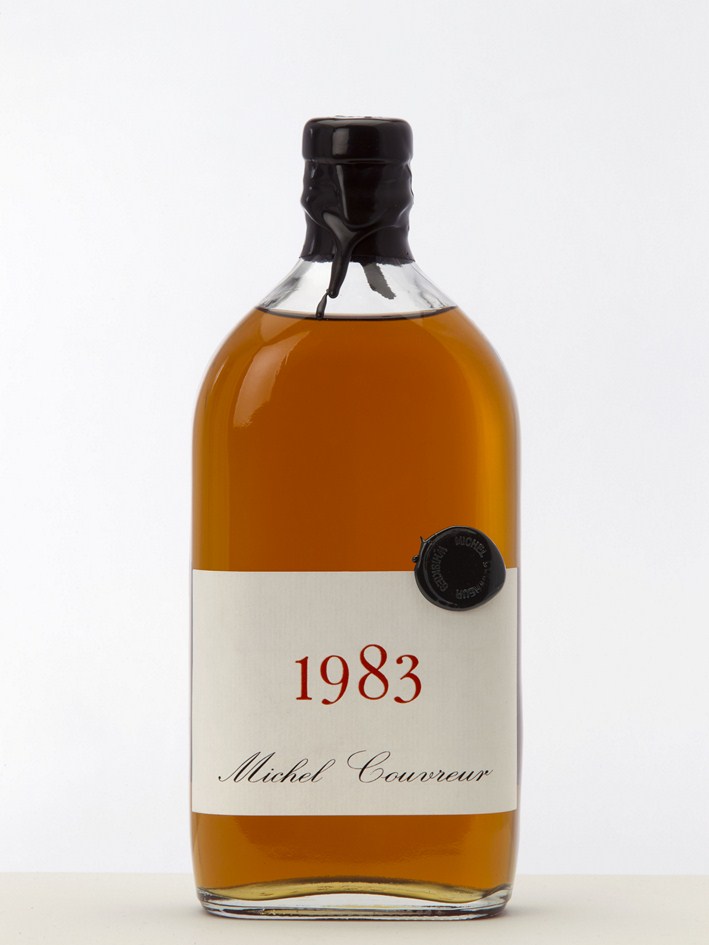
Michel Couvreur is a French whisky craftsman of long-standing.  Read about him and his whiskies here.  We offer his Overaged Malt, and his Special Vatting on our site, but we’ve also secured highly limited quantities (because that’s all that was available) of his super-premium products, about which you can contact us directly (on info@whisky.co.za) .  The unique (and I mean unique) 1983 might be a great option for the more patient dads, who’re willing to wait whilst we arrange an individual, customised bottling.

We wish you and your dads a wonderful Father’s Day.  May the dram be with you!

12YO blended Scotch preview

Whisky – if you’ll excuse this statement of the obvious – has been premiumising steadily in recent years.  New, expensive, lavishly packaged variants are being introduced on a weekly basis.  Older, better, more!  It’s exciting but also a little bit intimidating.  The bar is being set higher and higher, with direct impact on our daily lives.  As an example – it no longer seems enough to offer one’s guests the regular stuff.  Perhaps this is just my peculiar point of view, but I suspect that it rings true for many of us.  A 12YO blend seems to be the new minimum standard.

For this reason I’m embarking on a review of the major 12YO blended Scotches available on the South African market.  If this is the new game then I reckon someone should be carefully checking out the players and sizing them up against each other.

I’m kicking off the review with a tasting – for which I’ve enlisted some of Cape Town’s whisky luminaries to assist.  Marsh Middleton, Bernard Gutman, and Hector MacBeth will be joining me at the Bascule tonight to sample the following whiskies:

Johnnie Walker Black Label

Chivas Regal

Ballantine’s 12YO

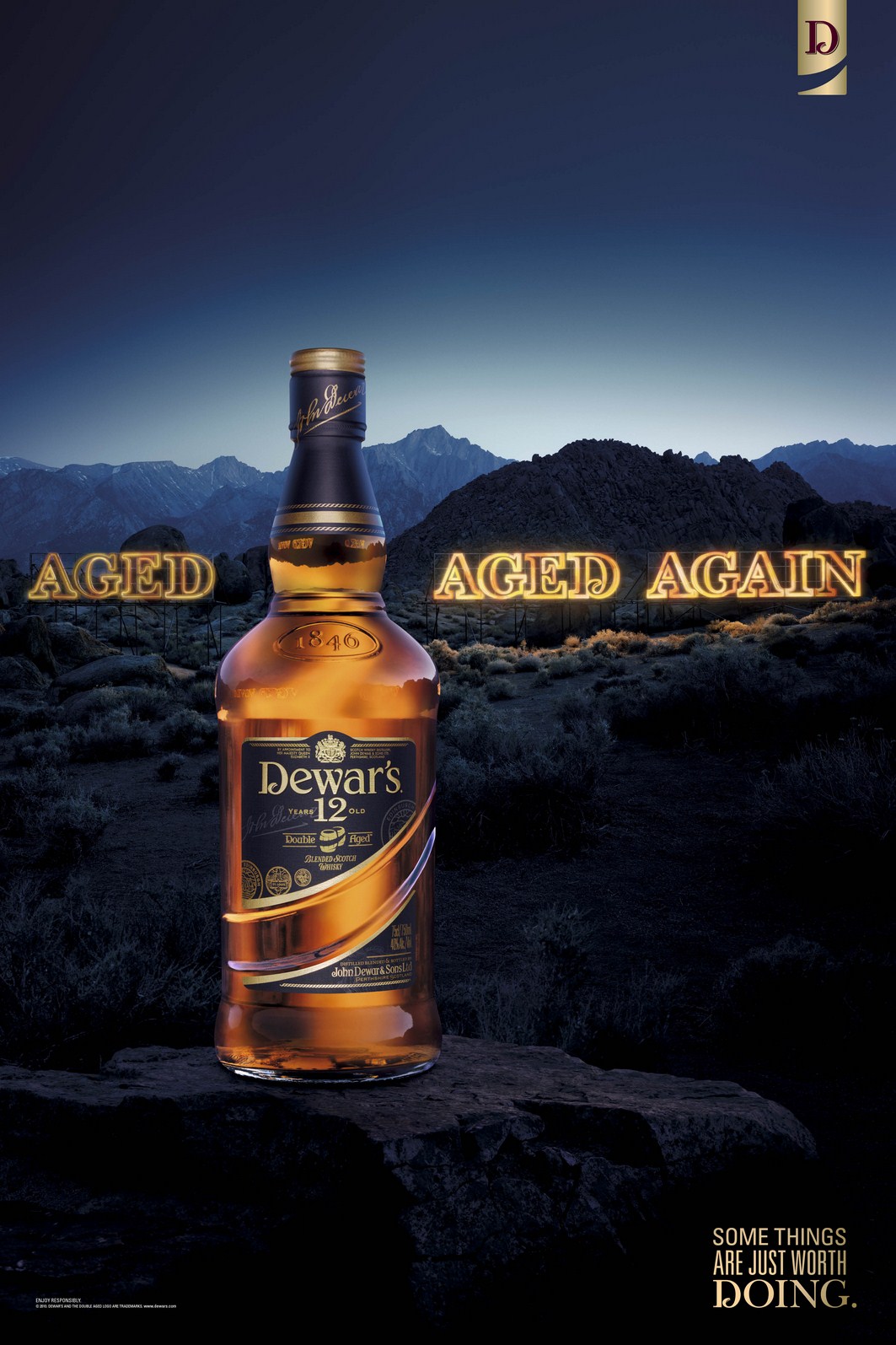
Dewar’s 12YO

J&B Jet

Grant’s 12YO

One of the whiskies we’ll be tasting.

If you happen to be in the area please join us for a dram and a chat.  There’s nothing better than whisky and good company – generally but particularly on a miserable, stormy day like this one.

The review will be published in the September issue of Prestige Magazine, and then on this blog later in September.

May the dram be with you!

The world’s first truly unique whisky…?

In my previous post I indicated that my next post (i.e. this post) would explore the subject of chillfiltration.  I’ve subsequently decided to hijack the topic for my whisky column in the May edition of Prestige Magazine.  It’ll be re-published here in a few months’ time.  Apologies.

You may remember from this post that a friend and I import an artisanal, boutique whisky into the country.  Be warned then that the information that follows is not critical or independent – in fact it’s a rehashed press release for the latest offering from French whisky guru Michel Couvreur.  You should find it interesting nonetheless.  The guys from GlenDronach did something loosely similar at last year’s Whisky Festival, but I think I’m right in saying that this is highly unusual.  Let me know if you’ve heard of any other instances.

What is a unique whisky?

A single malt is unique.  This style of whisky can only be produced at one distillery.  And yet year-on-year each bottling is pretty much the same.  A vintage whisky is unique.  It can only be made from liquid distilled and put in wood at the same time.  However there is no effective limit to how much of it can be churned out.  A single cask is unique.  All of this whisky must come out of a single cask.  Typically though a cask can produce up to 800 odd bottles of the same whisky.

Clearly then “unique” – in conjunction with whisky – is a word to be used with some circumspection.

Michel Couvreur has launched one of world’s only truly unique whiskies:  the 1983 vintage single cask…which is individually bottled on request.  Every bottle of the 1983 will be inscribed with the name of the purchaser and with the date and time of bottling.  This individual bottling process means that each and every bottle will spend a different period of time in wood, and consequently therefore will be a different and unique whisky!

Unique, uniquer, uniquest.

This 29 year-old malt is the ideal gift for the discriminating person who has it all, especially with Father’s Day approaching. The unique and personalized 1983 would without a doubt amplify any celebration, and enhance even the most eminent collection.

Michel Couvreur’s range of rare whiskies was officially launched in South Africa last year to critical acclaim.  Couvreur is a whisky artisan of long-standing, based in Burgundy in France, and he enjoys a stellar reputation for his highly cultivated maturation process, in which he employs individually selected Solera sherry casks.  He and his small team are the remnants of an almost-forgotten golden age, when craftsmanship trumped mass production.  He has been honoured in the press with the moniker “Last of the Mohicans”.

Only 20 bottles of the exclusive 1983 have been allotted to South Africa, and they are available at a unit cost of R4999.  Should you be interested in securing a bottle please contact us at info@whisky.co.za

And if you have this type of money to spend on whisky…I can only salute you.  It’s inspirational.  May the dram be with you!

New whiskies from the mouth of the river

An Islay whisky made from unpeated malt?   In the context of single malt whisky this is a stroke of positioning genius.  The whisky is Bunnahabhain of course, and it has been as intrinsically and intelligently set apart as could be imagined.   I don’t know whether this orchestration was deliberate or a fluke of circumstance, but as a student of marketing I find it quite beautiful to behold.  It would come as no surprise then if I were to reveal that I have always had a predisposed affinity for Bunna.  I sought it out since I first became aware of it, and I quickly came to the conclusion that it was damned good.  Now, much to the delight of all Bunna fans, it has ostensibly become even better.  Last week, at an elegant lunch held at Five Flies restaurant, the brand officially launched its new range of unchillfiltered whiskies in South Africa.

Picture perfect setting

A point of order quickly:  Bunnahabhain is pronounced Bũnna-ha-venn.   You might well have known that the gaelic bh is a phonetic v, but were you aware of the nasal u?  I wasn’t.  You live you learn, and if you can do the learning whilst eating good food and sipping great whisky…well that’s just a bonus.

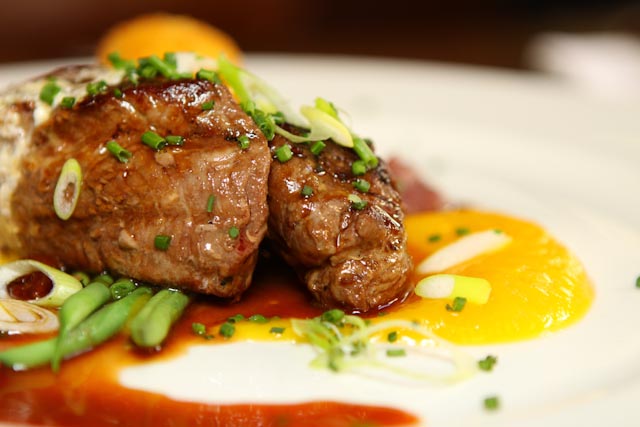
Bunna chow!

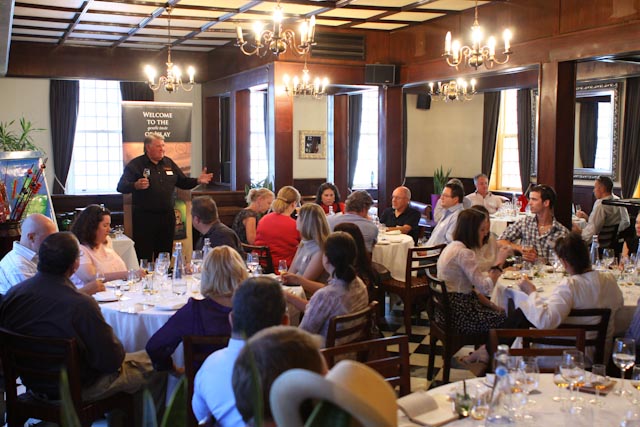
It’s been my impression that whisky events have increasingly tended to be diluted by all sorts of distractions.   It’s understandable – there’s a lot of competition for people’s short attention spans – but it can all become a bit tiresome at times.  This particular function was a refreshing return to the basics, played out with gravitas.  The focus was kept firmly where it should be – on the whiskies, no gimmickry required.  We were hosted by Brian Glass and Pierre Meintjes:  two of the most experienced whisky men in the country, boasting between them some 75 years in the business.  Pierre is in fact known as “Mr. Whisky” in local circles so we could not have hoped for a more credible and authoritative presenter to conduct our tasting.  If you’re South African and interested in whisky you’d do well to attend one of Pierre’s events and partake of of his abundant knowledge.

Pierre holding court

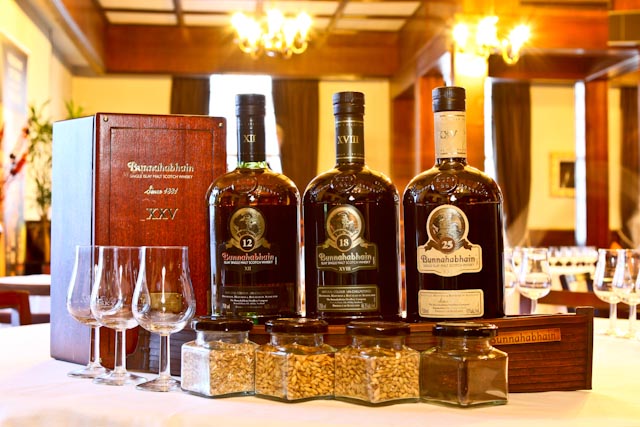
Despite my enthusiasm for this whisky, the realities of my personal budgetary environment meant that I had only been acquainted with the previous chillfiltered 12YO, so it was a real treat to get to taste both the new version, as well as the rest of the amplified core range.   I found the 12 and 18 YO’s to be similar, with flavours typical of a sherry cask influence.  Bunnahabhain has actually taken the unusual initiative of disclosing its cask profiles – the 12YO is made from 25% sherry cask whisky, and 75% bourbon cask whisky, the 18YO has a 40:60 split, and the 25YO sits at 10:90 – and I applaud them for it.  Their transparency in this regard shows the respect that they have for their consumers.  Would that this practice were more prevalent amongst other distilleries and bottlers.   Anyhow, whilst the two variants are similar, the 12YO is a more restrained.  The 18YO is sweeter and woodier with a little bit of salt evident, as one might expect given its specification, its age, and the location of the maturation warehouses (abutting the ocean).  Interestingly Pierre mentioned that it was developed as an ideal whisky to accompany a cigar.  I have a Partegas hibernating somewhere, so I’m dead keen to put their efforts the test (budget permitting).  The 25YO was distinctly different: creamy, rich, caramelized, and exceptionally well balanced.  I enjoyed it tremendously but at R2k odd a pop I don’t expect it to be crossing my lips again anytime soon (budget definitely won’t be permitting).

The new range

I’ve lingered about dispensing pleasantries, and sincerely so, but in the process I’ve been skirting around the meat of the matter.  The launch was an uncomplicated affair – a judicious introduction to the reincarnation of a range of superb whiskies from an iconic distillery – so I felt it deserved an uncomplicated retelling.  The elephant in the room is chillfiltration, and it’s a messy beast of a thing.  Given the premise for this launch it can’t be avoided, but it can be postponed.  I’ll leave you for the moment with my pleasant memories of an excellent lunch, enjoyed with some excellent people, accompanied by some excellent whiskies.  If you have the appetite join me next time as I wade into some muddy, or should I say hazy, waters.

The whisky fraternity

Photos courtesy of Bunnahabhain and Nico Gründlingh at Image Solutions.

Class act

The poet John Lydgate once wrote: “You can please some of the people all of the time, you can please all of the people some of the time, but you can’t please all of the people all of the time”, a quote that was subsequently adapted by Abraham Lincoln and bastardized by all manner of people.  Whilst the sentiment may have been put into words by a poet, I’d suggest that it’s actually a law of human nature.  At some point or another, and probably with some regularity, even the best of us will succumb to it.  This applies to brands as well, which are effectively just manifestations of peoples’ ideas and actions.  In the face of such inevitability the measure of person and, more pertinently for my purpose here, of a brand, is how it reacts when it has been the cause of disappointment.

I was invited earlier this year to attend a satellite tasting which was to be hosted by Dr. Bill Lumsden.  There’s only one properly fit description for Dr. Bill – he’s a legend!  This however obviously has its drawbacks, one of which is that it places incredible demands on his time.  Dr. Bill was called away on urgent business and unfortunately was forced to cancel the tasting on short notice.  I was disappointed, along with everyone else who’d been invited I’m sure, but I wasn’t given much time to reflect on my disappointment.  A week or so later a courier pitched up at my door and delivered a package containing a bottle of Glenmorangie 18YO (signed by Dr. Bill) as well as a personal letter apologising for the cancellation.

I was blown away.  This was sheer class.  I’m already a big fan of Glenmorangie, but if ever my affinity needed affirmation, then this gesture did the trick tenfold.  Dr. Bill, may the dram be with you!

Wow!