Category Archives: Uncategorized

St. Patrick’s Day

Happy St. Patrick’s Day everyone!  For obvious reasons I’ve been celebrating this day since as far back as I can remember.  My mom would bake a cake for my dad and I (he’s also a Patrick) to mark the occasion.  Sadly that hasn’t happened for a while now…perhaps I should put her in touch with an overnight courier service.  Anyhow, for now I’ll have to console myself with comfort of a more liquid nature.

On that note if you’re a Capetonian and wondering how to celebrate the Irish national holiday in fitting style, look no further than the Bascule Bar.  They’re offering double tots of Bushmills Original for R40.00, and throwing in complimentary tasters of Bushmills 10yo, Bushmills 16yo and Black Bush with each purchase.  The special will be running from 6pm until 9pm.  Enjoy and may the dram be with you!

Tribute to Japan part 2

When it comes to whisky Japan is a study in contrasts.  The industry is largely controlled by 2 players – Suntory and Nikka – and it is often described as “closed”.   In a sort of entrenched prisoner’s dilemma, the various distilleries, already limited in number, do not trade outside of their parent companies, hence restricting the variety of product available for blending, and forcing blenders to look abroad, primarily to Scotland, for alternative sources of malt whisky.  This is a deeply traditional convention, rooted in the Japanese ethic of company loyalty, which has to a large extent inhibited the industry to the point where, until fairly recently, Japanese whiskies were largely unknown, and undrunk outside of Japan.

Two series of events changed this course.

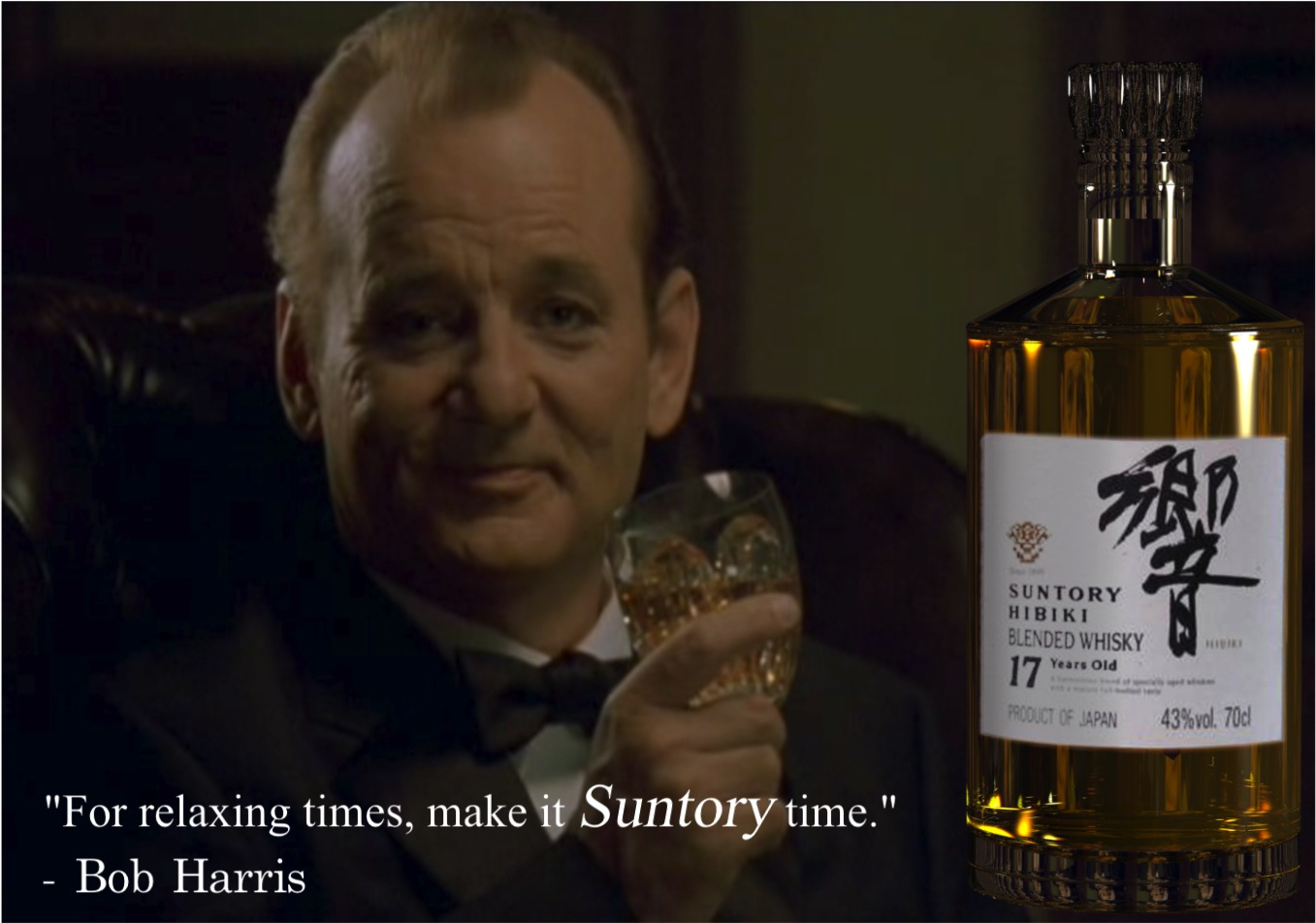
Firstly, Bill Murray, sworn enemy of gophers and ghosts alike, proved himself a great friend to and an unprecedented ambassador for Japanese whisky by dramatically elevating its global awareness in the 2003 film “Lost in Translation”.   You can’t buy that type of publicity.

Who you gonna call?

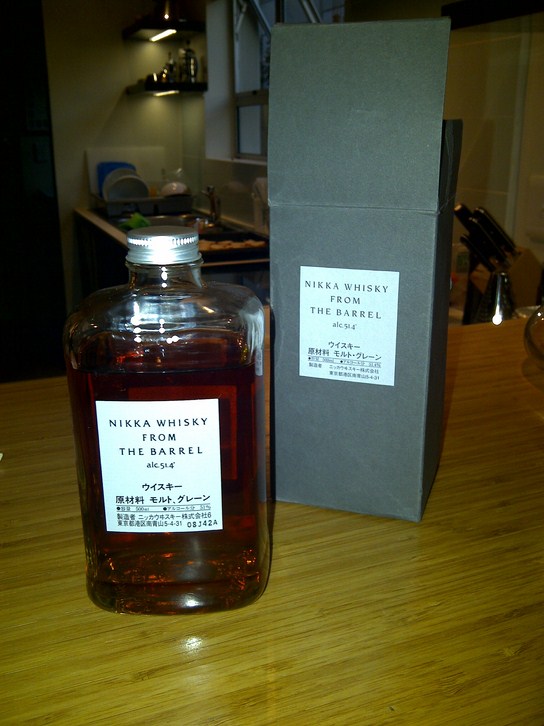
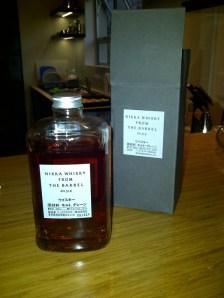
Secondly, in 2008 two Japanese whiskies, Yoichi 20yo and Suntory Hibiki, were awarded the titles of world’s best single malt and world’s best blend respectively by Whisky Magazine, which is one of the whisky industry’s most credible authorities.  Since then they have been garnering awards left right and centre.  On Friday night I was able to worship at the altar with a tasting of Nikka from the Barrel, a cask-strength, non-chill filtered, jack-in-the-box of a whisky.  It’s a multiple award winner with flavour that really lets you know it’s there.  Think fruits, candy-floss, and sweet bread.  Highly recommended.
Delish!

Paradoxically the same issues which have held the industry back have also driven it forward.  Starved of variety, Japanese distilleries began producing it for themselves.  A Scotch distillery will typically only produce one type of new make.  In Japan individual distilleries began experimenting with different barleys, different malting methods, different yeasts, and different stills to produce a variety of different single malts.  Bamboo charcoal filtration has been introduced.  High quality single malt has been made in a coffey still (unheard of elsewhere!).  Japanese oak (mizunara) has been added to the ageing mix (the American and European varieties being the usual).   And so on, and so on.  Within the conservative outer shell there is a hive of innovation producing spectacular results.

With product innovation clearly not an issue, perhaps the biggest challenge facing the industry is marketing and distribution.    Japanese whisky, having been modelled on Scotch, is not intrinsically well differentiated, and it’s the relative newcomer.  Subtleties and exceptions aside, the flavours are similar.  It also doesn’t help that many Japanese brands still contain Scotch malts.  It’s both difficult to sell something that’s not its own, and difficult to buy something that you can’t find.  They can’t just rely on old Bill forever, so let’s hope they kick on and get this right.

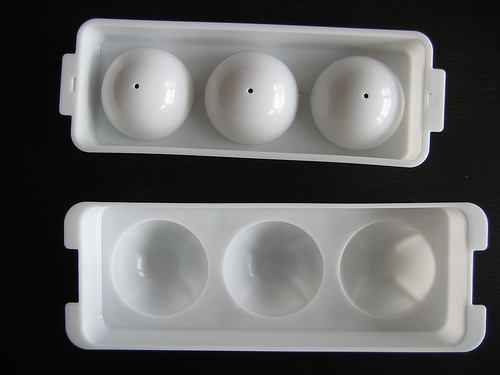
I mentioned yesterday that I was waiting for an ice-ball mould.  Predictably – having tempted fate – it did not arrive.  So I wasn’t able to enjoy my mizuwari as planned…cubes just won’t do it since ice-balls revealed themselves to me.  Instead I had an oyuwari: whisky with hot water, a custom that was borrowed from the drinking of sochu (the indigenous Japanese spirit).  Having no Japanese whisky at the ready I had to improvise with an Abelour 10yo, my table malt.  It was interesting, definitely releasing the volatiles, but it’s an oddity rather like gluhwein, something that you might have and even enjoy, but only every now and then.

My missing ice-ball mould

I’ll wait patiently then for the mould to arrive, mix up that mizuwari, and make a fitting toast to the both the Japanese whisky industry, and, with current events in mind, to Japan in general.

Tribute to Japan part 1

The earthquakes and resulting tsunamis in the area have focused the world’s attention on Japan, and on a crisis unprecedented in scale in that country since WWII. Thousands are dead, hundreds of thousands are surviving in life-threatening conditions, and the damage to property and infrastructure has been devastating in the extreme. Luckily, if indeed luck has any meaning in the greater context, the whisky industry can be grateful for small mercies. The facility most affected, Nikka’s Miyagikyo distillery, is reported to be relatively unscathed, having escaped with some minor damage to stock. However it is located adjacent to some of the most heavily affected communities, so there is a high likelihood that staff, suppliers, and/or their families may be suffering. I’m sure that all of our thoughts are with them. In this time of tragedy for the Japanese people, I thought a tribute to their whisky industry and culture might be appropriate. I tasted a great Japanese whisky over the weekend, and today I’m expecting a Japanese ice-ball mould in the post. If it arrives as scheduled I intend to prepare an ice-ball mizuwari (see my previous post: https://wordsonwhisky.wordpress.com/2011/03/09/shaken-not-stirred/) tonight, to serve as further  inspiration for the tribute, which I’ll post tomorrow. Join me then in honouring this great nation and offering them solidarity during these difficult hours.

Shaken not stirred

James Bond’s trademark quote refers to vodka martinis not whisky, and whilst I’m aligning myself with Humphrey Bogart – whose famous last words were “I should never have switched from scotch to martinis” – I can nonetheless appreciate Bond’s particular discernment when it came to how his drink of choice should be prepared.

Hey, what I do in my own time is my business.

I’m often asked how whisky should be drunk.  It’s like a recurring dream.  Sometimes it seems like the same people keep asking me.  Maybe I’m not interesting enough to engage on other subjects, so they stick to this topic as a refuge.  Worrying…enough so that I thought I’d take it out of the equation by putting my response on the record.  Perhaps I’ll carry little slips of paper from now on inscribed with this post’s URL and hand them out to whoever asks me again.

When I was on the marketing side of the industry, the party line was that whisky should be drunk the way the consumer wanted to drink it.  If that was with cream soda, then so be it.  I always thought that this was self-serving, and short sightedly so – particularly with premium brands.  How many Chivas suitcases could and would someone actually drink?  Yes it might impress your mates at first but how long before that wears off and you realise that passion fruit cordial tastes much the same with the ubiquitous Bells or J&B?

I’m not knocking whisky with mixers or even whisky cocktails.  They have their place, and it’s clearly spacious.  I don’t have any statistics at hand but I’d guess that the bulk of blended whisky is drunk with some sort of a mixer.   Whisky is an acquired taste and for many people mixed whisky is the push start to a long and beautiful journey.  I myself enjoy Canadian whisky with a mixer, and I’m partial to a Sour or an Old Fashioned.  But I also subscribe to the belief that a mixer ruins a superior whisky.  007 may be tempted by a Romanov and coke (I said may), but guaranteed he’ll save his Grey Goose for a martini.  Good whiskies are all about flavour and mouth-feel, and the subtleties thereof.  These are lost when set against the backdrop of a mixer – why skim a diamond over the surface of a lake when a stone will do?

There is a better way – and it’s called water.  Water in its liquid and frozen forms is whisky’s time honoured collaborator.  Usually I’d initially nose and taste a whisky neat and thereafter add water – anything from a drop to an equal part (depending on the alcohol level and my mood at the time) – to help release the flavours of the whisky.    Water reduces the edge of alcohol as a primary sensation, allowing you to more easily detect the subtler elements of aroma and taste.  It’s best to avoid heavily chlorinated water, because like a mixer this would interfere with if not overpower the whisky.  I would furthermore tend to stay away from sparkling water and soda, although it’s interesting to note that Dave Broom, one of the world’s pre-eminent whisky writers, recommends the former as an accompaniment to a young peaty whisky.  Worth a try.

Ice is more controversial.  Whisky is optimal at room temperature, but this is hardly a precise measure.  A Cameroonian gentleman downing a dram in downtown Douala may have a different take on it compared to his Swedish counterpart.  Anoraks – the geeks of the whisky world – will tell you that whisky should be drunk at the temperature of a Scottish parlour (+/- 15°C), hence the motivation for ice in certain climates.   The reason for all of this concern about temperature is that whisky contains congeners (types of fats and oils) which are largely responsible for flavour, and which, in much the same way as other fats, congeal at lower temperatures, and thereby become inhibited.  This is why non-chill filtered whiskies tend to haze when cooled.  Ice also introduces uncontrolled dilution as it progressively melts.  Soapstone “ice” blocks, chilled in the freezer and then added to a drink, offer a nifty solution to this problem.  The Japanese have also popularized the ice ball, which due to its smaller surface area versus an ice-cube of similar volume, melts more slowly and therefore is less diluting.  More on these cool (npi) ice-balls in a future post.

Soapstone "ice" blocks

So it’s clear that the preferred ingredients should be water, yes, and ice, maybe.  But as to how to put it all together, well, there is no exacting answer…not even in Japan, as precise a culture as one could hope to find.  The most popular whisky drink over there is the mizuwari (the classic recipe calls for the golden nectar with an equal measure of water and 2 blocks of ice, stirred precisely 13 and half times!) but even this would invariably vary according to personal taste.   The exciting solution to this dilemma then is to drink lots of whisky and experiment.  And on that note – may the dram be with you!

A Mizuwari, with extra ice it seems.

In Memoriam

A short one today.  About 10 years ago I had the privilege of viewing an absolutely astonishing whisky collection – the scale and composition of which was enough to make my eyes (and mouth) water.  It was hidden in the bowels of an insurance company, at the bottom end of Orange Grove in Johannesburg, and I was only able to find the place because I had lived in nearby Houghton during my Joburg days so was familiar with the area.   The incongruity was striking.  This was something that should have been exhibited like the crown jewels, not tucked away on the back streets of a yes charming, but also slightly dodgy suburb.  I would hazard the guess that at its zenith it would have laid claim to be the most valuable and judiciously assembled private whisky collection in the country…although I’d be happy for someone to dispute this and invite me round for verification.   I was recently sad to learn that its owner, the late Leslie Zulberg, had passed away.  My condolences go out to his family.  I did not know Leslie well, having only met him that one time, but I’ll remember him fondly for graciously allowing me that breath-taking visit, and for the gift of a MacKillop’s Caol Ila, an independent bottling that introduced me to Islay whiskies.  Less sad, but sad nonetheless, was the news that the collection had been dismantled and sold.    Rest in peace Leslie.

Green whisky

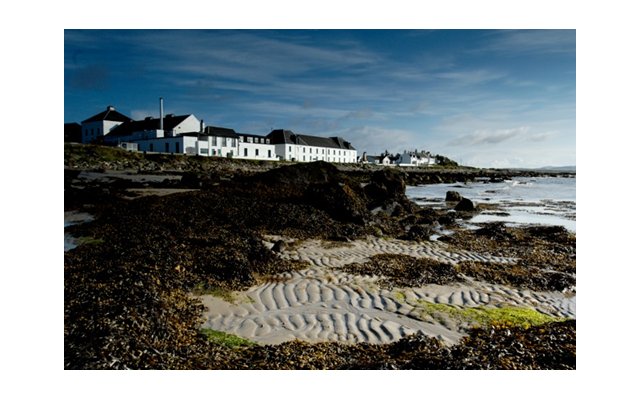
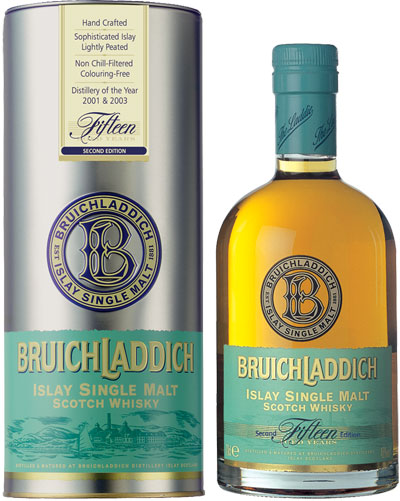
No, it’s not for St. Patrick’s Day, it’s not even Irish…it’s Bruichladdich (pronounced Brook-laddie).  On Tuesday the Bruichladdich distillery, which is located on the island of Islay, a mecca for peat-freaks the world over, and which produces the only organic Islay whisky (apparently a favourite of British PM David Cameron), became the first distillery to generate electricity using waste derived from the making of whisky.

The Bruichladdich distillery

This requires an explanation that can’t gloss too lightly over the technical details, but please bear with me because it’s a compelling story.

Whisky production creates 2 major waste streams: draff, and pot ale.  Draff, the barley husks that remain after the worts* is drained from the mash tun**, is commonly used as cattle feed.  Pretty much everyone ticks that box.  Pot ale, the watery post-distillation waste, has on the other hand up to now simply been discarded across the board.  On Islay the major distilleries along with the adjoining Jura distillery have clubbed together on a pipeline (located at Caol Ila) through which they pump their pot ale under the Sound of Islay.  Pot ale however contains organic material which can be converted to biogas (i.e. energy) by a process called anaerobic digestion (AD).  This has been theoretically known some time, but actual attempts to do it weren’t economically efficient enough to be employed sustainably…until recently.  Where others have tried and failed Bruichladdich, along with technology partners Biowayste, have got it right, and on a sufficient scale to power the distillery and its 10 acre site, including the bottling hall, computers, offices, warehouses, and vehicles.  Estimated carbon savings amount to a gratifying 225 tons per year.

The Biogas tanks at Bruichladdich

I was suitably impressed, not only because I find genuine environmental successes hugely uplifting, but also because these guys are independent and privately-owned, small players in an industry that is dominated by large multinationals wielding virtually limitless resources.  So how did it come to be that they were the ones to score this landmark victory?

I got in touch with Mark Reynier, CEO of Bruichladdich, to get some further insight into the situation.  He explained, unsurprisingly, that one of the big boys (I’ll keep the name to myself) had initiated a similar program some years ago as part of a large-scale development on the mainland, but that it had been plagued with problems, including the explosion of an AD vat and other less dramatic failures.  They had since, to quote Mark, been “all over us like a rash trying to find out how we have done this” whilst simultaneously putting “every obstacle in the way to try and slow us down”. These obstacles included using dubious measures to deny Bruichladdich access to the pipeline (of which they are part-owners!) for disposal of the post-AD waste – which is both cleaner than pot ale, and which had already been signed-off by the Scottish Environmental Protection Agency (the body controlling discharge permits).  Flashback to 1994, as Michael Schumacher crashes into Damon Hill to stop him from winning the race and taking the championship.  Luckily in this version of events Damon wins.

Keep in mind that I’ve only heard one side of this saga…but as they say, history is written by the winners, so we’ll go with it.  Internal industry wrangling aside, this is a fantastically positive initiative.  Well done Bruichladdich!  They deserve a bit of a punt, so in Mark’s words: “Drink Bruichladdich and save the planet!”

Environmentally responsible whisky

*the clear liquid that will be first fermented and then distilled to be transformed into whisky

** the vessel in which the malted barley or grain grist is boiled

Whisky and all

It’s a glorious monday morning in the Mother City (if you don’t mind chasing hats), the Mountain watches protectively over me as I write this post, and all is well in this part of the world.  Somewhat responsible for my buoyant mood is my discovery, or rather re-discovery, of a bottle of Chivas Brothers 30yo whisky that I had sort-of forgotten I had.  I’m not a collector; whilst I can certainly admire and appreciate a lovingly assembled stash of whisky, I personally prefer to drink rather than hoard.  So open it I will, and soon.  More about it then.

Over the weekend I was glued to my sofa whilst watching the World Cup games taking place in India, and since I’m always thinking about whisky my thoughts quite naturally turned to Indian whisky.  Whisky in India is big business: of the 5 best-selling whisky brands in the world in 2009, 4 were Indian, including Bagpiper, the world’s top seller for that year.  You’d be forgiven for thinking that this is a healthy situation – a developing market asserting itself in the arena, increased global competition, a wake-up call for the big boys – but the picture is less than rosy.   In actual fact the Indian whisky industry has a whiff about it which compares unfavourably to a French cheese ripening in the Mumbai heat.

At the heart of the matter is the question of whether Indian whisky is really whisky at all.  Vijay Mallya, the owner of United Spirits, India’s largest whisky producer, was quoted as saying:  “I’ve had this constant battle with the SWA (Scotch Whisky Association) on the definition of whisky. They won’t let me export my Indian whisky out of India and into the European Union. My last offer to them was that I said I was quite happy to label it ‘Indian whisky’ the same way that Suntory makes Japanese whisky. Why should there be any sort of discrimination? But for reasons best known to them, which is why we have our little disagreements every so often, they just won’t allow it”.   I just love this guy.  I have the feeling that he’s going to be fertilizing my blog for years to come.  Indian whisky can in fact be imported into the EU (and duty-free at that) but it cannot be labelled as “whisky”, Indian or otherwise.  Whisky by historical tradition, by overwhelming convention, and by law in most countries, must be made from cereals (grains).  In India the bulk of local whisky is made from molasses, which is subsequently blended with various proportions of malt whisky, depending on the particular brand and its level of quality and premium-ness.  “You will get the alcohol but none of the flavours,” said Bill Lumsden, an industry pioneer and the master distiller at Glenmorangie, of the molasses spirit in Indian whisky.  Mallya’s reasoning is beyond farcical.  Japanese whisky – as I’m sure he well knows – is in fact made from malt and other grains, and is undisputedly acknowledged to be whisky.

I'm also the owner of the Flat Earth Society

The reality is that Indian whisky is protected in its local market by exorbitant tariffs which violate WTO rules and without which the industry would collapse.  This is costing the Indian government and people a fortune in lost revenue, promoting counterfeiting, damaging trade, and, worst of all, deceiving Indian palates.  It reminds me of an experience I had in China recently when I bought some American whiskey.  Close comparison of the bottle with the real thing – which only happened after buying and tasting – revealed that it was a 99.5% perfect replica.  So in much the same way most Chinese people believe that Jack Daniels tastes like toner fluid, so most Indian people believe that whisky tastes like a Black Label with a few shots of Mainstay.

Some progress is being made: I read that this month Scotch whisky gained GI (Geographical Indication) status in India, but I personally wonder about how this will be enforced.   When there are vast sums of money at stake (India is far and away the world’s largest whisky market), and powerful interests with entrenched agendas in the equation, things are rarely simple.   Of the two biggest Indian whisky brands, the first, the aforementioned Bagpiper, features a corresponding visual on the label, and the second is called McDowell’s…and these are just two examples – Scottish sounding names and Scottish imagery abound, which in any other market would be a clear violation of GI regulations.

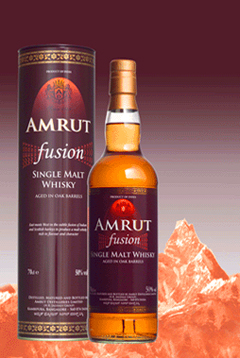
It’ll be interesting to see how things develop, but in my opinion the future lies with brands such as Amrut, a highly acclaimed, genuine, Indian born-and-bred malt whisky.  I reckon that only if India cultivates quality brands that can stand up to international competition will barriers be lowered and the situation resolved.  Even if I’m wrong at least I’ve figured out why Cane Spirits sell so well in Natal.

Real whisky

Respect for elders

Apologies, this post is a bit late.  Between SA’s opening World Cup match and work, time got away from me.  So, cutting to the chase: wednesday’s BBR launch was, as the post title suggested, interesting indeed.  There were the usual canapés, chit-chat and networking that are to be expected from these types of functions, but there was also more substance to it than the standard.  We were treated to a selection of carefully considered cocktails and drinks from their range of spirits, and a presentation with greater depth than the usual marketing veneer;  Mike Harrison, the presenter, and one of the company’s directors, clearly knows his stuff.  This is a blog about whisky, so I don’t intend to dwell on other liquor, but I’ll make a quick exception for Pink Pigeon, an infused Mauritian rum, because I’m a big fan of both rum and Mauritius.  I fear it’ll be too expensive to make a significant impact locally – but it’s delicious and exquisitely crafted.  Don’t hold back if someone else is buying.

Onto the real deal.  We were offered a dram of Glenrothes Select Reserve, which to my nose and palate was big on vanilla, underlaid with a full maltiness, and with detectable hints of citrus, dried fruit, and aniseed.  The Select Reserve, which has no age statement, although I’ve seen a Joburg liquor store boldly advertising it as a 12yo, is the entry-level variant of Glenrothes.  The guys at Kreate Brands, who are the new SA distributors for BBR, have promised me a tasting of their more premium bottlings next week.  There, it’s in print, so they can’t back out.

The guys from BBR - Mike (left) and Peter (right)

Even more interesting than the tasting was the insight we gained into the philosophy of Glenrothes… and for me one of the broader questions that it raises.  Mike explained to us that Glenrothes is all about natural flavour.  They steer clear of spirit caramel and chill filtration (which is commendable), and also finishing (why I don’t know, perhaps they feel it overcomplicates or unbalances whisky).     Most pertinently however, as I alluded to earlier, they don’t make age claims, preferring instead to focus on releasing vintage* whiskies.    Their rationale is that they don’t want to be dictated to by an arbitrary time-frame, they’d rather let the whisky mature at its own pace and “tell” them when it’s ready.  It all sounds very sensible, and I’m not by any means suggesting that the guys from Glenrothes don’t mean what they say (especially because many of their vintages are very old, and identifiably so), but such intentions are becoming almost commonplace in the industry now, and for a good reason: it’s expensive to keep whisky in wood.  It also presents certain logistical difficulties.  If your brand takes off and you don’t have enough stock…well, you just have to wait, or change the product from a single malt to a pure/blended malt (like Cardhu did a few years ago, a questionable move if ever I saw one).  Basically it’s a marketer’s wet dream to foist upon us a super-premium whisky with no age statement.  Johnnie Walker has done so quite successfully with Blue Label, and a few years ago (last year in SA) Glenmorangie launched Signet, a whisky of indeterminate age which sells for circa R2000 per bottle.  I must admit that it is a stupendously good whisky, uniquely constituted with a proportion of “chocolate” (overmalted) malt and partly aged in virgin casks to accelerate the effect of the wood without overpowering the whisky.  Nonetheless it makes me uncomfortable that I don’t know its age.  Full disclosure has not been made.  The producers are treating me like a child, thinking that the age, which would obviously be far too young for the price tag, would distract me from appreciating the merits of the whisky and valuing it accordingly.  I take a Jake White view on this – age in whisky, like size in rugby,does matter (up to a certain threshold, after which it becomes detrimental).   Pieter de Villiers, not typically known for his eloquence, summed it up quite nicely: “A small talented guy will always be better than a big untalented guy, and a big talented guy is better than a small talented guy”.

Age statement or not Glenrothes is a fine single malt offering decent value.  It currently sells in the R300 odd bracket.  I don’t think that they intend to make the vintages widely available in the local market in the short-term, but I’ll post my impressions next week regardless.  Have a great weekend and may the dram be with you!

*A whisky, even a single malt, is usually a “blend” of products of different ages.  This is done to maintain flavour consistency from bottling to bottling.  A whisky claiming vintage status was all distilled and put in wood in the same year – the one specified in the label – and then later also bottled at the same time.  In theory it is individually good enough to be offered as a stand-alone bottling, and would usually have a distinct flavour profile to the standard bottling.

BBR launch

This evening I’m off to attend the local launch of the Berry Bros & Rudd (BBR) spirits portfolio, which includes the Glenrothes single malt.  The name is pronounced Glen-roth-this (this as in thistle, not as in this gaelic pronunciation is a bugger).   I’m excited, not only because it’s an opportunity to savour a great whisky, but also because of the historical interest value.

Glenrothes comes in a cool sample-type bottle with a hand-written label

BBR is Britain’s oldest wine and spirits merchant, having been established in 1698, and it has since cemented a world-leading position as a supplier of fine wines and super-premium spirits.  Its most famous creation was Cutty Sark, the blended whisky named after the Scots-made tea clipper, at one time the world’s fastest ship.  Cutty Sark claims to be the first light-coloured blended whisky ever made, having originally (not sure if it’s still the case today) shunned the use of spirit caramel, which many whisky makers use to darken their products and ensure colour consistency, but which is also thought to mask more subtle flavours.  It was formulated by Charles Julian, who went on to create J&B in its image, as well as having a hand in putting together the Chivas Regal that we drink today.  From its origins in the early 1920’s Cutty Sark went on to become a prohibition-era success story and eventually the best-selling Scotch whisky in the US (at one time).  The brand, I guess because of its stature in American society, has featured repeatedly in popular culture.  Its epic name and distinctive bottle and label really made it stand out; I remember seeing it in movies such as Caddyshack and Goodfellas, marvelling at how much Chevy, Bob and others seemed to like the stuff, and wondering why I’d never come across it locally.

Glenrothes is the signature malt in Cutty Sark, and a significant contributor to other blends such as Famous Grouse and Chivas Regal.  BBR no longer owns Cutty Sark – in a contorted-sounding deal it recently sold the brand to the Edrington Group (owners of the Macallan, Famous Grouse, and Highland Park), in return acquiring the rights to the Glenrothes brand.  The Glenrothes distillery remains in Edrington’s hands, ostensibly to ensure control of supply for Cutty Sark et al.  The good news coming out of all of this for whisky lovers is that there should now be an increased focus on Glenrothes as a single malt, compared to past years where it served primarily as an ingredient for blends.  I’ll report back tomorrow on what we can expect from Glenrothes in SA.

Incidentally one of Cutty Sark’s first “distributors” was the smuggler Captain Bill McCoy, who had a reputation for supplying uncut, unadulterated spirits at a time (prohibition) when this was more exception than rule…hence the expression “the real McCoy”.

Bill and crew

Whisky bloody whisky

Where are you…? Search as I might, by the end of the evening I still hadn’t found what I was looking for. I’m referring of course, in case you haven’t deciphered my subtle-as-a-sledgehammer turns of phrase, to the U2 concert held on Friday at the Greenpoint Stadium, where there wasn’t a drop of whisky to be begged, borrowed or stolen. The dram was most definitely not with us.  Strange I thought because Heineken, one of the sponsors, resides in the Brandhouse stable, home also to the largest whisky portfolio in the country, including the County Antrim-based Bushmills. What could have been more fitting under a…uh…moonlit sky than watching these Irish gods of rock music whilst sipping Black Bush, the tipple reputedly favoured by Bono? But it was not to be. Make no mistake the people at Brandhouse are sharp operators, and not likely to resist the prospect of having their whiskies available to an 80 000 strong captive audience. So then, what manner of perniciousness was it that conspired to deny us? I decided to call Brandhouse to get some answers. They put me onto Big Concerts COO John Langford who explained that it was very difficult to get a special events liquor licence covering spirits, so they generally don’t bother applying (unless it’s specific to restricted areas like a VIP room). Bad news for us whisky-loving concert goers. It seems that the authorities just don’t trust us with hard tack in large groups. I guess situations like these are why the flask was invented.

Hey, I'm not happy about it either but no need to go all Woodward and Bernstein on us

This whisky fiasco notwithstanding the concert was top-drawer, although for many people the live experience must have been diminished somewhat by viewing most of the proceedings on their cell-phone screens; one of my mates with whom I attended the concert recorded so much footage that I’m expecting him to release a bootleg DVD.