Category Archives: Uncategorized

Win an iPad

Occasionally a blogger has to beg.  It’s undignified, but it has to be done.  This is one of those times.  Please (please, please) vote for WHISKYdotcoza as your favourite online store .  We’re late in the game on this one 😦  – voting closes today.

I know that most (all?) of you will be inclined to help out of sheer goodwill, but here’s the bonus.  By voting you’ll also stand the chance of winning an iPad.

Click here to vote.

The whisky tasting deconstructed part 1

Recently, after a not inconsiderable amount of effort, I finally acquired that bottle of Redbreast 12yo for which I’d been pining for so long.

As they say in my home town - kiff bru!

My immediate instinct, as someone who writes about whisky, was to conduct a “tasting”, because that’s just what’s expected.  A tasting is one of those serious sessions where one follows a very particular process to tease out one’s impressions of a whisky.  Serious enough in fact that one finds it necessary to resort to the third person.   Too serious.

After thinking about it for a while I favoured the lose-yourself-to-the-moment drink when you don’t have to concentrate on anything other than your own pleasure.

Don’t get me wrong.  I like tastings.  I’ve attended some awesome tasting functions, notably those put on by my friends at the College of Whisky.  I’d suggest however that on the education-enjoyment continuum these things are inclined towards the former. Tastings are a bit like school, or work.  They may be useful.    They’re frequently necessary.  They may even be interesting.  But when it comes down to it you’d rather be at the beach.

Let’s consider what’s involved in an optimal tasting:

Firstly, you don’t just uncork on a whim and start chugging.  You have to build the context if you want to do this right.  Our senses are most acute – and hence most receptive (but certainly not most appreciative) – in the morning and when we’re hungry.  In what seems like a past life I worked for a brandy manufacturer, one where the management team was expected to take part in tasting panels…first thing in the morning.  Once a week, the bare minimum, I’d reluctantly haul my arse over to the bottling plant and douse my palate with young, blended brandy – mmm!  Luckily they hadn’t cottoned onto the hunger aspect, or if they had they graciously let us off the hook.

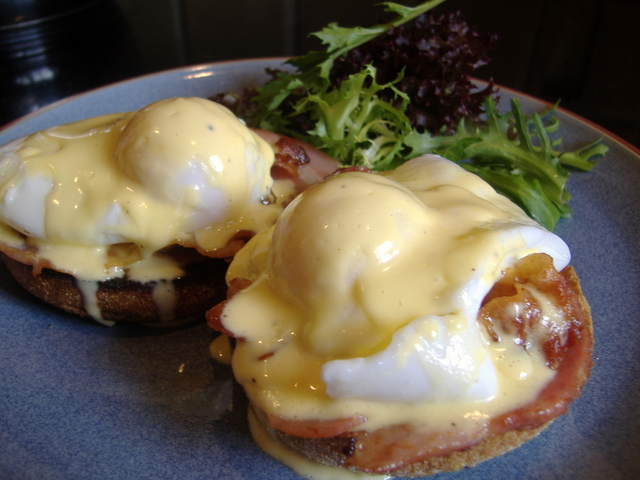
Personally I reckon we should keep mornings for champagne, preferably accompanied by croissants and eggs benedict.

Say NO to hunger

The spartan theme of the thing doesn’t end there – the formula dictates that the tasting area should be well ventilated and free of distracting odours: food, cleaning solutions, dubious personal hygiene, and, ironically, also scented soaps and toiletries.  A smoker would have likely impregnated his or her clothing with cigarette smoke – don’t invite these dodgy buggers to your tasting.

Secondly, you need to be properly equipped.  A tasting should be done using a nosing glass – a tulip-shaped vessel, usually on a stem.  These glasses have a narrowly tapered rim to concentrate the aroma or nose of the whisky.  Sometimes, for blind tastings, or particular sessions where the taster doesn’t want to be influenced by the whisky’s appearance, they might be opaque.  There’s no doubt that they’re fit for purpose, but, in my opinion, they’re also a bit poncy.

Tell me I'm wrong

If I wanted to be doing little pinky salutes with every sip I’d be drinking tea from a china cup.   Admittedly Glencairn’s version – with its satisfyingly masculine foot – has dialled down the pratt-factor somewhat.

Cooler tasting glasses

Nevertheless, give me a solid crystal whisky tumbler any time.  Well-balanced and comfortable in the palm of your hand, this is the ticket to a legendary whisky drinking experience.  These days you get them with an appropriately tapered rim so the nuances of the nose don’t just pass you by.

Glenfarclas 30yo in a Schott crystal tumbler

Thirdly, there’s appearance…which, as they say, can be deceiving.  It’s no different for whisky.  Here you’ll be looking at colour, texture and clarity.

When it comes to colour the basic rule of thumb is that whiskies aged primarily in sherry casks should be darker and more coppery, and those aged primarily in bourbon barrels should be lighter and more golden.  However after you’ve thrown in the possibility of refill variations, finishing in exotic woods, virgin casks, and caramel colouring (the wolf in sheep’s clothing effect), it just becomes a waste of time for anyone other than the keenest expert to extract any kind of meaningful insight.

In evaluating texture (and later the nose) the tasting presents a Shakespearean dilemma: to swirl or not to swirl that is the question.  A conventional tasting guide will encourage you to swirl the whisky about in your glass so that you can ogle the “legs” of the whisky (sometimes also called “tears”, less fun).  These are the little rivulets that form as the swirled whisky runs down the sides of the glass.  These can be long or short, and fast or slow-moving – from which you can draw inferences about alcohol content, and texture.  There’s another camp that suggests that whisky should not be swirled.  SA wine and spirits guru Dave Hughes, a man worth calling for his answering machine message alone, was quoted as follows on the subject:  “don’t vigorously swirl the whisky in the glass as you would wine.  Leave it idle since the aromatics are important – and delicate – and you don’t want those escaping as you agitate the glass violently”.  I’m going to answer the Hamlet question with another question.  This gimmick is quite nifty, especially at a promotional tasting.  It has an impressive feel about it.  Novices sense they’re learning something – they’re virtually on their way to becoming master distillers.  But take a step back.  Does it really add value?   The alcohol strength can be gleaned far more precisely from the label.  And texture is only important once the whisky’s being drunk, at which time you should feel free to swill it about with gay abandon and get a good gauge of the mouth feel.

The last element to consider in assessing appearance is clarity.  This is actually more meaningful, and it’s worthwhile doing.  Here you’ll be trying to deduce whether this whisky is chill-filtered or not.  You may remember from this post that chill filtration essentially removes flavour from the whisky, so for the true whisky lover it’s an abomination.  Lift the glass to the light and scrutinize the whisky for any cloudiness.  If it’s crystal clear it means that the whisky has likely been chill-filtered; if you can pick up a bit of haze then it’s likely to be what’s called a “non-chill filtered” whisky, or possibly a whisky that’s been less aggressively chill filtered.  You’ll be able to do this more reliably by chucking in a bit of ice or some cold water since this will precipitate the congeners that form the haze.  I wouldn’t encourage this though – unless it’s a warm day.  Cold inhibits the flavour of the whisky on your nose and palate.

In the next post we get down to brass tacks – the flavour.  Until then, may the dram be with you.

Hitting some Black Bush

I’ve made a sort of loose commitment to myself that I’m not going to drink tequila anymore.  Actually shoot is more apt because I don’t plan on depriving myself of the occasional margarita – that would be needless overkill.  My rationale?  Why chuck back cactus juice when I could be sipping fine whisky.  It’s taken me a while to unearth this pearl – age it seems has its merits – and to appreciate its simple beauty…but now that I have long may its lustre last.  Tequila buzz, pah…it’s a myth.

Usually occurs after shooting tequila

I recently had the opportunity to put my resolve to the test – during the bachelor party of an Irish friend.  The chaps in attendance had been known to pursue Mexican gold with the enthusiasm of modern-day conquistadors.  Once, crazed by tequila feva, two of them pinned me down whilst I was asleep, and a third squirted tomato sauce into my mouth till it seeped out of my nose.  True story.  Anyhow, on this occasion I steeled myself, ignored the taunts, and meandered towards a bottle of Black Bush.  It proved to be validation indeed – of the highest order.

Black Bush along with its little brother, Bushmills Original, is an unusual specimen amongst blended Irish whiskeys in that its component parts come from different distilleries.  This is common practice in Scotland, but in Ireland, with its mere handful of distilleries, blend composition tends to stay in-house.  Given that Bushmills has no column stills and thus cannot make its own grain whiskey it sources this instead from Irish Distillers’ Midleton distillery.  Black Bush is a malt/grain blend, so it contains no single pot still – that special nectar which I suggested in my last post as being central to the Irish whiskey identity (and of which I now have a bottle, hooray!).   Nevertheless the Bushmills brothers can truly claim to be the most representative of Irish whiskeys – the malt comes from County Anheim in the North, where the Bushmills distillery is located, and the grain comes from County Cork in the South, home to Midleton.   I can well imagine that this would have been the dram served during the Good Friday peace talks.

This is some light-hearted conjecture on my part of course.  But I thought I’d throw it into the mix.  I’m reasonably confident that I’m toeing the party line.  Whisky makers in my opinion are deliberately cagey about the makeup of their products; this both encourages positive conjecture amongst consumers and it keeps their options open.   Marketers will tell you that mystique adds to the allure.  This is all somewhat self-serving.  I’m pretty sure it’s not in the consumer’s best interests to be left in the dark.  When you’re shelling out hundreds of rands and more for a bottle of whisky you deserve to know – as precisely as is reasonable, and as is the case with most other product categories – what it is that you’re getting.

In this game it seems that Bushmills is no exception.   The label claims that it is “matured to perfection in sherry casks” and indeed the sherry influence is its defining feature.  However, I’ve struggled to definitively confirm whether it is exclusively or just predominantly matured in sherry casks.  Frustratingly there are other grey areas; notably its age, and the proportions of grain and malt.  Withholding the latter is hardly unusual, and indeed this may need to vary to maintain flavour consistency from bottling to bottling.  In fact I really don’t mean to single out Black Bush.  I’m for the moment bottling in a full-blown tirade – but springing a few leaks in the process.

Anyhow, as much as I was distracted by picking over these details, I didn’t let it deter me from fully and unreservedly appreciating this exceptional product.  From the first glance at its rich maple syrup colour this whiskey exalts the sherry womb from which it (mostly?) sprang.  The nose is big and fruity with a spicy undertone – I could picture a mince pie made with delicate phyllo pastry.

Inside every bottle of Black Bush

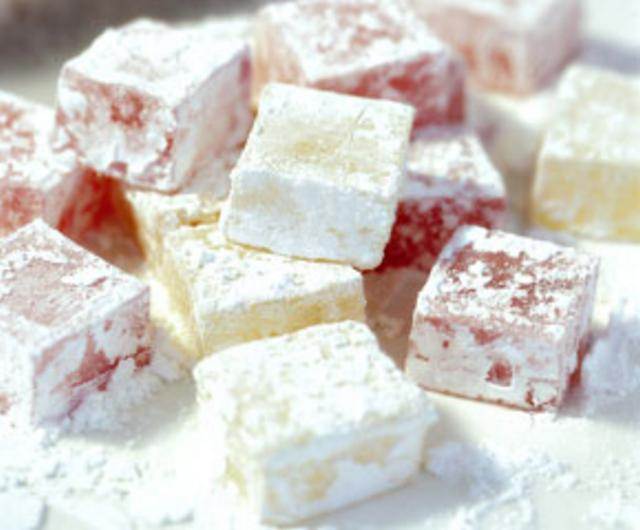
The liquid has a full, but slick mouthfeel, with the intense fruit persisting on the palate, and the spice, identifiably cinnamon, more prominent than before.  The oak is restrained, imbuing the whiskey with a well-rounded, smooth, balanced character without ever taking centre stage.    Fine stuff from start to the finish – which incidentally reminded me of something that I couldn’t quite place at the time: a high quality Turkish Delight.  It was only after sampling some Bushmills 10yo, in which this flavour resonates, that the penny finally dropped.

Pronounced in the 10yo

Black Bush has undoubtedly deepened my love of Irish whiskey.  To coin those famous lyrics “the pipes the pipes are calling”.  I’ll be sure to answer as regularly as I responsibly can.

I love Irish whiskey

And to anyone who doesn’t I have this to say – don’t be an eejit man!  Tree times distilled, you canna go wrong…

One who does not like Irish whiskey

In many ways the history of Irish whiskey reflects the very soul of Ireland itself: tragic, principled, enduring, resurgent, and throughout it all, ebullient, and abundant in lyricism and warmth.  The Irish story is bittersweet, having travelled a course of buoyant victories and bitter setbacks.  It led the charge of whisky in the nineteenth century, but passed on the trend to blend, much to its commercial detriment.  Scottish corporate interference then stunted the industry’s capacity to produce grain whiskey.  One hindrance followed another.  Independence and separation from the Empire deprived it of vast markets.  The industry shunned bootleggers and then was insufficiently prepared for the revocation of Prohibition, leading to severe reversals in one of its most successful markets.  Later post-war government policies further limited development, bringing the once flourishing industry to its knees, ravaged and barely hanging on with only 2 distilleries still operating.

But hang on it did, and in the last 20 odd years it’s been progressively emerging from the darkness.  There are now two new distilleries, independent and Irish-owned to boot.  And then there’s Jameson, the leading Irish whiskey brand and spearhead of the recovery, today logging sales of over 3 million 9-litre cases annually…and still growing.    As the more perceptive amongst you may have gleaned from the title of this post, I’m a big a fan of Irish.  So I couldn’t be happier about this turnaround.  There’s still some way to go but I’m starting to believe that it’s on its way to reclaiming its rightful place in the whisky pantheon – which is important, not only because Ireland is the birthplace of whisky, but more so because Irish offers whisky lovers an astonishingly good, and meaningfully distinct style of whisky.  The more it thrives the richer our whisky adventure becomes.

What makes Irish Irish?  As with Scotch any such analysis is general at best.  The industry may be more limited than that of its celtic cousins, but its whiskeys are significantly diverse.  Nonetheless, certain signature features have evolved over the centuries which on a broad level may be considered representative.  Most people know about triple distillation.  Whether this makes a whiskey “twice as smooth” is debatable, but it certainly does have an effect.  The original strength – i.e. before reduction – is higher than a twice-distilled whisky and this will influence flavour.  Furthermore the stills are notably and consistently larger than those of the Scotch industry.  You’ve probably heard stories of distillers replacing old stills by putting dents in a new still to match those that were on the original: it’s not scientifically quantifiable but it’s accepted as fact that the size, shape, and surface area of a still impact flavour.  They affect the “conversation” of the spirit with the copper.  These are the subtle differences – more tangible is the difference in ingredients.  Irish generally uses unpeated malt in its mashbills, whereas Scotch (very generally) uses peated malt.  And whereas the single malt is the bastion of Scotch, the heart of Irish is the single pot still (previously known as the pure pot still), made from a mixture of malted and unmalted barley (and sometimes a sprinkle of oats).

Peat. Lots in Ireland, little in Irish.

Single pot stills are still scarce, although this is changing as the industry prospers again.  Until recently there were only 2 brands, Redbreast and Green Spot, available…but sparsely distributed.  Two new brands – under the Midleton and Powers umbrellas – were introduced this year.  These are all produced at Irish Distillers’ Midleton Distillery, however there are rumours that Cooley, the aforementioned independent distiller, is now also producing and laying down stocks of single pot still.  Hooray!

The Single Pot Still family

I’ve got to come clean.  I’m trumpeting this news and singing the praises of Irish despite having never tasted a single pot still.  This will imminently change.  A bottle of Redbreast soon will be winging its way to me.  Irish blends can be made with a combination of any or all of single pot stills, single malts, and grain whiskeys.  The grain whiskey is usually lightly flavoured so as not to interfere with the “master” component. I’m very partial to brands such as Jameson, Tullamore Dew, and Powers, but recently, when biting down on my regular-ish Jameson, I’m left with the impression that it’s over-diluted.  I like the flavour tremendously but I’m not getting enough of it.  The more premium versions, like the Gold Reserve, which obviously have a greater proportion of single pot still (and also benefit from longer maturation), go some way to solving the problem, but I want more.  I need to take my appreciation of Irish on a journey, and there can only be one destination – single pot still.  So I’m as familiar with and as confident about this style of whiskey as it’s possible to be without actually having tasted it.

I recently told a mate of mine who works for Diageo that Bushmills wasn’t a real Irish whiskey, because it doesn’t have a single pot still component.  He was seriously unimpressed by this opinion.  Admittedly I was being unfair, and exaggerating my point (I like to stir).  The truest of Irish, the heart of its tradition, is the single pot still, but that should by no means exclude the other fine whiskeys produced on the island.  To make up for this slight I’m going to follow-up on this post with a review of Black Bush, an unfortunately named (try an unfiltered image search on google), but superbly constituted whiskey.

Until then may the dram be with you!

Indian whisky part 2

Finally I’m getting pen to paper so to speak, after promising the rest of this review some time ago.  Last week was extremely rough, and this week has been a blur.  I find myself in China, about to return home, and running on the last fumes of my energy after multiple flights, countless hours on the road, and a bit of business thrown in for good measure.  I’ll try to make some sense nonetheless.

Amrut Fusion derives its name from the malted barley that is used in its mashbill.  A portion of it is sourced from Scotland and the remainder is local, from the foothills of the Himalayas, thus a “fusion” of West and East.  The former is peated, and this is evident in the flavour, which exhibits a delicious, fragrant, gentle smoke.  I’ve tried to establish the origin of this malt but there’s no specific information about it.  It’s a personal gripe of mine that whisky makers are often purposefully vague if not altogether evasive when releasing specifications about their product.  But more on this some other time (soon).  The best I can do is hazard the guess that the malt comes from an inland source – I couldn’t pick up any of the notes indicative of coastal peat.

The ingredients are a notable feature, but despite the name billing they’re strictly support cast.  The ageing process is what’s creating the buzz around this product.  Fusion is 5 years matured but tastes like a whisky far better and longer acquainted with a cask.  Some punters have even suggested that it’s equivalent in maturity to an 18yo whisky.  I’m not sure how one would go about coming to such a specific conclusion, but it makes the point.  Fusion has a complexity that’s typically only found in whiskies more advanced in years; it’s a prodigy.  This unusual occurrence is due to the prevailing climate (at altitude in Bangalore, where the distillery is located) which is hot and dry pretty much year round, thereby accelerating maturation.

This may seem like a boon, and in this case there’s no doubt that it is, but it does comes at a cost and with some risk.  Evaporation is far higher than in Scotland, so annual losses are significant.  It’s also all too easy to overcook the whisky.  Leave it a few months too long and it’ll likely become excessively wooded.

The risks of rapid maturation

Amrut however has graciously paid the angels their due and walked the fine line with great poise.  It is simply beautifully balanced.  Smoke, biscuity malt, barley fruitiness, and toffee – they’re all swirling around in there, alternately brash and subtle, jostling boisterously for position one moment, in an orderly line the next.  Fusion is clearly Scotch inspired but also somehow not Scotch.  And through it all there’s only the faintest hint of oak – the turbo charged maturation clearly evident, but felt and not “seen”, like gravity, ever present and holding everything together.

This whisky has a certain individuality of style that’s perceptible yet difficult to describe.  Perhaps, and hopefully, it is the birth of something wonderful, of the chosen one that will bring balance to the force and lead the world’s largest whisky-loving nation into the fold.    I’ll drink to that…as soon as I get back to my remaining half-bottle that is.

The Skywalker of whiskies?

My flight is boarding, home beckons, so farewell for now.  Until the next time may the dram be with you.

In memory of Chloe

One of my closest friends lost his daughter today, in the most tragic, cruel and inconceivable of circumstances.  The shock of it persists and will for some time to come.  I simply don’t have the words to express the grief and sympathy that I feel.  They’ve been crowded out by a deep sense of loss.   This post is in honour of a bright, beautiful, special little girl, who was loved by all who knew her, and who was like family to me.  She will be dearly missed.

Rest in peace Chloe.  It was a privilege to have known you.  You’re gone from us, but you’ll never be forgotten.

Indian whisky part 1

A while back I pulled out both pistols and let loose at the Indian whisky industry – see Whisky and all.  Today I’m starting off by reloading.  I’m a say-what-you-mean, do-what-you-say kind of person…or at least I try to be.  So I find it intrinsically offensive, nay incensing, that these guys are bottling cheap liquor – much of it made from molasses, unaged, and artificially flavoured – and calling it whisky.

Indian barley

The situation is of course a source of some controversy, for two reasons:

Firstly, this Indian product cannot be sold in the EU (and elsewhere) under the name whisky, despite the vigorous protests of whisky-magnate Vijay Mallya, and others of his ilk.  The basis for their objections seem spurious to me, justified more by their obvious agenda than by any logic.  A name is important.  It is the source of identity, and the means by which we define the world around us.  In a sense names are the foundation of all meaning in the world.  Indian “whisky” is a con-job and an identity theft.

Secondly, foreign whisky imported into India is taxed at astronomical levels, flouting the agreements and the general spirit of the World Trade Organisation.  Supposedly this has its roots in the cultural attitude towards liquor in India.  Whilst I don’t have enough insight into the subject to convincingly dispute this point of view, I can’t help but wonder.  It sounds like a conveniently nebulous cover story.  India is the largest whisky market in the world, and it’s also the world’s most corrupt democracy – connect the dots.  I’m picturing Indian politicians in upmarket villas…and to add insult to injury they’re certainly not drinking Bagpiper.

There’s little incentive to make genuine, quality whisky in this market, given that one would be competing in the same arena as opposition with a significant cost advantage, and yet the talk of the whisky town for the last year has been none other than an Indian whisky (note no inverted commas).  So much for preconceived notions then.  This whisky has been garnering awards and plaudits from the four corners, such is its merit.  It is so far removed from its cousins that it’s insulting to imply any familial relationship whatsoever.  They may share geographical origins but that’s where the similarities end.

The distillery is Amrut, and the whisky is Amrut Fusion.  It’s a glimpse into the future.  I managed to get hold of a bottle and before I could blink half of it was gone, my guests (Indian whisky?!?) making light work of their scepticism.

Surf over to WoW tomorrow for my review of Amrut Fusion.

Fireside chat with Highland Park

One of my most picture perfect whisky memories dates to some 10 years ago. The setting was Shamwari at sunset, the awe of bushveld at its most inspiring. I wish I could claim to be a regular visitor to this magnificent game reserve, but alas my sheckles are too few in number, and my distribution thereof too retrained. I was there on the company dime, and alert to the knowledge that I might not be returning in a hurry, so I was particularly intent on savouring the experience. We had finished a game drive, and had stopped in what seemed to be the middle of nowhere, surrounded by big sky, bush to the horizons, the quiet noise of the wild, and the biting cold of the veld at evening. I sipped on a dram of Chivas next to a roaring fire, contemplated Africa, and wondered if this was how Livingstone must have felt. Ok, admittedly the adjacent Land Rovers and the proximity of a 5-star lodge probably separated our perspectives somewhat. Some may also contend that the Eastern Cape hardly qualifies – can an area so close to Slummies really be considered to be genuine African bushveld? But still, the moment felt huge, and the whisky tasted sweeter than ever.

Shamwari sunset

I’m reminded of it whenever I enjoy a whisky by the fire, which is a bit of a stretch I grant you, but that’s just how the mind works…well mine anyhow. Recently, on a glacial peninsula evening, having put my fireplace to good use, I decided to unleash a bottle of Highland Park 12yo. This wasn’t done lightly, not because it’s expensive or rare, but rather because it’s a whisky that deserves to be shown respect. In my opinion it should only be drunk in the right setting, and if you’re in the right frame of mind – unrushed, relaxed – to appreciate it fully, otherwise it would be a waste. I sat myself down, the toasty glow of the fire at my back and the spirit of the bush in my heart, and I put the golden liquid to my lips.

HP next to the fire - a winning combination

I should declare at this point that I’m a big fan of the Edrington Group, owners of Highland Park and also of Macallan and Famous Grouse. I like their whisky making ethic – I’m particularly partial to a strong sherry wood influence and these guys are the doyens of sherried whisky. I also fondly remember tasting Highland Park for the first time with good friends in London some 5 years ago, so the brand has a certain sentimental value for me. My review as a result may be somewhat emotive, and so it should be I think. Whisky is beyond the purely clinical.

Highland Park is a bit of an iconic brand of whisky, holding the somewhat romantic status of being the northern-most distillery in Scotland. It is located on the Orkney Islands, and the local peat has a pronounced influence on the flavour of this whisky. I’ve mentioned before that whilst I can appreciate an Islay malt I’m not peat-freak. The gentler, honeyed smoke of the Orkney variety as evidenced in Highland Park is more to my taste. Intermingled with the smoke are elements of wispy heather, oaky malt, sweet honey, and, whilst I believe recent bottlings have been upweighted with American wood, a prevailing dense, dried fruit, sherry presence nonetheless. These elements are all beautifully balanced – picture identical twins on a see-saw, one giving way to the other but returning in between to a perfect equilibrium (btw, for best effect imagine twins that look like Scarlett Johanssen, that’s what I’m doing).

I don’t believe in quantitative ratings, and I’ll never make claim to a “favourite” whisky, but I’d be remiss if I didn’t point out, nay emphasise, that this is one damned good whisky. As Jim Morrisson said (sort of) – get some and it’ll do the rest.

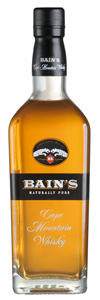
Bain’s Cape Mountain Whisky

I had an eventful last week dealing with the Bell’s Father’s Day promotion – see The return of WHISKYdotcoza.  We’ve now dispatched the bulk of the orders, so hopefully there’ll be a host of happy customers dramming Bell’s Special Reserve from personalised tumblers in the very near future.

Despite all this activity, I managed to work in a few tastings.  No matter how busy you are you can and should always find time to chill out with a friendly whisky.  It’s good for the soul.

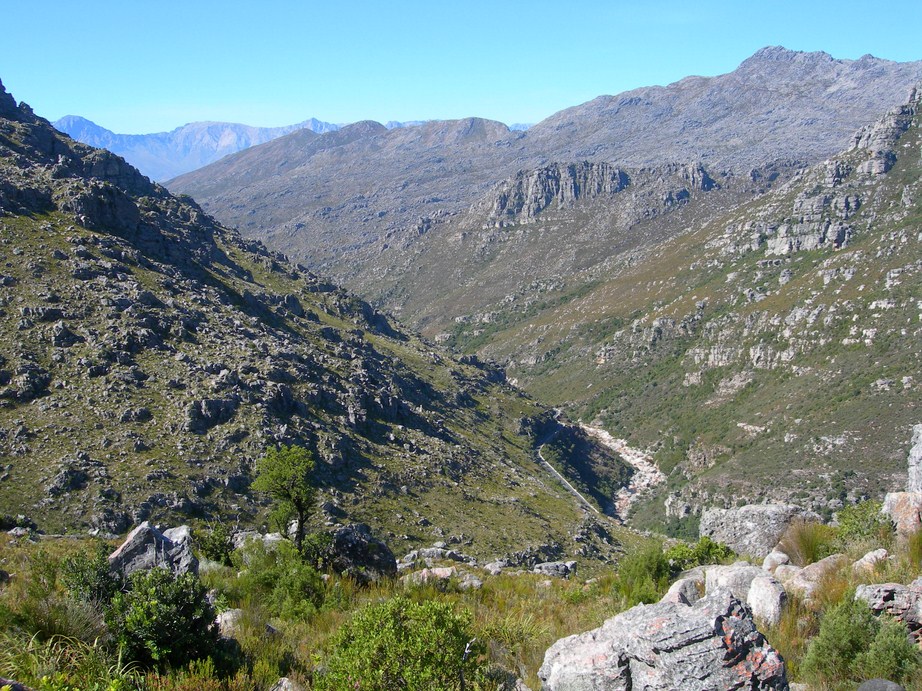
On Saturday I went to my brother’s place for dinner, and, true to form, we ate late.  He and his wife like to partake of some extended kuiering and slowly ease into their evening meals…take a long-limbed, ambling fast bowler’s run-up to the crease if you will.  Their inclinations in this regard gave me ample opportunity to settle in with a few unrushed whiskies.  I opted to start with Bain’s Cape Mountain Whisky, with which I was unacquainted.  In fact – North American whiskeys aside – I’m unfamiliar with single grain whisky as a style, so it was a pleasant surprise to have one at hand to sample.  The brand is named after the mind-numbingly spectacular Bain’s Kloof Pass, built, quite fittingly for the subject of this post, by a Scottish settler.

The pass from above

I’ve driven through it on several occasions and it ranks in my opinion as one of the most epic stretches of road in the country.  So the name is a winner, conjuring up the right frame of mind to relax, sip whisky, and unleash one’s imagination.  Onward then.  This is an easy drinking, immediately accessible whisky.  I’d suggest that it would be an ideal introduction to whisky for the novice drinker.  My brother felt that it had more in common with bourbon than scotch, and I wouldn’t disagree.  The verbage on the pack talks about double maturation in first-fill, otherwise unspecified oak casks, but it tastes as if it was aged in virgin wood.  Its overwhelming impression is one of sweetness, a touch cloying but not unpleasant, with notes of vanilla, toffee, and very ripe fruit – apricot and maybe a bit of guava on the palate.   Strikingly, it lavishes you with a great full, thick mouthfeel.  All considered this is a commendable effort by the local industry.  Let’s hope we forge ahead with more challenging, more complex offers in the future.

South African single grain whisky

For the love of whisky

First published in Spatula Magazine.

Of all the epicurean pursuits, is there any more magical than whisky?  I’m asking the question rather than making the statement, because I can’t be relied on for objectivity.  I’ve been known to refer to whisky as the golden nectar of the gods, because not since Jesus turned water into wine has a divine hand been more apparent in the crafting of a beverage.   I am a whiskyphile, pure and simple.  Nevertheless, that grain, yeast and water, as rudimentary a recipe of ingredients as can be imagined, could yield such an astounding array of flavours, is inarguably cause for wonder no matter what your palatary persuasions.  I think I have a case.

Whisky was thought to have first been distilled in by Irish monks during the Dark Ages (so perhaps it’s true that God invented whiskey so that the Irish would never take over the world).  From there it spread to Scotland first, and then much later to the rest of the world, suffering an etymological schism in the process.  Today the Irish and Americans (with a few exceptions) call their product whiskey (with an “e”), whilst Scotland and the rest of the world have stuck with the original spelling.  This aberration occurred because the average Scotch of the late 19th Century was reputedly of such poor quality that the Irish and Americans wanted to set their whiskeys apart.  These semantics, whilst interesting, don’t really make much of a difference to anything other than signalling that as the craft spread various countries have each added their own individual expression to create a wonderful, diverse world of whisky.

Much has since changed and today the Scots are the frontrunners, producing whisky of undisputed quality.  A typical person’s whisky journey would begin with drinking Scotch blends such as J&B, Johnnie Walker or Ballantine’s, before graduating, if the bug bites, to single malts, and the discovery of other styles.  At the early getting-to-know-you stage whisky can seem mystifying and challenging, and I guess that’s part of the appeal, but the basics are actually quite straightforward.  One whisky differs from another primarily because of the type of grain used in its making.  Single malts and blended malts use malted barley (peated and unpeated), Scotch and Irish grain whiskies use wheat, corn or a combination of these grains, Irish pure pot stills use a combination of malted and unmalted barley, blends are as the name suggests combinations of these styles, and bourbon is predominantly corn, mixed with either rye or wheat.  There’s more to it of course, in fact there’s always something new to learn even for seasoned whisky lovers, but this is the foundation.

Some people drink whisky because it’s cool.  They’re drawn to the mystique, the glamour, the lore, and the culture.  Most people drink whisky, and keep drinking it, because of its intrinsics, because of the flavour.   It was the lure of flavour which once prompted someone to remark: “The last time I turned down a whisky, I didn’t understand the question”.

Flavour refers to aroma and taste, and engaging with it can initially be off-putting.  Certainly that was my experience.  Just one look at an anorak (a whisky nerd) swilling a nosing glass and spouting forth with tweedy pompousness is enough to make you shudder.   As fascinating as flavours of sandalwood incense, mid-growth east coast heather, and Anatolian figs (not the common variety) may well be, at first sight it all seems a bit pretentious.

The trick with flavour is to trust your instincts and your imagination.  Your nose and palate interpret flavour in an individually specific manner.  There is no single, specific right answer.  Whilst there is a theory to flavour, and certain parameters, at the end of the day you’re answerable only to one person.  Remember that the whole whisky tasting endeavour is undertaken only to further your own satisfaction.  You don’t have to be a Jim Murray (there can be only one).  It’s not a test.  You drink whisky to enjoy it.  And once you’ve started to master the identification of broad flavours in whisky – the smoke of Scotch, the spice of Irish, the butteriness of Bourbon – something that can certainly be done on the hoof, there’s no limit to the variety to be explored, and the enjoyment to be savoured.

As to the how, this is where I do a 180 and turn prescriptive.  The target is flavour, and you can’t hit a target if there are obstacles in the way.  Some younger whiskies, particularly Americans and Canadians, may be suited to mixing or as a base for cocktails (such as Mint Juleps and Manhattans).  But not older, more premium, nuanced whiskies…at least not unless you want to waste your money (and if you do there are better ways).  These can be drunk neat, and if that’s your inclination you won’t be alone.  There’s a Scottish proverb that reads:  “There are two things a Highlander likes naked, and one of them is malt whisky”.  Personally I find that the undiluted 43% strength is anaesthetizing.  Ice, in modest quantity, is optional, but it too can be numbing, can over dilute, and can generally get in the way.  The ideal is to add a splash of filtered or mineral water at room temperature, or rather the Scottish version thereof, hence, for those of us under the African sun, the allowance for a bit of ice.

I think my case is made.  Whisky towers high, there’s no doubt.  I remain partial but am able to call on two last, reputable advocates in my support – the market economy that has valued this beneficiated mix of grain, yeast and water as highly as £13 000 a bottle and Mark Twain who once wrote: “Too much of anything is bad, but too much of good whiskey is barely enough”.  Worth a retweet I think.   May the dram be with you!