Inside the bottle

Dipping into the definitions of drinks

First published in Prestige Magazine (April 2012 edition).

An aside:  The guys at Prestige Magazine have asked me to write a second column, on spirits in general, and this is the first attempt.  This column will feature whisky on the rare occasion, but it will be more focused on other spirits so that they too get some coverage.

As it appeared,

When I was offered a column writing about distilled spirits, I thought that I’d start at the beginning.  A singing nun once convinced me that this might be a very good place to start.  Sage advice – one never knows what one might otherwise miss.   The beginning in this case is not doe (as in a female deer, get it now…?) but definition.  I’ll go out on a limb and suggest that without the ability to define our society would be in utter chaos.    The definition of the world and its phenomena are the basic blocks upon which order, understanding, and communication, veritable bastions of civilization, are built.   What, one might well ask, does this portentous declaration have to do with the somewhat less solemn subject of liquor?  The implications might not be quite so all-encompassing but nonetheless, in a local context, the definitions for spirits, as enshrined in the Liquor Products Act 60 of 1989 and subsequent amendments (henceforth “the regulations”), are a treasure trove of interest for both the aficionado and the casual observer.

Two of the major players, vodka and brandy, between them command a huge swathe of the South African market.  Let’s take a tour.

Vodka

I think vodka and potatoes come to mind.  Is Vodka actually made from potatoes, as is widely believed?  Not necessarily; in fact the regulations allow for vodka to be made from any vegetable matter.  It is easily the most indiscriminate of spirits, with its come-one-come-all rallying cry.  Ironically there isn’t a single potato vodka commonly available in South Africa, not counting the sparsely distributed Chopin and others of that ilk.

Vodka originated in Poland and Russia – the lore of the potato vodka actually came out of Poland (sad then in a sense that Belvedere and Wyborowa, its most eminent scions, are made from rye and not potatoes) – and these two countries historically dominated vodka production.  In previous generations vodka had to be Polish or Russian for it to be considered credible.  The regulations, which derive from convention in this regard, dictate that vodka should “not have any distinctive characteristic, aroma, taste or colour”.  It is essentially a simple, almost neutral product, and one which is therefore easy to produce.

As a result, vodka has in recent times undergone somewhat of a de-mystification.  The success of a brand is often dependent on marketing more than any production expertise or heritage, thus creating an arena where style tends to trump substance…although purists may well disagree.    I say this without a shred of disparagement – style has its merits and is obviously important.   It’s always useful however to be explicitly aware of what it is for which one is paying, and with vodka, more so than other spirits, the active ingredient is image.  Blockbuster brands have emerged out of Finland (Finlandia), Sweden (Absolut), France (Grey Goose, Ciroc), Holland (Ketel One), and, at the extreme end of unlikely, New Zealand (42Below).  Absolut in particular has been the poster child for this new wave, blazing an advertising-orchestrated path to the vaunted position of world’s best-selling premium vodka.

A last word.  On closer examination of the regulations I was particularly struck by one of the stipulations: that a vodka must be produced “in a rectifying or fractionating column” i.e. a column still.  How then is Smirnoff Black Label (recently rebranded Small Batch no. 55 or somesuch), flagship of the world’s largest vodka brand and a product of pot-still provenance, being so prominently sold as a vodka in South Africa?  Have they somehow snuck an oversized set of studs past the referee?  Food for thought…

Brandy

Historically the mainstay of the local spirits industry, brandy has been in crisis for the past several years.  Consumers have fled like rats from a sinking ship, finding refuge in whisky primarily, but also in rum and other products.  Naturally, the question being asked is why, and the broad consensus, somewhat unhelpful in itself, is that whisky is seen as a better class of drink, as more aspirational.

So why then is whisky perceived as superior to brandy?  It may come as no surprise that an answer can to be found at the beginning – in the regulations;  very simply: whisky is better than brandy by definition.

It’s generally acknowledged that the quality of a brown spirit improves with maturation in oak casks, usually referred to as ageing.  On a like-for-like basis, and to a certain point, the (sometimes hotly disputed) rule is: the older the better.  In this regard the regulations state that a whisky, any whisky, must be aged in its entirety for a minimum of three years before it can legally be sold as a whisky in our country.

These regulations however are played out on an uneven field.  Brandy, which is locally produced, has been handed a few massive – one might be tempted to say unfair – advantages.  Most significantly the vast majority of the liquid in popular brandies is immature new-make spirit, bottled virtually straight off the still.  Only 30% of a blended brandy is required to be aged.   This situation probably arose because at some point in time stakeholders in the brandy industry had lobbied the authorities to set the bar low and thereby hand them a preferential cost platform…or maybe it wasn’t quite so conspiratorial, may this was just how things naturally evolved.  Whichever, it now appears that the advantage has boomeranged and come back to bite the industry in the arse.

In an era when the spirits drinking public is becoming increasingly curious about their consumption, and discriminating as a result, this is a debilitating predicament.  Brandy is saddled with an image problem that’s rooted deep down in its DNA, in its very definition.  The quality of South African brandy has a great reputation, with our products consistently winning awards at all the major spirits competitions world-wide – Van Ryn, Oude Molen, and Joseph Barry, to name but three, have flown the flag and flown it high – but a chain is only as strong as its weakest link and the weak link in this case happens to be the foundation upon which the entire edifice is stacked.  Only time will tell whether brandy can rekindle its former glory.   If anyone were to ask I could suggest where it should start…

No age statements

The dark side of whisky

First published in Prestige Magazine (April 2012 edition).

An aside: The opinion I express is this column is somewhat contentious.  In a recent twitter exchange on the subject  I was informed by an esteemed whisky writer that I was “just plain wrong”.  The why was, and still is, not as clear.  In the interim thus this presumably snot-nosed, impudent upstart of a whisky blogger stands by his opinion.

As it appeared.

I’m often guilty of looking at the whisky world through rose-tinted glasses.  I am after all a self-professed whiskyphile, so a certain extolling of the virtues is part of the job description.  My natural inclination is to be mostly positive.  The reality however is that whisky is a human endeavour, and, like any other, is prone to human failings.  A cast which includes moonshiners, bootleggers, smugglers, gangsters, and all manner of dodgy bastards, have featured prominently in its story, a story whose aspect has been transformed – by the passage of time, and by subsequent regulation and legitimisation – from criminal to colourful.  Today a few huge conglomerates dominate production.  The industry is seen as venerable, and its members as responsible corporate citizens.  But are things really as proper as they appear?  I wouldn’t be self-respecting if I didn’t blend my admiration with a dash of scrutiny.

Marketing – if one was to adopt a cynical stance – is akin to commercial propaganda.  The discipline, in somewhat Goebbels-esque fashion, is no stranger to large-scale institutionalized deception.  In the marketing of whisky one of the more insidious examples, in my opinion, is the so-called No Age Statement (NAS) whisky.   The age, or to be more accurate (and lyrical) the duration of maturation, of whisky is a subject of lengthy debate.  To avoid labouring the point, let’s just conclude for our purposes that age is of distinct importance to the whisky drinking public.  Research published by Chivas Brothers last year revealed the following actualities: “94% of consumers believe the age statement serves as an indicator of quality” and “93% believe that older whiskies are better quality”.

It follows then that people expect expensive whiskies to be old – since one expects to pay for quality.  As the whisky market has boomed beyond forecast over the last three decades, suppliers have struggled to keep up with the demand for older stock.   This crisis has been to some extent remedied by the proliferation of the multi-vintage whisky – a blending of old and young whiskies.  In itself this was a tidy “innovation” (these had existed before but as an exception) presenting whisky lovers with an extensive new diversity of flavour and style, and stretching the dwindling quantities of older liquid.  There was however an accompanying dilemma – Scotch Whisky regulations require that any age claim must refer to the youngest component in a whisky.  This nagging inconvenience – upon which the integrity of Scotch whisky is largely built – would potentially motivate a cap on pricing and/or the expensive need to re-educate the market…or maybe not.

The low road was and is an option to withhold disclosing the age, creating a situation where the average whisky buyer automatically assumes these whiskies to be older than they are in reality.  There is no doubt in my mind that multi-vintage NAS whiskies have been designed to foster this misconception.  Witness Johnnie Walker Double Black in particular (in the context of Black Label): a derivative and misleading name, similar packaging, higher pricing, and no age statement.  Is this whisky 12 years old – or even older – as one might reasonably be led to assume?  I think not.

This example and others like it I believe are lies of omission, occurring when an important fact (and we know that age is undisputedly important) is deliberately withheld, or not made explicit, in order to perpetuate deception.   Despite the obvious moral dubiousness these lies have become common practice.  There’s a glimmer of hope though that this may soon change.

Last year the new Consumer Protection Act came into effect.  Here’s a little snippet:

False, misleading or deceptive representations

41. (1) In relation to the marketing of any goods or services, the supplier must not, by words or conduct—

(a) directly or indirectly express or imply a false, misleading or deceptive representation concerning a material fact to a consumer;

 (b) use exaggeration, innuendo or ambiguity as to a material fact, or fail to disclose a material fact if that failure amounts to a deception; or

(c) fail to correct an apparent misapprehension on the part of a consumer, amounting to a false, misleading or deceptive representation,

I don’t lay claim to any striking legal insight, but it seems clear to me that were a challenge to be made this piece of legislation could terminate the existence of the NAS whisky in South Africa.  The veil would be lifted and we would be able to appreciate the real Double Black, ostensibly at a reduced price.  Law aside, isn’t it just basic ethics that all material elements to a transaction be disclosed?

Perhaps I’m being optimistic.  This is an entrenched agenda which will take some shifting.  Nonetheless it’s encouraging to hear industry voices seemingly supporting this position, whether out of self-interest or not.  Christian Porta, head of Chivas Brothers, was quoted as follows: “In an age when consumers of luxury goods increasingly demand transparency and authenticity from brands, it is vital that we empower consumers with knowledge so that they fully understand the value of what they are buying.”  Mr Porta, I salute you; you renew my faith.  May the dram be with you!

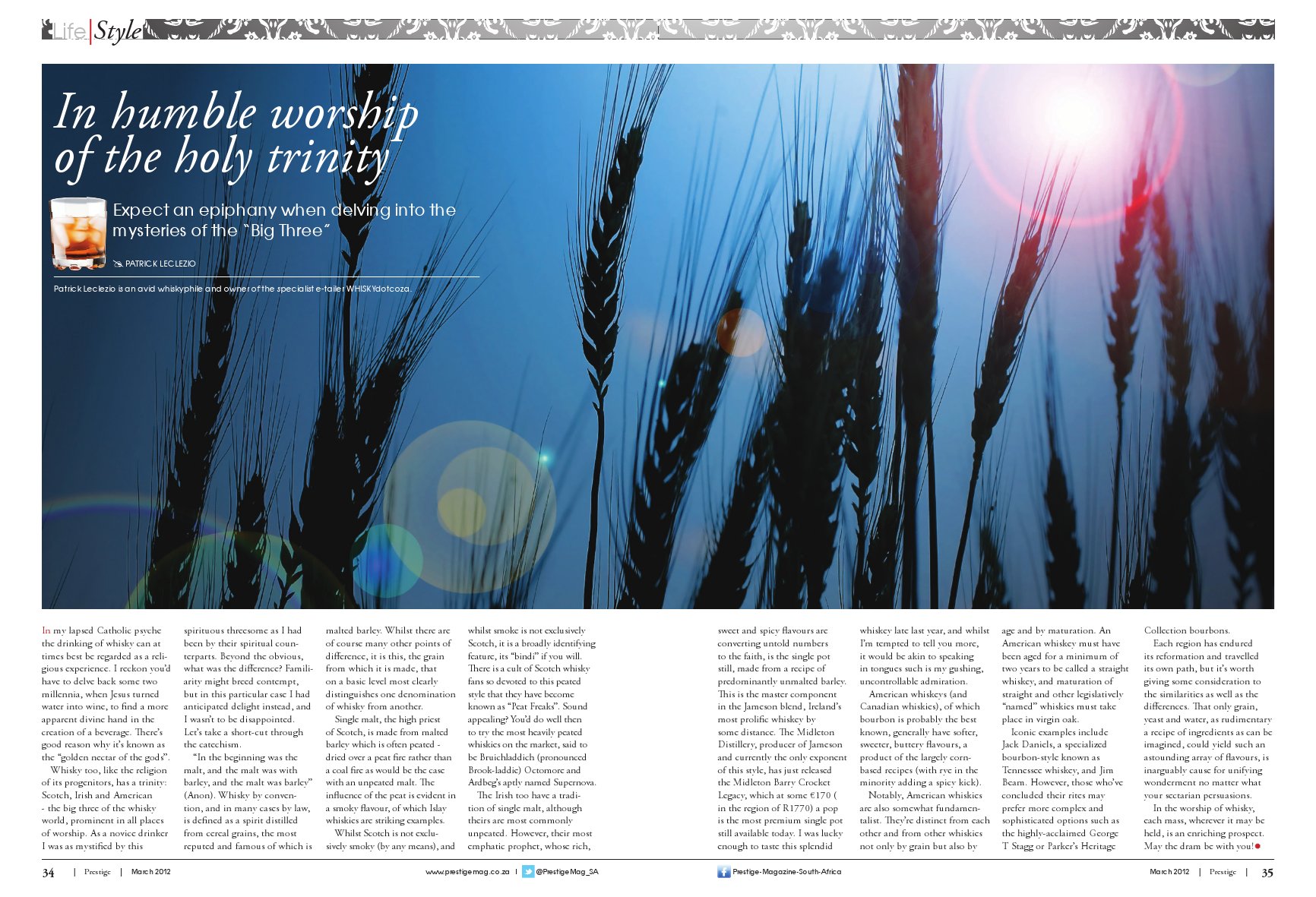
In humble worship of the holy trinity

Expect an epiphany when delving into the mysteries of the “Big Three”

First published in Prestige Magazine (March 2012 edition)

As it appeared

In my lapsed Catholic psyche the drinking of whisky can at times best be regarded as a religious experience.  I reckon you’d have to delve back some two millennia, when Jesus turned water into wine, to find a more apparent divine hand in the creation of a beverage.  There’s good reason why it’s known as the ‘golden nectar of the gods’.    Whisky too, like the religion of its progenitors, has a trinity:  Scotch, Irish and American – the big three of the whisky world, prominent in all places of worship.  As a novice drinker I was as mystified by this spirituous threesome as I had been by their spiritual counterparts.  Beyond the obvious, what was the difference?  Familiarity might breed contempt, but in this particular case I had anticipated delight instead, and I wasn’t to be disappointed.  Let’s take a short-cut through the catechism.

“In the beginning was the malt, and the malt was with barley, and the malt was barley” Anon.  Whisky by convention, and in many cases by law, is defined as a spirit distilled from cereal grains, the most reputed and famous of which is malted barley.  Whilst there are of course many other points of difference, it is this, the grain from which it is made, that on a basic level most clearly distinguishes one denomination of whisky from another.

Single malt, the high priest of Scotch, is made from malted barley which is often peated i.e. dried over a peat fire rather than a coal fire as would be the case with an unpeated malt.  The influence of the peat is evident in a smoky flavour, of which Islay whiskies are striking examples.  Whilst Scotch is not exclusively smoky (by any means), and whilst smoke is not exclusively Scotch, it is a broadly identifying feature, its bindi if you will.  There is a cult of Scotch whisky fans so devoted to this peated style that they have become known as ‘Peat Freaks’.  Sound appealing?  You’d do well then to try the most heavily peated whiskies on the market, said to be Bruichladdich (pronounced Brook-laddie) Octomore and Ardbeg’s aptly named Supernova.

The Irish too have a tradition of single malt, although theirs are most commonly unpeated.  However, their most emphatic prophet, whose rich, sweet and spicy flavours are converting untold numbers to the faith, is the single pot still, made from a recipe of predominantly unmalted barley.  This is the master component in the Jameson blend, Ireland’s most prolific whiskey by some distance.  The Midleton Distillery, producer of Jameson and currently the only exponent of this style, has just released the Midleton Barry Crocket Legacy, which at some €170 (≈R1770) a pop is the most premium single pot still available today.  I was lucky enough to taste this splendid whiskey late last year, and whilst I’m tempted to tell you more, it would be akin to speaking in tongues such is my gushing, uncontrollable admiration.

American whiskeys (and Canadian whiskies), of which Bourbon is probably the best known, generally have softer, sweeter, buttery flavours, a product of the largely corn based recipes (with rye in the minority adding a spicy kick).  Notably American whiskies are also somewhat fundamentalist.  They’re distinct from each other and from other whiskies not only by grain but also by age and by maturation.  An American whiskey must have been aged for a minimum of two years to be called a straight whiskey, and maturation of straight and other legislatively “named” whiskies must take place in virgin oak.  Iconic examples include Jack Daniels, a specialized Bourbon-style known as Tennessee whiskey, and Jim Beam, but those who’ve concluded their rites may prefer more complex and sophisticated options such as the highly-acclaimed George T. Stagg, or Parker’s Heritage Collection Bourbons.

Each region has endured its reformation and travelled its own path, but it’s worth giving some consideration to the similarities as well as the differences.  That only grain, yeast and water, as rudimentary a recipe of ingredients as can be imagined, could yield such an astounding array of flavours, is inarguably cause for unifying wonderment no matter what your sectarian persuasions.  In the worship of whisky, each mass, wherever it may be held, is an enriching prospect.  May the dram be with you!

The world’s first truly unique whisky…?

In my previous post I indicated that my next post (i.e. this post) would explore the subject of chillfiltration.  I’ve subsequently decided to hijack the topic for my whisky column in the May edition of Prestige Magazine.  It’ll be re-published here in a few months’ time.  Apologies.

You may remember from this post that a friend and I import an artisanal, boutique whisky into the country.  Be warned then that the information that follows is not critical or independent – in fact it’s a rehashed press release for the latest offering from French whisky guru Michel Couvreur.  You should find it interesting nonetheless.  The guys from GlenDronach did something loosely similar at last year’s Whisky Festival, but I think I’m right in saying that this is highly unusual.  Let me know if you’ve heard of any other instances.

What is a unique whisky?

A single malt is unique.  This style of whisky can only be produced at one distillery.  And yet year-on-year each bottling is pretty much the same.  A vintage whisky is unique.  It can only be made from liquid distilled and put in wood at the same time.  However there is no effective limit to how much of it can be churned out.  A single cask is unique.  All of this whisky must come out of a single cask.  Typically though a cask can produce up to 800 odd bottles of the same whisky.

Clearly then “unique” – in conjunction with whisky – is a word to be used with some circumspection.

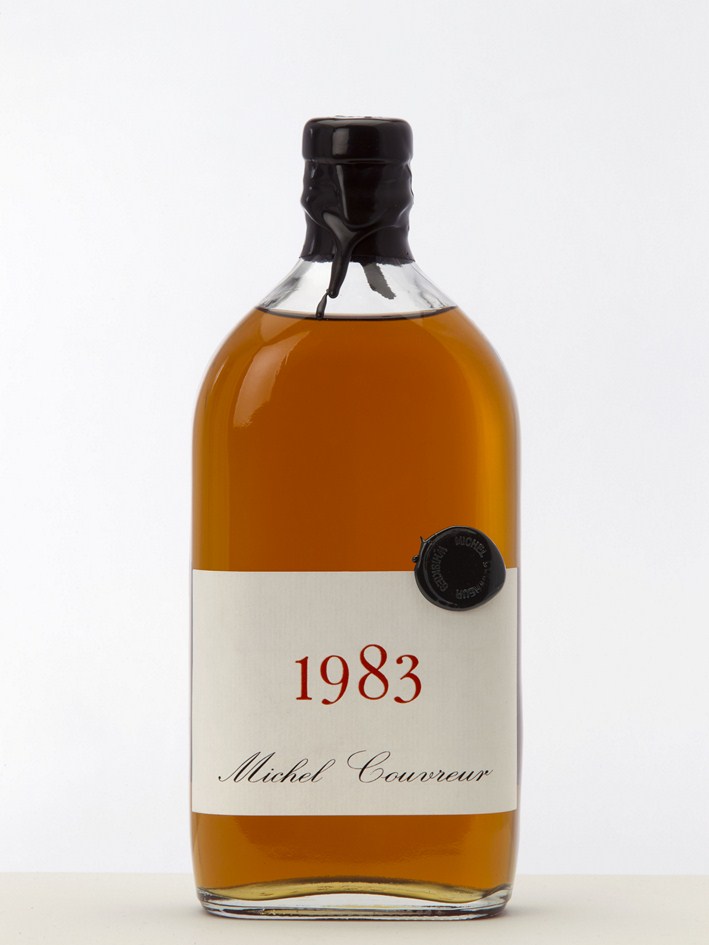
Michel Couvreur has launched one of world’s only truly unique whiskies:  the 1983 vintage single cask…which is individually bottled on request.  Every bottle of the 1983 will be inscribed with the name of the purchaser and with the date and time of bottling.  This individual bottling process means that each and every bottle will spend a different period of time in wood, and consequently therefore will be a different and unique whisky!

Unique, uniquer, uniquest.

This 29 year-old malt is the ideal gift for the discriminating person who has it all, especially with Father’s Day approaching. The unique and personalized 1983 would without a doubt amplify any celebration, and enhance even the most eminent collection.

Michel Couvreur’s range of rare whiskies was officially launched in South Africa last year to critical acclaim.  Couvreur is a whisky artisan of long-standing, based in Burgundy in France, and he enjoys a stellar reputation for his highly cultivated maturation process, in which he employs individually selected Solera sherry casks.  He and his small team are the remnants of an almost-forgotten golden age, when craftsmanship trumped mass production.  He has been honoured in the press with the moniker “Last of the Mohicans”.

Only 20 bottles of the exclusive 1983 have been allotted to South Africa, and they are available at a unit cost of R4999.  Should you be interested in securing a bottle please contact us at info@whisky.co.za

And if you have this type of money to spend on whisky…I can only salute you.  It’s inspirational.  May the dram be with you!

New whiskies from the mouth of the river

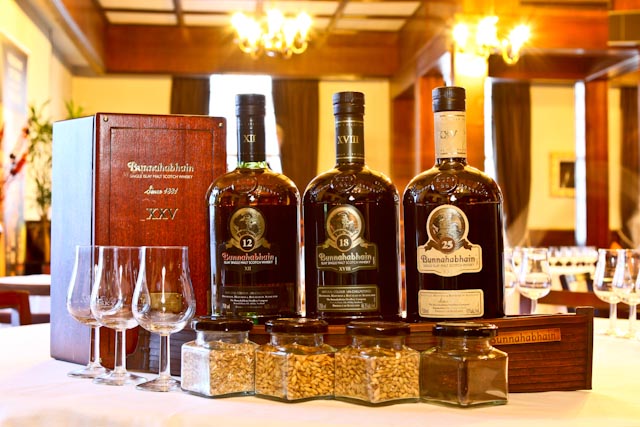
An Islay whisky made from unpeated malt?   In the context of single malt whisky this is a stroke of positioning genius.  The whisky is Bunnahabhain of course, and it has been as intrinsically and intelligently set apart as could be imagined.   I don’t know whether this orchestration was deliberate or a fluke of circumstance, but as a student of marketing I find it quite beautiful to behold.  It would come as no surprise then if I were to reveal that I have always had a predisposed affinity for Bunna.  I sought it out since I first became aware of it, and I quickly came to the conclusion that it was damned good.  Now, much to the delight of all Bunna fans, it has ostensibly become even better.  Last week, at an elegant lunch held at Five Flies restaurant, the brand officially launched its new range of unchillfiltered whiskies in South Africa.

Picture perfect setting

A point of order quickly:  Bunnahabhain is pronounced Bũnna-ha-venn.   You might well have known that the gaelic bh is a phonetic v, but were you aware of the nasal u?  I wasn’t.  You live you learn, and if you can do the learning whilst eating good food and sipping great whisky…well that’s just a bonus.

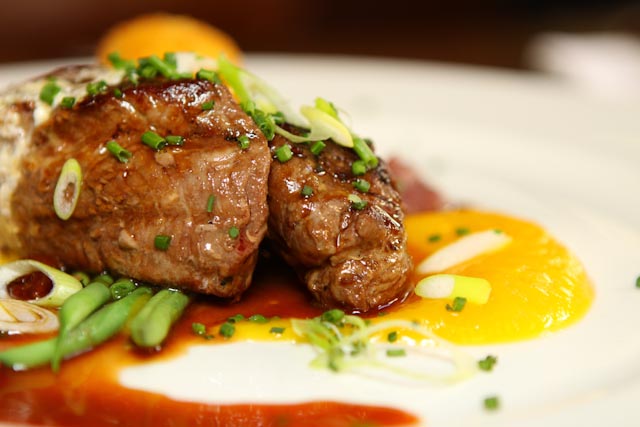
Bunna chow!

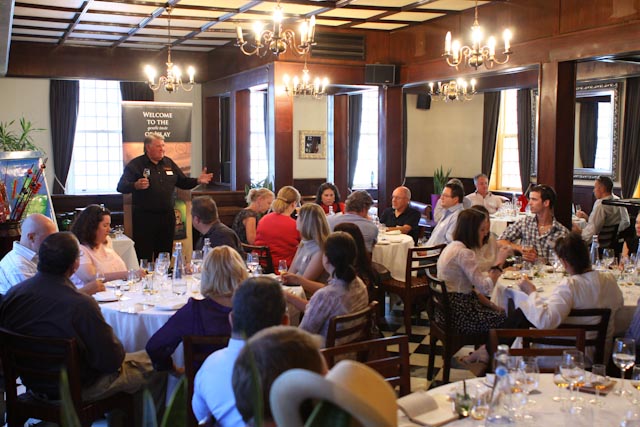
It’s been my impression that whisky events have increasingly tended to be diluted by all sorts of distractions.   It’s understandable – there’s a lot of competition for people’s short attention spans – but it can all become a bit tiresome at times.  This particular function was a refreshing return to the basics, played out with gravitas.  The focus was kept firmly where it should be – on the whiskies, no gimmickry required.  We were hosted by Brian Glass and Pierre Meintjes:  two of the most experienced whisky men in the country, boasting between them some 75 years in the business.  Pierre is in fact known as “Mr. Whisky” in local circles so we could not have hoped for a more credible and authoritative presenter to conduct our tasting.  If you’re South African and interested in whisky you’d do well to attend one of Pierre’s events and partake of of his abundant knowledge.

Pierre holding court

Despite my enthusiasm for this whisky, the realities of my personal budgetary environment meant that I had only been acquainted with the previous chillfiltered 12YO, so it was a real treat to get to taste both the new version, as well as the rest of the amplified core range.   I found the 12 and 18 YO’s to be similar, with flavours typical of a sherry cask influence.  Bunnahabhain has actually taken the unusual initiative of disclosing its cask profiles – the 12YO is made from 25% sherry cask whisky, and 75% bourbon cask whisky, the 18YO has a 40:60 split, and the 25YO sits at 10:90 – and I applaud them for it.  Their transparency in this regard shows the respect that they have for their consumers.  Would that this practice were more prevalent amongst other distilleries and bottlers.   Anyhow, whilst the two variants are similar, the 12YO is a more restrained.  The 18YO is sweeter and woodier with a little bit of salt evident, as one might expect given its specification, its age, and the location of the maturation warehouses (abutting the ocean).  Interestingly Pierre mentioned that it was developed as an ideal whisky to accompany a cigar.  I have a Partegas hibernating somewhere, so I’m dead keen to put their efforts the test (budget permitting).  The 25YO was distinctly different: creamy, rich, caramelized, and exceptionally well balanced.  I enjoyed it tremendously but at R2k odd a pop I don’t expect it to be crossing my lips again anytime soon (budget definitely won’t be permitting).

The new range

I’ve lingered about dispensing pleasantries, and sincerely so, but in the process I’ve been skirting around the meat of the matter.  The launch was an uncomplicated affair – a judicious introduction to the reincarnation of a range of superb whiskies from an iconic distillery – so I felt it deserved an uncomplicated retelling.  The elephant in the room is chillfiltration, and it’s a messy beast of a thing.  Given the premise for this launch it can’t be avoided, but it can be postponed.  I’ll leave you for the moment with my pleasant memories of an excellent lunch, enjoyed with some excellent people, accompanied by some excellent whiskies.  If you have the appetite join me next time as I wade into some muddy, or should I say hazy, waters.

The whisky fraternity

Photos courtesy of Bunnahabhain and Nico Gründlingh at Image Solutions.

Class act

The poet John Lydgate once wrote: “You can please some of the people all of the time, you can please all of the people some of the time, but you can’t please all of the people all of the time”, a quote that was subsequently adapted by Abraham Lincoln and bastardized by all manner of people.  Whilst the sentiment may have been put into words by a poet, I’d suggest that it’s actually a law of human nature.  At some point or another, and probably with some regularity, even the best of us will succumb to it.  This applies to brands as well, which are effectively just manifestations of peoples’ ideas and actions.  In the face of such inevitability the measure of person and, more pertinently for my purpose here, of a brand, is how it reacts when it has been the cause of disappointment.

I was invited earlier this year to attend a satellite tasting which was to be hosted by Dr. Bill Lumsden.  There’s only one properly fit description for Dr. Bill – he’s a legend!  This however obviously has its drawbacks, one of which is that it places incredible demands on his time.  Dr. Bill was called away on urgent business and unfortunately was forced to cancel the tasting on short notice.  I was disappointed, along with everyone else who’d been invited I’m sure, but I wasn’t given much time to reflect on my disappointment.  A week or so later a courier pitched up at my door and delivered a package containing a bottle of Glenmorangie 18YO (signed by Dr. Bill) as well as a personal letter apologising for the cancellation.

I was blown away.  This was sheer class.  I’m already a big fan of Glenmorangie, but if ever my affinity needed affirmation, then this gesture did the trick tenfold.  Dr. Bill, may the dram be with you!

Wow!

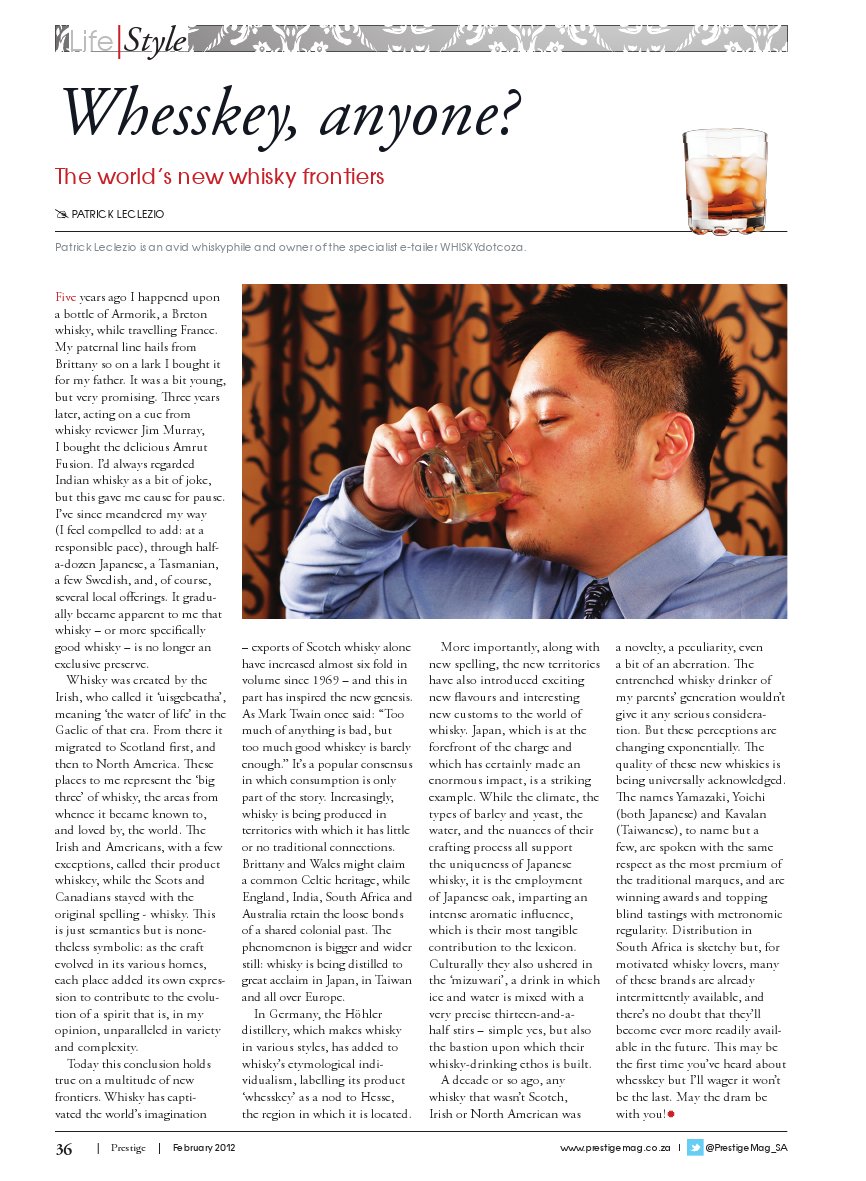
Whesskey anyone?

The world’s new whisky frontiers

First published in Prestige Magazine (February 2012 edition).

As it appeared

Five years ago I happened upon a bottle of Armorik, a Breton whisky, whilst travelling about in France.  My paternal line hails from Brittany so I bought it for my father on a lark.  It was a bit young, but very promising.  Three years later acting on a cue from whisky reviewer Jim Murray I bought the delicious Amrut Fusion.  I’d always regarded Indian ‘whisky’ as a bit of joke, but this gave me cause for pause.  I’ve since meandered my way (I feel compelled to add: at a responsible pace) through half-a-dozen Japanese, a Tasmanian, a few Swedish, and, of course, some of the local fare, and in the process it has gradually become apparent to me that whisky – or more specifically good whisky – is no longer an exclusive preserve.

Whisky was created by the Irish, who called it “uisgebeatha”, meaning ‘the water of life’ in the Gaelic of that era.  From there it migrated to Scotland first, and then to North America.  These places to me represent the ‘big three’ of whisky, the areas from whence it became known to and loved by the world.  The Irish and Americans (with a few exceptions) called their product whiskey whilst the Scots and Canadians stayed with the original spelling.  This is just semantics but it is nonetheless symbolic; as the craft evolved in its various homes, each place added its own expression to contribute to the evolution of a spirit that is in my opinion unparalleled in variety and complexity.

Today this conclusion holds true on a multitude of new frontiers.    Whisky has captivated the world’s imagination – exports of Scotch whisky alone have increased almost six fold in volume since 1969 – and this in part has inspired the new genesis.  As Mark Twain once said “too much of anything is bad, but too much good whiskey is barely enough”.  It’s a popular consensus in which consumption is only part of the story.  Increasingly whisky is being produced in territories with which it has little or no traditional connections.  Brittany and Wales might claim a common Celtic heritage and England, India, South Africa and Australia retain the loose bonds of a shared colonial past, but the phenomenon is bigger and wider.  Whisky is being distilled to acclaim in Japan, in Taiwan, and all over Europe.

In Germany the Höhler distillery, which makes whisky in various styles, has added to whisky’s etymological individualism, labelling its product “whesskey” as a nod to Hesse, the region in which it is located.  I see it as something of a standard bearer for these emerging producers, but then again I’m a nit-picking fanatic when it comes to the details of language.  More importantly, along with new spelling, the new territories have also introduced exciting new flavours and interesting new customs to the world of whisky.  Japan, which is at the forefront of the charge, and which has made an enormous impact, is a striking example.  Whilst the climate, the types of barley and yeast, the water, and the nuances of their crafting process all support the uniqueness of Japanese whisky, it is the employment of Japanese oak, imparting an intense aromatic influence, which is their most tangible contribution to the lexicon.  Culturally they also ushered in the mizuwari, a drink in which ice and water is mixed with a very precise thirteen and half stirs – simple but the bastion upon which their whisky-drinking ethos is built.  I recently had the privilege of enjoying a Nikka from the Barrel mizuwari with ice-balls…perhaps a subject for another time.

A decade or so ago any whisky that wasn’t Scotch, Irish or North American was a novelty, a peculiarity, even a bit of an aberration.  The entrenched whisky drinker of my parents’ generation wouldn’t give it any serious consideration.  But these perceptions are changing exponentially.  The quality of these new whiskies is being universally acknowledged.  The names Yamazaki, Yoichi (both Japanese) and Kavalan (Taiwanese) to name but a few are being spoken with the same respect as the most premium of the traditional marques, and are winning awards and topping blind tastings with metronomic regularity.  Distribution in South Africa is sketchy but, for motivated whisky lovers, many of these brands are already intermittently available, and there’s no doubt that they’ll become ever more readily available in the future.  This may be the first time you’ve heard about whesskey but I’ll wager it won’t be the last.  May the dram be with you!

This is the Chivas life

After my recent tasting of Pride I began to see myself as a bit of a whisky hero.  I’d ripped back that dram with what I was coming to believe was a practiced hand.  Yes, it’s true that I drive around on a scooter, but such realities fade after a few drinks.  From now on when it comes to whisky the sky would be the limit.  In a field of barley when I called it they would come!

Ok, who am I kidding?  That delusion died quickly. In the real world I embrace thrifty efficiency as a way of life…although I’ve heard others describe my philosophy in somewhat less glowing terms – water off a duck’s back.  Anyhow, it was thus somewhat out of character when I made the decision to break the seal on a bottle of Chivas Brothers 30yo that I’d been hoarding for some time.

Out into the light

My thought process was as follows:

–        The Whisky Exchange sells this bottle for £425 ≈ R5100.

–        Further, mine just happened to be signed by Master Distiller Colin Scott – making it a limited edition of a limited edition and adding I’d hazard about 20% to its value.  So let’s call it at R6k, or just over.

–        Cue in the delicious Glenmorangie Lasanta, going for R469.99 a pop on WHISKYdotcoza.

–        The opportunity cost?  13 bottles of sherry barrelled bliss.

You’ve now probably guessed that I didn’t buy this bottle myself, and you’d be correct.  It was a gift from my erstwhile employer, Seagram, given to certain staff on the event of Chivas Brothers’ 200th anniversary (2001).   The special occasions for which I’d been saving it had come and gone, the bottle either forgotten or the opening thereof deferred.  My major remaining milestone is the arrival of my first-born, but I reckon I’ll need my wits about me if and when that happens.

So, sometime last year, I thought #u%& @t, I’m going to crack this bad boy.  Perhaps it was a remnant of Pride-induced grandeur, perhaps it was a stupor induced by who-knows-what, or perhaps, just perhaps, it was a glimmer of good sense.  Whatever it was I don’t regret it for an instant.  You should look back on life as a collection of the greater moments, and this one was epic.

How was I to go about executing this brave decision though?  I quite enjoy the expression “to cast pearls before swine”.  It tickles my fancy…I can almost hear the crunching noises.  Needless to say it’s a situation best avoided.  This whisky had to be properly appreciated.  It was a MUST.  The answer was simple enough – I would share it with some of Cape Town’s pre-eminent whisky personalities, most of whom I’ve come to know as both fellow travellers and friends.  We would also quest for the glory of documenting what I believe is this whisky’s first set of tasting notes, although I can’t 100% verify that this would be either glorious or true.

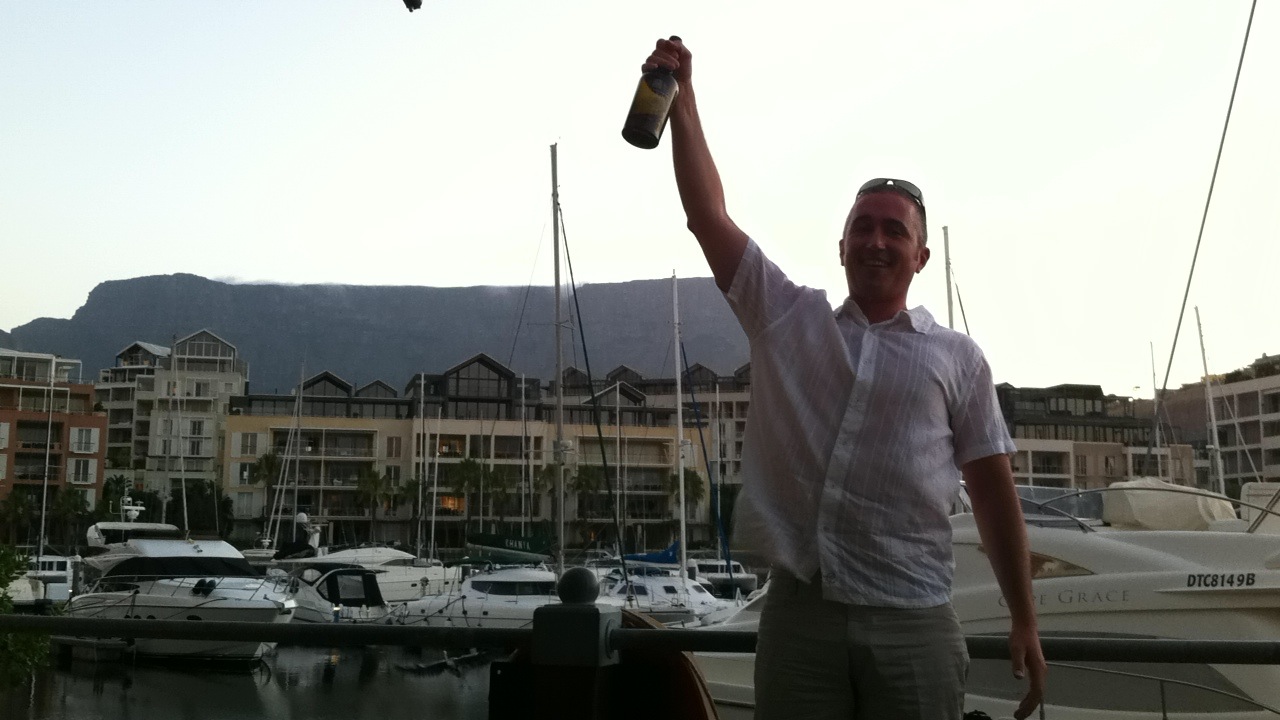
In attendance at the cathedral (the Bascule) were Candice Baker and Niel Hendriksz, the charming ambassadors for Glenmorangie, Macallan and other esteemed whisky brands, Bernard Gutman, that local whisky legend of prolific extent, Marsh/Miles/Mash Middleton, Whisky Magazine’s editor of the ether, and, of course, yours truly.  A quick aside: big thanks George for allowing me to bring in the bottle so that we could enjoy it in appropriately ‘Grace-ful’ surroundings.

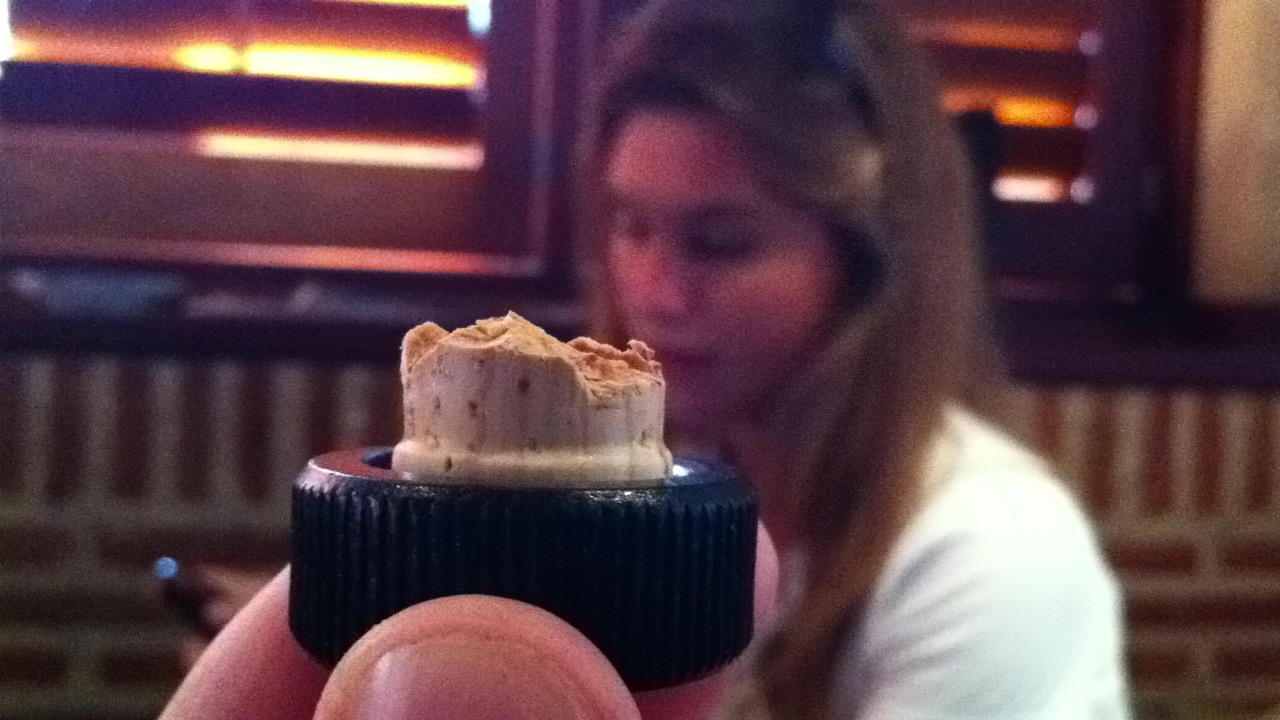
And so it was that on a picture perfect Cape Town afternoon, the five of us seated ourselves adjacent to some luxury yachts – owned by people who probably drink this dram daily, curse them.  Things started badly.  The cork broke eliciting some momentary panic.  This though was quickly resolved with a fine sieve.  Disaster averted we cascaded the golden liquid into our glasses and sat back to ponder this whisky, whisky in general, and just about everything else.

Close call

I’m not really a tasting notes kind of guy.  So despite coming up with this quest I didn’t have the diligence to actually make any notes.  Luckily some of the others were more conscientious so I have some fairly reliable information to add to the flotsam left in my memory.

Packaging:

Elegant, dark bottle with dodgy cork closure.  Simple board box with silk-like fabric covering the interior.  Adequate in 2001.  Somewhat below par in the current era of decadent over-the-top presentation.

Appearance:

Dark burnished gold, betraying a substantial sherry provenance.

Nose:

Wonderful  treacle marzipan nose, delicate hint of espresso.  Dusty dates baked under the Sahara sun.  Caramel.  Toffee.  Sherry, and lots of it.

Palate:

Caramelised tropical fruits, slight bitterness.  Dryish cigar smoke.  Comes to life with water.  The grain component ostensibly lends a wonderful oily-textured mouthfeel.

Finish:

Long lingering, flavoursome, well-balanced finish.

Conclusion:

A classic heavy-hitting blend.  Luxuriant, but stops short of mind-blowing.

Drinking the fair share that I appropriated for myself I felt like a bear drizzling honey down its throat.  I was lightly toasted by the time I left and I couldn’t help but reflect that I was on whisky buzz that could best be described as premium.  There would be no ill-effects.

A gift from the gods. Ok, actually from Seagram – more bootleggers than gods. You get the idea.

It was an afternoon to be savoured for a long while.  The chaps made some noises about regular gatherings to enjoy fine whisky of the same ilk, so I wait with bated breath to see with what they’ll come up.

From me on this fine February evening – may the dram be with you!

Photos courtesy of Marsh Middleton.

2012 ahoy!

Greetings fellow whisky lovers, and compliments of the season!  A new year has dawned which promises to be exciting indeed (if you don’t agree just fake some enthusiasm anyhow).  2012, or, more specifically, most of 2012, is also the Year of the Dragon.  In fact people born during this period will be known as Water Dragons, and since whisky is the water of life, this should be a prolific year for recruitment to our ranks.  I myself am a Water Ox so clearly the logic is airtight.

2012 Year of the Dragon

My personal whisky calendar begins with a satellite tasting next week with the highly reputed and regarded Dr Bill Lumsden of Glenmorangie.  The depths of his whisky knowledge and experience must be staggering, so I look forward to plumbing them for a few nuggets.  I hope too that we get to taste something interesting but whatever the case I have no doubt that the event will set a great tone for the year ahead.  Thereafter, early next month, I’ll be participating in my first “twasting” – a whisky tasting conducted on Twitter.  This particular twasting is courtesy of Mackmyra, a Swedish whisky that’s been taking the industry by storm.   I received my samples a few days ago and despite the not inconsiderable temptation to crack them open I’ve shown remarkable restraint…so far.

From the land that brought us Volvos, great massages and dragon tattoos...

So it’s looking like a year that’s sure to be packed with all sorts of interesting experiences and occasions.  I’ll be giving some special focus to a new venture – my own monthly magazine column.  The good folk at Prestige Magazine have offered me the opportunity to take my whisky musings into print.  My first piece – about the “new” whisky producing countries – will feature in the February issue.  Let me know what you think if you happen to read it.

Don't deny it - you know you want to subscribe.

I wish you all an inspiring, rewarding and gratifying year.  May the dram be with you!

Answering Ireland’s call

I have on this blog repeatedly expressed my gushing affection for Irish whiskey – you may remember my review of Black Bush in particular.  If fans were bottles  I would be a Melchizedek.  So yesterday was a bit of a sad day for me and all my fellow lovers of Irish, or certainly that was my first impression at the unfolding of events.  On reflection I feel mixed emotions rather than sadness as such.  The trigger was an announcement that Beam Global – the large US liquor group which owns mega-brands such as Jim Beam, Maker’s Mark, Teacher’s and Courvoisier – had bought Cooley, Ireland’s last remaining independent whiskey distiller.  Has a light that has long flickered, and sometimes waned, gone out for good?

In the midst of these morose musings my mood was buoyed by memories of a recent Irish experience.  I was lucky enough some ten days ago to attend “Find-the-Craic”, the culminating event in the “Make it 2 Bushmills” global competition.  Two young South Africans, Sean Tickner and Jonathan ‘Oros’ Oliff, won this competition, beating out 3600 other teams in the process.  As if these guys weren’t righteous enough for having “brought the distillery home” the fact that we share an alma mater elevated them further in my esteem.  If I were a rah-rah jolly hockey sticks type, or rather the male equivalent thereof, I’d say “Go School!”, but I’m not so I won’t.  There is nonetheless a certain kinship to having been forged in the same fire.

Oros, Colum and Sean

A bit of context at this point.  I have attended countless liquor and tobacco promotions.  These are industries not known to be shy to flash their cash.  They are also categories where brand (the extrinsics) can tend to often overshadow product (the intrinsics), which is all well and fine, but extrinsics are costly and that cost eventually finds its way into the price of the product.  I once organised a Benson & Hedges party where we bussed (by luxury coach) a large group of celebrities into the Tswaing meteorite crater for a party of unjustifiable proportions.  It bordered on the ridiculous.  A few years later I was at a Lucky Strike concert where Violent Femmes played for a crowd of less than 300 people.  And I can quote dozens of similar examples.  I think I’ve reached the point where I can no longer be impressed by wanton expenditure…although I don’t really mind having this hypothesis tested from time to time :).

At Find-the-Craic I was teamed up with a group of similarly blasé whisky veterans: the legendary Bernard Gutman, whisky supplier extraordinaire Hector McBeth, and Whisky Mag SA digital editor Marsh Middleton, sometimes also known as Miles.  This was as hardened a group as for which you could hope, and yet despite our ho-hum preconceptions we were at the end of the day – to a man – all impressed by what we had experienced.

After a leisurely lunch at the Chapman’s Peak Hotel, where we were seated with Master Distiller Colum Egan, we separated into our respective teams and followed clues to the sites of the various challenges that were awaiting us.

We've already found the craic!

The program was essentially a replication of what Sean and Oros had faced during their epic victorious journey; it was comprised of barrel rolling, whisky tasting, beach golfing, and cocktail making, all of which was great craic (fun), especially in good company, and it was followed by a party at the Bascule, the Cape Town whisk(e)y HQ, where we were entertained by an excellent Irish singer with the interesting name of Foy Vance.  Foy incidentally comes from the French word “foi” meaning faith, although I can’t confirm that this was the basis upon which this particular Foy was named.

Foy Vance in action

Anyhow, I digress.  The day was organised with metronomic precision.  It can’t be easy managing six separate sites (seven if you include the collection point) and yet it was all seamless.  I didn’t notice a single misstep – even though I tried to throw a spanner in the works by tweeting misleading information to lead the other teams astray.

The fun and games aside, what was most impressive was the whole philosophy of the promotion, and by projection the brand.  Money was spent, make no mistake – this can’t have been a cheap endeavour – but there was heart, warmth and a genuineness about the proceedings.  I felt this way primarily for the two following reasons:

–        The theme of the promotion was closely tied to the core brand message of friendship.  Of course this was a marketing exercise, but it was kept relevant, responsible, related to the product, and within reason.  The Bushmills team was generous but not excessive.  I didn’t at any time feel like I was being arbitrarily schmoozed.  This is a brand that seems well grounded, secure and true to itself – no pretence was necessary.

–        The event was a standout largely due to the presence of Colum Egan.  Colum is a real Master Distiller (the best there is if his tongue-in-cheek comments are to be believed), unlike others who spend more time pounding the PR trail than doing any actual distilling.  I had the sense that we were his personal guests, as opposed to invitees at a brand function.  He was a relaxed and congenial host, chatting about the cost of a column still one moment, making stirring toasts the next, all the while making sure we had a great time and having a great time himself.

Taking a short break from distillation duties.

Now, back to my earlier worries about the Cooley situation.  Bushmills is owned by the liquor colossus Diageo, and you just don’t get more corporate than Diageo.  If it’s possible to substitute a process for any element of human initiative the Diageo machine will typically find a way to do it.  And yet, on the evidence of this experience, is there any real cause for concern?  The spirit of Ireland – which history has shown can never be tamed – and of Irish whiskey clearly still thrives within Bushmills.  I have a feeling that independence in Irish whiskey, despite superficial appearances to the contrary, will not be lost to us.

Check out Marsh’s video summary here and Bernard’s endorsement of the post-event here.

Photos courtesy of Tony Niemeyer.